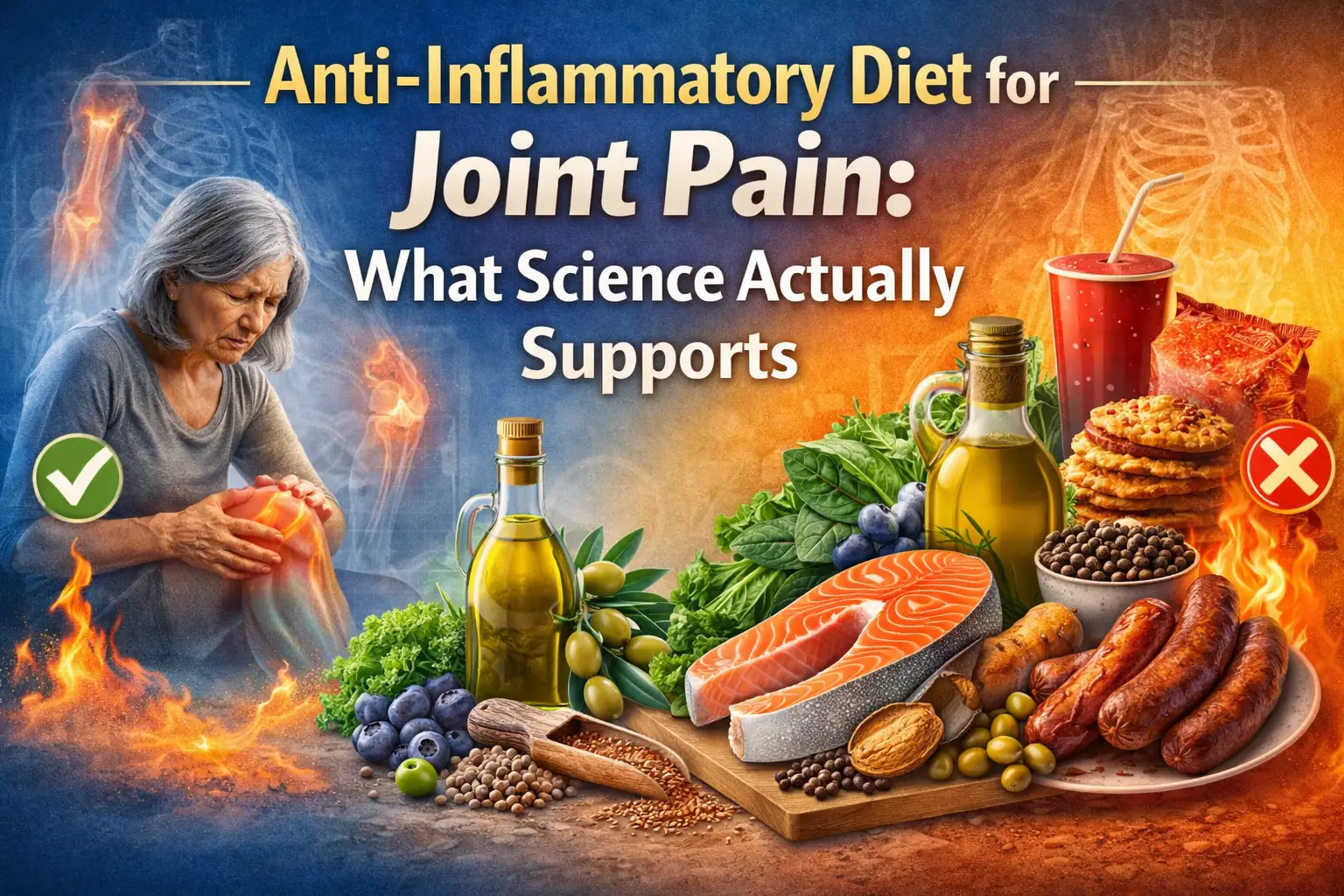
Anti-Inflammatory Diet for Joint Pain: What Science Actually Supports
Confused by conflicting dietary advice for joint pain? Here is what the research actually says — and what to eat starting today.
Understanding Chronic Inflammation and Joint Pain
Inflammation is the body's natural defence against injury and infection. Short-term inflammation is protective. The problem arises when it becomes chronic — a persistent, low-grade state that damages joint tissue over time.
Chronic inflammation plays a central role in both osteoarthritis and rheumatoid arthritis. What you eat influences systemic inflammation through multiple mechanisms:
- The gut microbiome and its impact on immune signalling
- Blood lipid profiles and cardiovascular-linked inflammation
- Oxidative stress and free radical damage to joint tissue
- Cytokine production — the chemical messengers that drive or suppress inflammation
The Mediterranean Diet — Strongest Evidence for Joint Health
The Mediterranean diet has the strongest and most consistent evidence for reducing inflammatory markers in joint conditions. It is characterised by:
- High intake of vegetables, fruits, legumes, and whole grains
- Regular fish consumption — especially oily fish
- Olive oil as the primary fat source
- Limited red meat and ultra-processed foods
"At StepUp Joints, we tell patients to start simply: add more dal, sabzi, and fruit; replace packaged snacks with nuts; include fish or flaxseeds a few times a week; and cut back on cold drinks."
Key Anti-Inflammatory Nutrients With Good Scientific Evidence
These specific nutrients have strong research backing for reducing joint inflammation — and most are readily available in Indian kitchens.
Omega-3 Fatty Acids
Found in oily fish (salmon, sardines, mackerel, hilsa / rohu), flaxseeds (alsi), and walnuts. They block production of pro-inflammatory prostaglandins and leukotrienes. Particularly well-supported for rheumatoid arthritis.
Curcumin (Turmeric / Haldi)
Multiple clinical trials show meaningful anti-inflammatory effects for joint conditions. Absorption increases significantly when taken with black pepper (kali mirch) or a fat source. Cook with turmeric daily.
Polyphenols
Found in berries, amla, green tea, ginger (adrak), and dark leafy vegetables. These compounds modulate inflammatory pathways at the cellular level.
Dietary Fibre
Feeds beneficial gut bacteria that produce short-chain fatty acids with systemic anti-inflammatory effects. High-fibre diets consistently correlate with lower CRP levels. Dal, sabzi, and whole grains are excellent sources.
Vitamin C
Essential for collagen synthesis in joint cartilage and acts as a powerful antioxidant. Amla (Indian gooseberry) is one of the richest natural sources of Vitamin C anywhere in the world.
Foods That Worsen Joint Inflammation — What to Reduce
Certain foods directly stimulate inflammatory pathways. Reducing these consistently — even partially — has a meaningful impact on joint pain over time.
- Ultra-processed foods — packaged biscuits, instant noodles, chips, and fast food are high in refined carbohydrates, trans fats, and additives that directly trigger inflammatory pathways.
- Sugar and refined carbohydrates — white bread, sugary chai, cold drinks, and sweets cause blood glucose spikes that trigger inflammatory cytokine release.
- Excess red and processed meat — sausages, bacon, and frequent mutton consumption are associated with elevated inflammatory markers in blood tests.
- High omega-6 vegetable oils — sunflower and soybean oil dominate Indian cooking. A high omega-6-to-omega-3 ratio (very common in modern Indian diets) creates a pro-inflammatory environment. Consider switching partially to mustard oil or including more omega-3 sources.
What the Science Does NOT Support
Several popular dietary claims for joint pain have little or no scientific backing. These are the most common ones we hear at our clinic:
Avoiding nightshades (tomatoes, brinjal, peppers) reduces arthritis pain. This has minimal scientific evidence. These foods are in fact nutrient-rich and anti-inflammatory for most people. Unless you have a confirmed personal sensitivity, there is no reason to eliminate them.
Expensive supplements marketed as 'joint cures' work reliably. Glucosamine and chondroitin, for instance, show mixed evidence across large randomised controlled trials. A whole-food dietary pattern consistently outperforms isolated supplements for most patients.
Diet alone can cure arthritis. Diet is a powerful tool for managing inflammation and reducing symptoms. But it does not replace physiotherapy or appropriate medical management — it works best as part of a comprehensive joint health plan.
Simple, Practical Anti-Inflammatory Eating for an Indian Lifestyle
An anti-inflammatory diet does not have to be complicated or expensive. Based on what the evidence supports and what works realistically in Indian kitchens, here is where to start:
- Cook with haldi (turmeric) daily — add a pinch of kali mirch (black pepper) to improve absorption
- Include oily fish (rohu, hilsa, sardines) 2–3 times a week, or add alsi (flaxseeds) to roti dough or curd
- Replace packaged snacks with a small handful of walnuts or almonds
- Start your day with fresh amla or amla juice for a natural Vitamin C boost
- Add adrak (ginger) to chai, sabzi, or warm water — daily
- Eat more dal, rajma, and chana — excellent fibre and plant protein combo
- Cut cold drinks and packaged biscuits — replace with nimbu pani or plain lassi
- Switch one of your cooking oils partially to mustard oil which has a better omega ratio
Diet + Physiotherapy: The Complete Joint Health Plan
Diet manages inflammation. Physiotherapy restores function. Together, they offer far better outcomes than either approach alone. If you are living with joint pain and want a personalised plan, our team at StepUp Joints, Lajpat Nagar is here to help.
📅 Book a ConsultationThere is no single magic food — the evidence strongly supports a dietary pattern rather than individual foods. That said, if you had to pick the top three to add today: oily fish or flaxseeds (omega-3), turmeric with black pepper (curcumin), and amla (Vitamin C + polyphenols). These have the strongest clinical trial evidence for reducing joint inflammation in Indian contexts.
Yes — curcumin, the active compound in turmeric, has multiple clinical trials showing meaningful anti-inflammatory effects for joint conditions including osteoarthritis. The key issue is absorption. Curcumin is poorly absorbed on its own. Taking it with black pepper (piperine) improves bioavailability by up to 2000%. Cooking with turmeric and black pepper daily — as is traditional in Indian cooking — is the most practical way to benefit. Curcumin supplements are also effective but should be standardised extracts.
No — not based on current evidence. The popular belief that nightshade vegetables (tomatoes, brinjal, peppers) worsen arthritis has very little scientific support. These foods are actually nutrient-rich and anti-inflammatory for most people. Unless you have personally noticed a consistent worsening of symptoms after eating specific nightshades — which a very small number of people do — there is no reason to eliminate them from your diet.
The evidence is genuinely mixed. Some large randomised controlled trials show modest benefit for a subset of patients with moderate-to-severe knee osteoarthritis. Others show no significant benefit over placebo. Current guidelines from most rheumatology bodies do not strongly recommend them as a primary treatment. If you wish to try them, they are generally safe, but do not expect dramatic results. Focusing on dietary patterns and physiotherapy will give you more consistent and evidence-backed outcomes.
Dietary changes typically take 6–12 weeks to show measurable effects on inflammatory markers like CRP. Some patients notice subtle improvements in stiffness and energy within 3–4 weeks of significantly reducing ultra-processed foods and sugar. Consistency matters far more than perfection. Small, sustainable changes made every day outperform dramatic short-term elimination diets. Track your symptoms and discuss changes at your next physiotherapy or rheumatology appointment.
Absolutely — a well-planned vegetarian Indian diet can be highly anti-inflammatory. Key priorities: include flaxseeds (alsi) daily for omega-3, cook with turmeric and ginger regularly, eat amla frequently, build meals around dal and sabzi rather than refined carbohydrates, replace sunflower oil partially with mustard oil, and snack on walnuts and almonds instead of packaged foods. This approach covers most of the evidence-based anti-inflammatory nutrients without any non-vegetarian foods.