
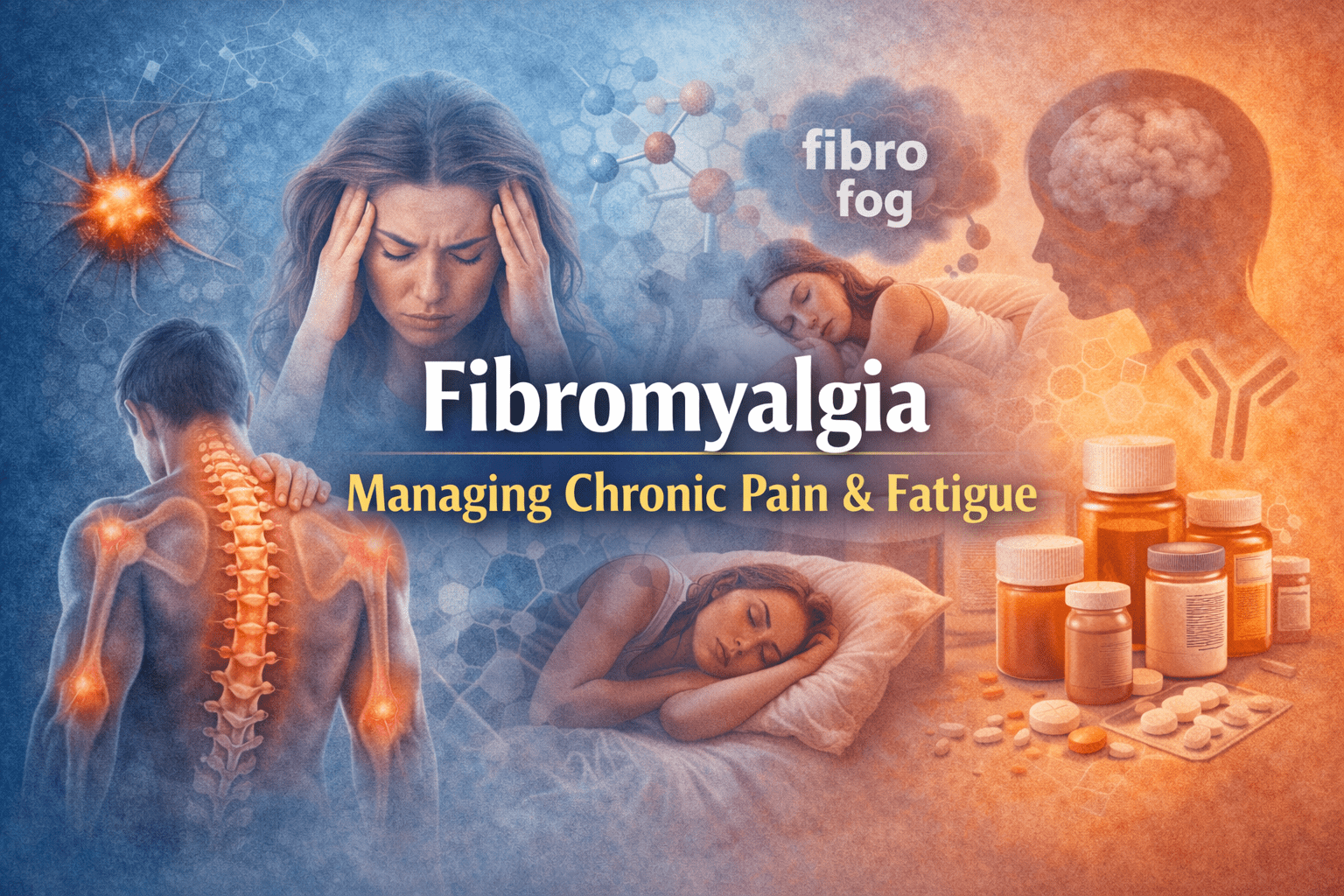
Fibromyalgia is a chronic disorder characterized by widespread musculoskeletal pain, fatigue, and tenderness, often accompanied by cognitive disturbances and sleep abnormalities. It affects both adults and adolescents but is most commonly diagnosed in middle-aged women. Fibromyalgia significantly impacts quality of life and daily functioning.
What is it
Fibromyalgia is a centralized pain syndrome in which the nervous system amplifies pain signals, leading to widespread pain without obvious tissue injury. It is considered a disorder of central pain processing rather than a structural musculoskeletal disease. Patients often experience a constellation of symptoms, including fatigue, sleep disturbances, cognitive impairment (often called “fibro fog”), and mood disorders. Fibromyalgia is classified as a chronic pain condition with no clear inflammatory or autoimmune etiology.
What causes it
The exact cause of fibromyalgia is unknown, but it is thought to result from a combination of genetic, neurobiological, and environmental factors. Central sensitization, in which the nervous system becomes hyperresponsive to pain stimuli, plays a key role. Neurotransmitter imbalances, including altered levels of serotonin, norepinephrine, and substance P, contribute to abnormal pain perception. Triggers can include physical trauma, infections, emotional stress, and other medical conditions. A family history of fibromyalgia or chronic pain syndromes increases susceptibility.
What are the symptoms
The hallmark symptom is widespread, chronic musculoskeletal pain, often described as aching, burning, or stiffness. Pain typically affects multiple body regions and is accompanied by fatigue, non-restorative sleep, and morning stiffness. Patients frequently report cognitive difficulties, including memory lapses and impaired concentration. Additional symptoms may include headaches, irritable bowel syndrome, numbness or tingling in extremities, anxiety, depression, and sensitivity to temperature, light, or noise. Symptoms often fluctuate in intensity and may be exacerbated by stress or physical activity.
How the diagnosis is made
Diagnosis of fibromyalgia is clinical, based on a combination of patient history, symptom patterns, and exclusion of other conditions. The 2016 revised criteria by the American College of Rheumatology (ACR) emphasize widespread pain index (WPI) and symptom severity (SS) score rather than tender point examination. Laboratory tests and imaging are typically normal but are used to rule out other disorders such as autoimmune diseases, thyroid disorders, or inflammatory arthritis.
Importance of diagnostic tests
Diagnostic tests are important primarily for excluding other medical conditions that may mimic fibromyalgia. Laboratory tests help rule out hypothyroidism, rheumatoid arthritis, or systemic lupus erythematosus, while imaging may exclude structural musculoskeletal disorders. Accurate exclusion prevents misdiagnosis and ensures appropriate management.
Importance of early diagnosis
Early diagnosis is crucial because delays in recognition can lead to chronic pain, disability, psychological distress, and reduced quality of life. Early identification allows timely initiation of multidisciplinary management strategies to control symptoms and improve daily functioning.
Management options
Management is multidisciplinary, focusing on symptom relief, functional improvement, and quality of life. Non-pharmacological interventions, such as exercise, physical therapy, cognitive-behavioral therapy, stress management, and sleep hygiene, are first-line approaches. Pharmacologic treatments may include duloxetine, pregabalin, gabapentin, and low-dose amitriptyline to address pain, fatigue, or sleep disturbances. Patient education and support groups are also essential.
Prognosis
Fibromyalgia is a chronic condition with fluctuating symptoms but is not life-threatening. With proper management, many patients experience significant symptom improvement and enhanced quality of life. However, some may continue to experience persistent pain, fatigue, or psychological comorbidities. Early recognition and a comprehensive, individualized treatment plan improve long-term outcomes and functional capacity.