Understanding the Link Between Nutrition and Bone Health
Strong bones and flexible joints are the foundation of an active, pain-free life. However, maintaining musculoskeletal health goes far beyond exercise — it starts with proper nutrition. The body constantly renews bone tissue, and this process requires a steady supply of nutrients such as calcium, vitamin D, protein, magnesium, and omega-3 fatty acids.
As we age, bone density naturally decreases, and cartilage — the smooth tissue that cushions joints — begins to wear down. Poor diet, lack of sunlight, or insufficient intake of essential nutrients can accelerate this process, leading to conditions such as osteoporosis, arthritis, and joint stiffness.
The good news? Eating the right foods can help strengthen bones, reduce inflammation, and protect joints from early degeneration.
Essential Nutrients for Strong Bones and Healthy Joints
1. Calcium: The Building Block of Bones
Calcium is the most abundant mineral in the body and forms the structural framework of bones and teeth. Without adequate calcium, bones become weak and brittle, increasing the risk of fractures and osteoporosis.
Best Sources:
-
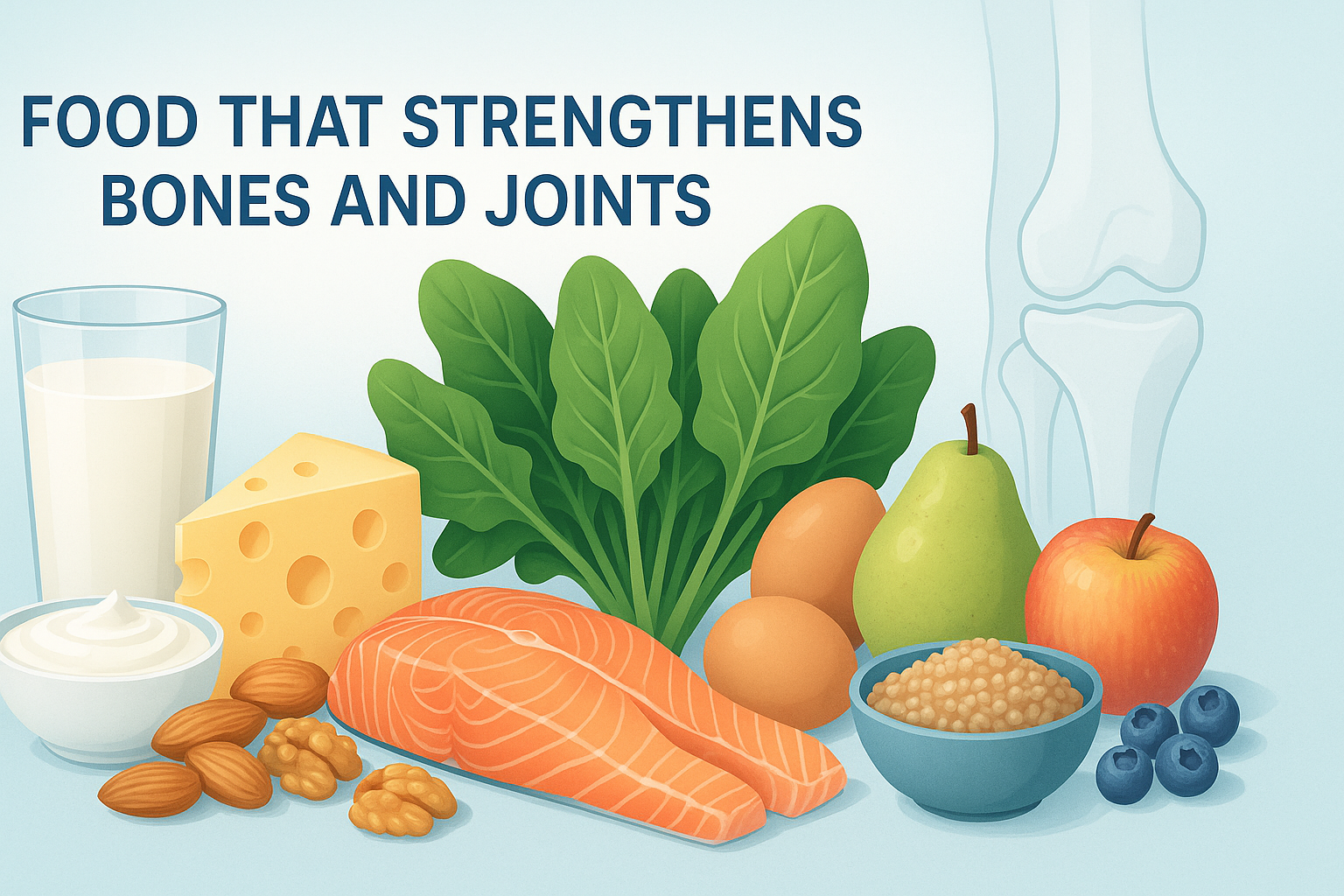
Dairy products: milk, yogurt, cheese
-
Green leafy vegetables: spinach, kale, broccoli
-
Tofu, sesame seeds, and fortified plant-based milk
Tip: Divide calcium intake throughout the day, as the body absorbs only a limited amount at a time.
2. Vitamin D: The Calcium Companion
Even with sufficient calcium, your bones cannot absorb it effectively without vitamin D. This vitamin plays a key role in calcium metabolism and bone mineralization. It also supports muscle function, which is vital for joint stability.
Best Sources:
-
Sunlight exposure (15–20 minutes daily)
-
Fatty fish such as salmon, tuna, and mackerel
-
Fortified milk and cereals
-
Egg yolks
Tip: Individuals with limited sun exposure or darker skin tones may require vitamin D supplements after consulting their doctor.
3. Protein: The Muscle Protector
Protein provides the amino acids needed to build and repair muscles, tendons, and ligaments — all of which support and protect joints. It also contributes to bone structure by stimulating bone-forming cells.
Best Sources:
-
Lentils, beans, tofu, and paneer
-
Lean meats, poultry, eggs, and fish
-
Nuts, seeds, and dairy products
Adequate protein intake is especially important for older adults, as it helps maintain muscle mass and prevents frailty.
4. Magnesium: The Bone Strengthener
Magnesium assists in converting vitamin D into its active form, which supports calcium absorption. It also helps regulate nerve function and muscle contraction, reducing joint stiffness and cramps.
Best Sources:
-
Almonds, cashews, walnuts
-
Whole grains, bananas, and avocados
-
Dark leafy vegetables and legumes
A magnesium-rich diet not only strengthens bones but also promotes overall cardiovascular and metabolic health.
5. Omega-3 Fatty Acids: The Anti-Inflammatory Hero
Omega-3s are essential fats that play a powerful role in reducing inflammation — a major contributor to joint pain and arthritis. They help lubricate joints, improve flexibility, and slow cartilage degeneration.
Best Sources:
-
Fatty fish such as salmon, sardines, and trout
-
Flaxseeds, chia seeds, and walnuts
-
Fish oil or algal oil supplements
Regular intake of omega-3 fatty acids helps relieve joint stiffness and supports long-term joint health.
Anti-Inflammatory Superfoods for Joint Health
Chronic inflammation is a silent culprit behind many joint disorders, including osteoarthritis and rheumatoid arthritis. Incorporating anti-inflammatory foods into your diet can significantly reduce joint pain, stiffness, and swelling.
Top Anti-Inflammatory Foods:
-
Turmeric: Contains curcumin, a potent compound that reduces joint inflammation.
-
Ginger: Acts as a natural pain reliever and helps improve joint mobility.
-
Olive Oil: Rich in healthy monounsaturated fats and antioxidants.
-
Berries: Packed with vitamin C and polyphenols that combat oxidative stress.
-
Green Tea: Contains catechins that protect cartilage and reduce inflammation.
Tip: Combine these foods with a balanced diet for cumulative benefits.
The Role of Micronutrients and Antioxidants
Micronutrients like vitamin C, vitamin K, zinc, and selenium play supporting roles in bone and joint maintenance.
-
Vitamin C: Helps in collagen synthesis — essential for cartilage, tendons, and ligaments.
Sources: Citrus fruits, strawberries, bell peppers, and guava. -
Vitamin K: Promotes bone mineralization and prevents excessive bone loss.
Sources: Kale, spinach, and broccoli. -
Zinc and Selenium: Support tissue repair and protect against oxidative damage.
Sources: Nuts, seeds, whole grains, and seafood.
A diet rich in antioxidants helps neutralize free radicals that can damage bone and joint tissues.
Lifestyle and Diet Tips for Stronger Bones and Joints
Nutrition works best when combined with the right lifestyle habits. Here’s how to optimize your diet for lifelong bone and joint health:
-
Stay Active: Weight-bearing exercises like walking, dancing, or light jogging stimulate bone strength.
-
Maintain a Healthy Weight: Excess body weight increases pressure on joints, accelerating cartilage wear.
-
Stay Hydrated: Joint cartilage is made up of water — staying hydrated keeps it flexible and cushioned.
-
Avoid Excess Salt and Caffeine: High intake can interfere with calcium absorption.
-
Limit Junk Food and Processed Items: They promote inflammation and nutrient imbalance.
-
Moderate Alcohol and Quit Smoking: Both can weaken bones and slow the healing process.
Consistency is key — long-term dietary habits matter more than short-term changes.
Foods to Limit or Avoid
Certain foods can worsen inflammation and weaken bones when consumed frequently:
-
Processed and fried foods
-
Sugary snacks and sodas
-
Refined carbohydrates
-
Red and processed meats
-
High-sodium packaged foods
Minimizing these will help improve both bone density and joint comfort.
Frequently Asked Questions (FAQs)
Q1. Is calcium alone enough for strong bones?
A: No. While calcium is essential, your body also needs vitamin D, magnesium, and protein for proper absorption and bone building.
Q2. Are supplements better than natural foods?
A: Natural food sources are always superior because they provide multiple nutrients and antioxidants. Supplements should be used only if recommended by a doctor.
Q3. Does junk food affect joint health?
A: Yes. Processed and fried foods increase inflammation, which can worsen joint pain and arthritis symptoms.
Q4. Can diet really prevent osteoporosis and arthritis?
A: Absolutely. A nutrient-dense, balanced diet along with physical activity can delay bone loss, reduce inflammation, and maintain joint flexibility.
Q5. How much protein should I eat daily for bone health?
A: On average, adults should consume 0.8–1 gram of protein per kilogram of body weight daily. Active individuals may need more.
Conclusion
A balanced, nutrient-rich diet is one of the most powerful tools for keeping your bones strong and your joints flexible. By incorporating calcium-rich foods, vitamin D sources, lean proteins, and anti-inflammatory ingredients into your meals, you can effectively prevent conditions like osteoporosis and arthritis.
Remember — good nutrition today is an investment in your mobility and independence tomorrow. Pair your healthy diet with regular exercise, proper hydration, and a positive lifestyle for lasting bone and joint wellness.
If you have ongoing joint pain, stiffness, or a family history of bone disorders, consult your orthopedic specialist or a nutrition expert for personalized dietary advice. Strong bones and healthy joints truly begin at your table.
Frequently Asked Questions (FAQs)
No. While calcium is essential, your body also needs vitamin D, magnesium, and protein for proper absorption and bone formation.
Natural food sources are always superior because they provide multiple nutrients and antioxidants. Supplements should be taken only if recommended by a doctor.
Yes. Processed and fried foods increase inflammation, which can worsen joint pain and arthritis symptoms.
Absolutely. A nutrient-rich, balanced diet combined with physical activity can slow bone loss, reduce inflammation, and maintain joint flexibility.
On average, adults should consume 0.8–1 gram of protein per kilogram of body weight daily. Active individuals may require more.