Frozen shoulder is often dismissed as a “self-limiting” problem.
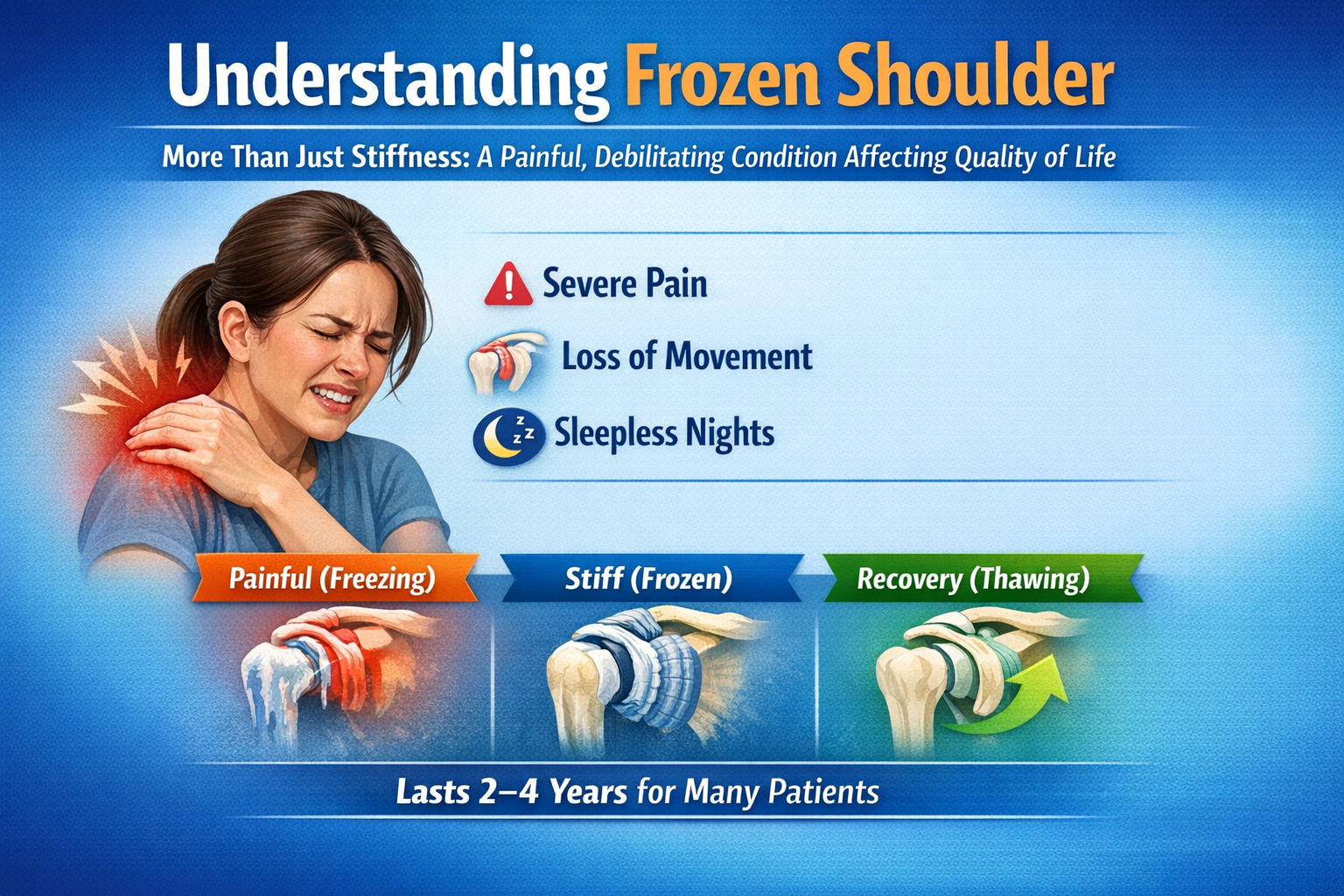
In reality, it is one of the most painful and disabling shoulder conditions, affecting sleep, work, mental health, and overall quality of life — often for years, not months.
What Frozen Shoulder Really Is
Frozen shoulder (also called adhesive capsulitis) is a condition in which the capsule surrounding the shoulder joint becomes inflamed, then thickened and tight.
This leads to:
- Severe pain
- Progressive stiffness
- Loss of shoulder movement
It is not just stiffness and not just muscle tightness.
How Common Is Frozen Shoulder?
Frozen shoulder affects around 2–5% of the general population.
It is more common:
- Between the ages of 40 and 65
- In women
- In people with diabetes or thyroid disorders
In some patients, the opposite shoulder may get affected later as well.
Frozen Shoulder Is Not Always “Self-Limiting”
Many patients are told that frozen shoulder will settle on its own.
However, clinical experience and modern studies show that:
- Symptoms can last 2–4 years
- A significant number of patients have persistent pain or stiffness
- Full recovery of movement is not guaranteed in all cases
This explains why many patients feel frustrated and misunderstood.
Why Frozen Shoulder Hurts So Much
Frozen shoulder pain is not imagined or exaggerated.
Inside the joint:
- Inflammatory chemicals irritate pain fibres
- New pain-sensitive nerves develop
- Thickened capsule restricts movement
- Night pain disrupts sleep, increasing fatigue and distress
Pain, stiffness, and mental stress often feed into each other.
The Three Clinical Phases of Frozen Shoulder
Frozen shoulder follows predictable stages, and treatment must match the stage.
| Phase | What Patients Feel | What Is Happening | What Helps |
|---|---|---|---|
| Painful (Freezing) | Severe pain, night pain, pain with small movements | Active inflammation | Pain relief, gentle movements, injections when needed |
| Stiff (Frozen) | Pain reduces, stiffness dominates | Capsular tightening and fibrosis | Structured physiotherapy, controlled stretching |
| Recovery (Thawing) | Gradual improvement in movement | Capsule slowly loosens | Progressive rehab and strengthening |
Trying to force movement during the painful phase often makes symptoms worse.
Does Physiotherapy Help?
Yes — physiotherapy is the foundation of treatment.
But it works best when it is:
- Stage-specific
- Guided and supervised
- Gradually progressed
Aggressive stretching too early, or random exercises, often delay recovery.
What About Injections?
Steroid injections can:
- Reduce pain
- Improve sleep
- Allow better participation in physiotherapy
However:
- Their effect is usually temporary
- Accuracy of injection matters
- Blood sugar monitoring is important in diabetics
Injections are tools, not permanent solutions.
Is Surgery Required for Frozen Shoulder?
Most patients recover without surgery.
Surgery is considered only when:
- Pain and stiffness persist despite adequate treatment
- Daily function remains severely limited
- The patient understands risks and expectations
Surgery is not the first step.
Frozen Shoulder and Diabetes
Patients with diabetes:
- Experience more severe symptoms
- Recover more slowly
- May have residual stiffness
Early diagnosis and careful, patient rehabilitation are especially important in this group.
The Hidden Impact of Frozen Shoulder
Frozen shoulder affects more than the shoulder.
It can lead to:
- Poor sleep
- Time off work
- Repeated medical visits
- Emotional distress
This is why a comprehensive approach is needed.
Take-Home Message
Frozen shoulder is a real, painful, and disabling condition.
With:
- Early recognition
- Phase-appropriate treatment
- Patience and guided rehabilitation
Most patients can recover without unnecessary surgery and without prolonged suffering.