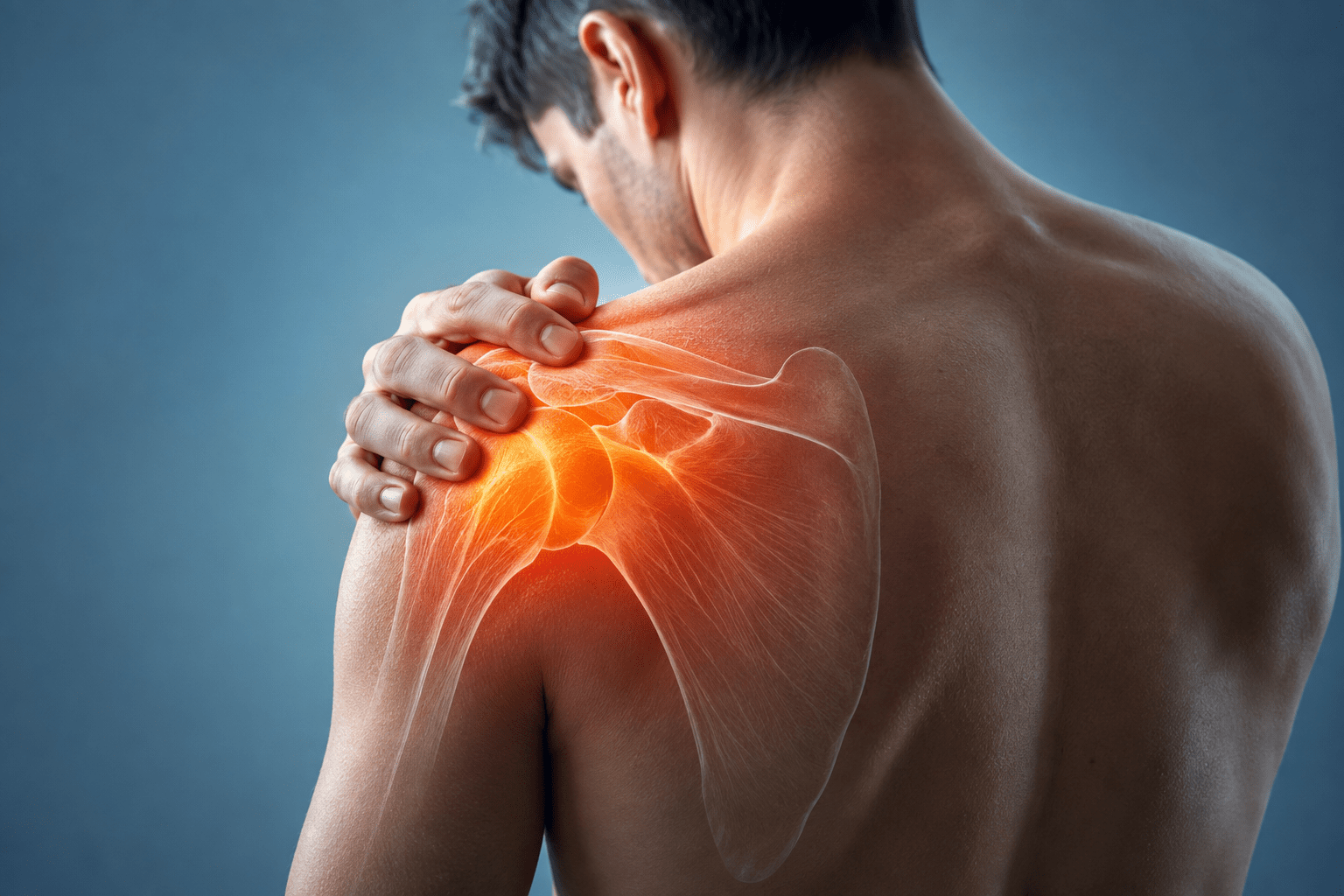
If you are searching for the shoulder pain doctor in South Delhi, persistent joint discomfort and arm stiffness should never be dismissed as minor fatigue. Shoulder pain is commonly mistaken for a simple sprain or poor sleeping posture, but early clinical evaluation by the best shoulder pain doctor in South Delhi ensures accurate diagnosis before chronic muscle wasting or tendon retraction occurs.
Knowing when shoulder pain is an ordinary strain versus a structural issue—such as a rotator cuff tear, subacromial impingement, or adhesive capsulitis frozen shoulder is essential for preserving long-term shoulder mobility.
When to Consult the Best Shoulder Pain Doctor in South Delhi
A minor muscle strain typically resolves within a few days of basic rest. According to clinical guidance from orthopaedic specialist Dr. Naman Wahal, a comprehensive evaluation is required if you experience any of the following 6 warning signs:
-
Progressive Rather Than Improving Symptoms: Discomfort or functional limitation that worsens over time instead of resolving like a standard muscle strain.
-
Persistent Symptoms Beyond 2–3 Weeks: Aches that continue despite adequate rest, simple painkillers, and daily activity modification.
-
Disturbed Sleep & Night Pain: Pain that sharpens when lying down on the affected side or repeatedly wakes you during the night.
-
Loss of Arm Function: Difficulty lifting the arm overhead, reaching behind your back, dressing, or performing basic daily tasks.
-
True Muscular Weakness: Sudden or progressive loss of arm strength—especially after an injury or fall—raising strong suspicion of a significant rotator cuff tear.
-
Progressively Decreasing Movement: A gradual loss of joint range in all directions, which is characteristic of frozen shoulder (adhesive capsulitis) rather than a localized muscle pull.
Common Shoulder Conditions: Distinguishing the Symptoms
| Clinical Condition | Primary Symptom Pattern | Typical Cause / Trigger | First-Line Approach |
| Rotator Cuff Tear | Sharp weakness, night pain, catching sensation while lifting arm | Traumatic fall, heavy lifting, or chronic age-related tendon wear |
Diagnostic imaging, guided rehab, or keyhole repair
|
| Frozen Shoulder (Adhesive Capsulitis) | Progressive global stiffness, severe restriction in lifting/rotating arm | Capsule inflammation, diabetes, post-immobilization stiffness |
Hydrodilatation, targeted physio mobilization
|
| Subacromial Impingement | Pinching pain in the arc between 60° and 120° arm elevation | Repetitive overhead activities, bone spur, inflamed bursa |
Posture correction, anti-inflammatory care, physio
|
| Shoulder Instability / Labral Tear | Sensation of the joint slipping out, clicking, feeling loose | Sports injuries, shoulder dislocations, high-impact trauma |
Arthroscopic stabilization, dynamic rehab
|
🩺 Doctor’s Clinical Perspective: Misconception vs. Reality
CLINICAL INSIGHT & EXPERT NOTE – DR. NAMAN WAHALThe Common Misconception:If I consult a shoulder surgeon early, I will immediately be advised surgery.The Clinical Reality:“Early consultation often helps avoid unnecessary surgery by establishing the correct diagnosis and starting condition-specific treatment early.It also prevents excessive delay in conditions where time matters. For example, some rotator cuff tears can increase in size and develop muscle atrophy or fatty degeneration over time, potentially making later repair more difficult. Similarly, identifying the actual cause of pain early prevents months of inappropriate, ineffective treatment.My Core Clinical Principle:Early diagnosis doesn’t mean early surgery. It means identifying who can safely be treated conservatively and who may be harmed by waiting too long.”— Dr. Naman Wahal, Consultant Orthopaedic Surgeon, StepUp Joints
Diagnostic & Treatment Pathways at StepUp Joints
At StepUp Joints, shoulder conditions are managed through an integrated, multidisciplinary model:
Digital Imaging Diagnostics ➔ Precision Clinical Diagnosis ➔ Conservative Joint Preservation ➔ Surgeon-Guided Rehab
-
Same-Day StepUp Digital Diagnostics: Immediate, high-resolution Digital X-ray and StepUp Labs blood profiles at our Lajpat Nagar centre to evaluate joint alignment, bone spurs, and inflammatory markers.
-
Joint Preservation & Conservative Care: Non-surgical management utilizing targeted anti-inflammatory regimens, ultrasound-guided therapeutic injections, and posture modification.
-
Surgeon-Guided In-House Physiotherapy: Dedicated physiotherapy and rehabilitation coordinated directly with the surgical team for personalized rotator cuff strengthening, joint capsule stretching, and scapular stabilization.
-
Minimally Invasive Arthroscopic Surgery: When structural tendon tears or recurrent dislocations require surgical repair, minimally invasive shoulder and sports injury arthroscopy ensures anatomical restoration with minimal soft-tissue disruption and fast-track recovery.
(According to peer-reviewed orthopaedic research on rotator cuff pathology, timely evaluation of structural tears prevents long-term tendon degeneration.)
Frequently Asked Questions (FAQs)
Q1: Can a rotator cuff tear heal without surgery?
Partial tears and tendon inflammation often improve with structured physiotherapy, medical management, and activity modification. Full-thickness tears with significant muscle weakness benefit from early arthroscopic repair to prevent muscle atrophy and retraction.
Q2: What is the difference between Frozen Shoulder and a Rotator Cuff tear?
A rotator cuff tear typically causes sharp pain and weakness with specific movements (especially overhead lifting), while passive movement assisted by an examiner remains possible. Frozen shoulder causes progressive, generalized stiffness where the joint cannot move past a certain point even with assistance.
Q3: When should I consult the shoulder pain doctor in South Delhi?
You should consult a specialist if pain lasts more than 2–3 weeks, disrupts your sleep, causes true arm weakness, or progressively restricts your daily arm movements.
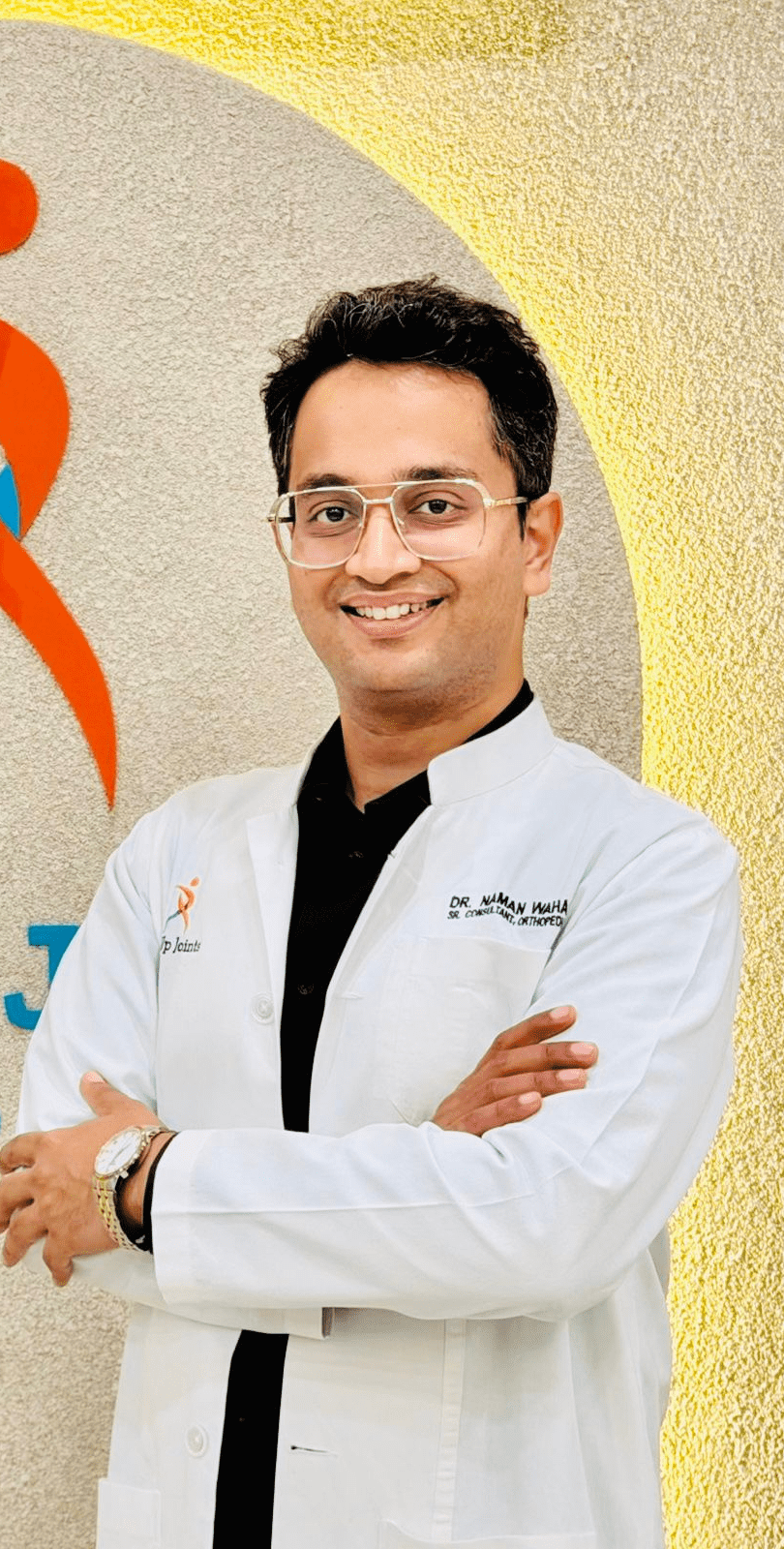
Dr. Naman Wahal is a Senior Consultant Orthopaedic & Shoulder Surgeon and Director at StepUp Joints, Lajpat Nagar 4, New Delhi. With over 12+ years of clinical experience and 10,000+ surgical procedures, he specializes in advanced shoulder arthroscopy, rotator cuff repair, sports injury management, joint preservation, and joint replacement.
• Qualifications & Training: MBBS, MS Orthopaedics (AIIMS, New Delhi) | Shoulder & Elbow Surgery Fellowship (ATOS Klinik, Munich, Germany)
• Current Affiliations: Director at StepUp Joints (Lajpat Nagar 4) & Senior Consultant at Fortis Escorts Hospital (Okhla)
• Clinical Expertise: Rotator Cuff Tears, Shoulder Instability/Bankart Repair, Frozen Shoulder, Knee Arthroscopy/ACL, and Joint Preservation