THE TRUTH ABOUT PSYCHOSOMATIC PAIN- A PSYCHIATRIST’S
PERSPECTIVE
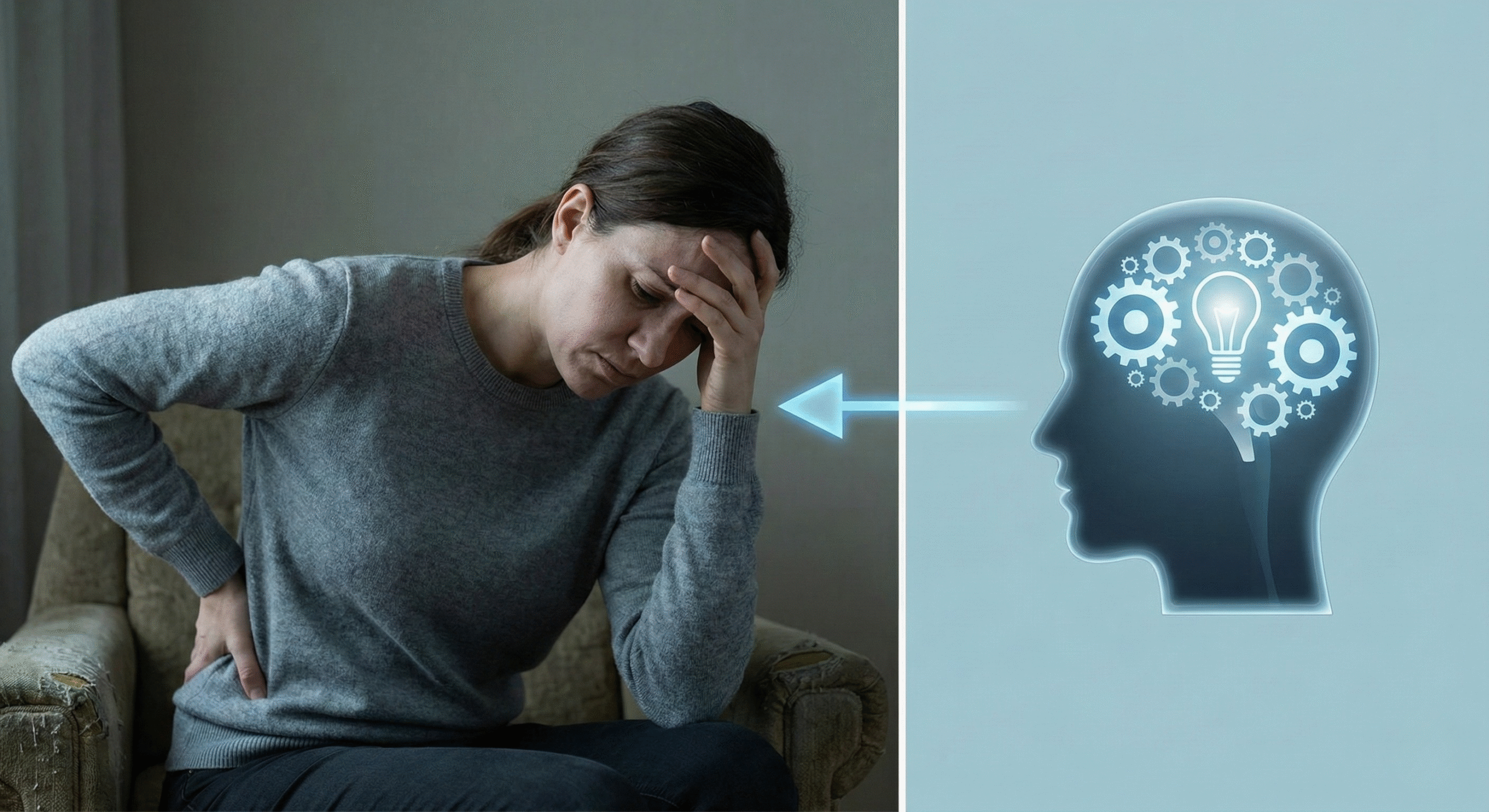
A large population of people who visit, approximately 30-40%, an orthopaedics clinic or physiotherapy have a strong psychosomatic component. Your mind and body are connected. Stress, anxiety,
depression can be the causes behind the “CHRONIC PAIN”, the “DISPROPOTIONATE PAIN”, the pain which is also associated with other symptoms like – Feeling always tired, headaches/migraines frequently, palpitations, sleep at times, disturbances, feeling sad and anxious all the while.
These Psychosomatic components also delay the recovery post-surgery and limit the general functionality of the individual. Among such physical symptoms, are mainly influenced by our thoughts, emotions, and stress levels.
Listing the types of psychosomatic disorders as per
DSM-5:
Somatoform Disorder
Having 1 or more disturbing physical
symptoms
Spending a lot of time and energy troubling
about them
Multiple doctor visits with no clear cause
detected
Pain that keeps on recurringILLNESS ANXIETY DISORDER
Excessive fear of a serious disorder
Fear is more than the symptom itself.
Repeated reassurance tests.
Thoughts for a “simple backpain” like –
What if it is a tumor? What if it is permanent damage? If so, will it spread to my
whole body?FUNCTIONAL NEUROLOGICAL SYMPTOM DISORDER
These symptoms simulate a nerve or a brain
problem, it can be related to a psychosocial stress factor.
Sudden weakness
Fainting spells
Difficulty walking
Non-epileptic seizure
What are some neurochemical causes for Psychosomatic pain?
LOW SEROTONIN – can lead to sharper
perception of pain, slower recovery from injury and dysregulated pain signals
to the brainGLUTAMATE – This is an excitatory neurotransmitter
characterized by becoming hyperactive in chronic stress and emotional overload.STRESS HORMONES – CORTISOL AND ADRENALINE – When
these two are released it leads to increase in joint inflammation and tightening
of muscles.DOPAMINE REDUCTION – It reduces the motivation level
and pain tolerance. Common in Depression and chronic stress.
How do we treat Psychosomatic complaints?
Ruling out structural problems, assisted by orthopaedics.
Error correction by LIFESTYLE SUPPORT
Sleep hygiene
Nutritional support (removing the food
that elevates the body’s inflammation level)Relaxation techniques
Guided physiotherapy
Treatment of underlying Anxiety, Depression with
drugs and counseling when necessary.
Your “PAIN” needs a team to heal. With proper mental health support, the recovery is quicker, smoother, and more sustainable.