
Medically guided by Dr. Pulak Vatsya (MBBS, MS Orthopaedics, DNB, MNAMS)
Doctor’s Clinical Statement
Hip replacement surgery has evolved in many ways to help patients achieve better post-operative pain relief, improved mobility, and faster recovery. Dr. Pulak Vatsya (MBBS, MS Orthopaedics, DNB, MNAMS) informs, “Bikini incision is a skin-crease incision made as part of the surgical procedure called direct anterior approach to hip replacement. When performed in appropriately selected patients, it can provide an imperceptible scar while enabling the surgeon to perform the critical steps of the hip replacement procedure safely. However, the choice of approach should be dictated by patient factors such as anatomical and clinical considerations as well as the surgeon’s experience and should not be dictated by purely cosmetic considerations. For patients interested in learning more about the Bikini incision hip replacement in Delhi, here’s a brief overview of the surgery, who are the ideal candidates and what to expect during the recovery process.
Summary
Bikini approach hip replacement is a variation of direct anterior approach hip replacement surgery performed through an incision made in a skin fold at the groin area. This surgical technique allows the surgeon to place an implant in a way that leaves a small less noticeable scar on the patient, which is not always possible with other methods of hip replacement.
While the bikini incision for hip replacement does provide a less invasive option for exposure of the femoral head, it is not an ideal choice for all the patients due to individual anatomical variation. There are a number of factors that need to be considered before selecting a specific method for hip replacement such as patient’s age, weight, sex, overall health, history of previous hip surgery, hip deformity and implant position. Those considering a bikini approach hip replacement should consult an expert orthopaedic surgeon to discuss the options available and decide on the most appropriate treatment plan.
What Is a Bikini Approach Hip Replacement?
A bikini approach hip replacement is a type of hip replacement surgery performed through a shortened oblique incision made along the natural skin crease near the groin.
As opposed to the standard longitudinal incision, the bikini incision follows the natural line of the skin fold, which can make it less conspicuous after the healing process
However, the type of surgical approach does not affect the nature of the hip replacement itself, which is a procedure to replace the damaged hip joint with prosthetic elements.
Therefore, patients looking for a Bikini incision hip replacement in Delhi should be aware that the term refers to the placement and direction of the incision, but the procedure is a total hip arthroplasty with an anterior approach nonetheless.
Why Is the Bikini Incision Different?
The traditional anterior approach often utilizes a longitudinal incision made at the front of the hip. The bikini incision is placed more horizontally along the natural crease in the skin.
Some potential benefits of a bikini incision may include:
- A scar that may appear more discreetly within the skin crease.
- Enhanced cosmetic satisfaction for some patients.
- A direct anterior surgical approach to the hip joint.
- Compatibility with current rehabilitation and early mobilization protocols.
For patients considering Bikini incision hip replacement Delhi the cosmetic aspect of the incision placement is a significant consideration but patient safety and appropriate candidate selection remains the focus.
Who May Need Hip Replacement?
Hip replacement may be recommended when the joint becomes severely damaged and painful or restricted movement starts to interfere with normal life.
Common indications for hip replacement include:
Progressive Hip Osteoarthritis
Progressive degenerative changes in the cartilage covering the joint surfaces can result in patients presenting with persistent groin or hip discomfort, stiffness, diminished walking capacity, and functional limitations.
Femoral Head Lesions
Various conditions affecting the blood supply to the femoral head, such as avascular necrosis, can lead to collapse of the hip joint, resulting in debilitating pain.
Hip Fractures
In some cases, fractures may be so severe that they become indications for hip replacement.
Other Joint Diseases
Several inflammatory conditions, childhood hip diseases, developmental deformities, or traumatic injuries to the joint can also be factors in the development of advanced joint degeneration.
A surgeon typically evaluates symptoms and physical findings, imaging results, age, level of activity, overall health, and prior treatment in selecting a treatment option for an individual patient.
What Happens During Bikini Approach Hip Replacement?
The procedure was performed under adequate anaesthesia in an operating-room environment. The surgeon creates the bikini-style incision at the natural skin crease and carefully works through the anterior tissues to access the hip joint.
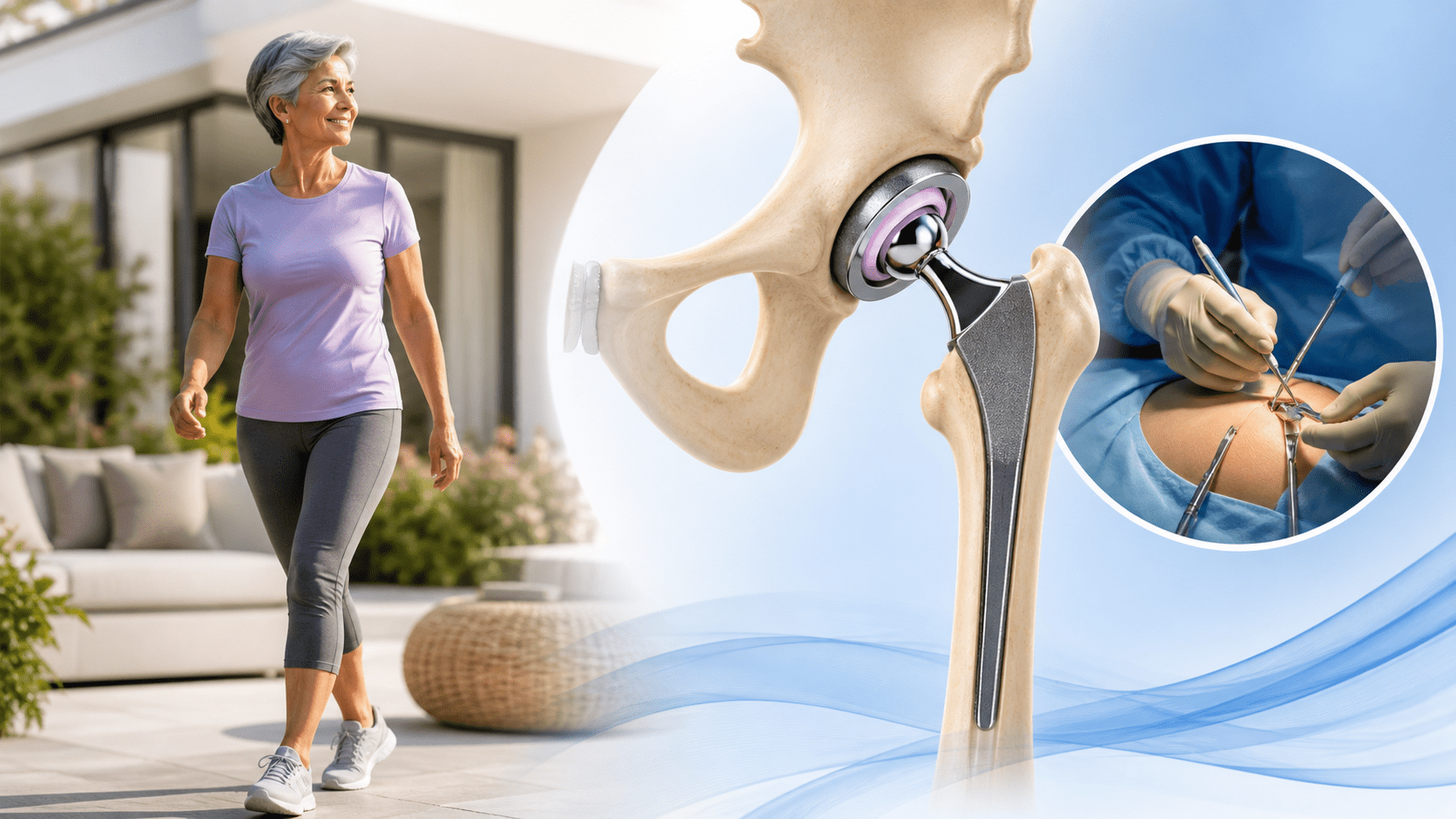
The damaged portion of the femur is removed, the acetabulum is prepared, and artificial parts are inserted to reconstruct the hip joint. The surgeon then confirms implant position, leg length, stability, and range of motion before closing the incision.
The specific surgical technique varies from patient to patient and surgeon to surgeon.
The bikini incision does not represent a completely separate type of hip replacement. It is an incision option used with the direct anterior approach.
This is an important distinction for those researching Bikini incision hip replacement Delhi, as a differently positioned incision does not necessarily mean that the procedure is safer, faster, or suitable for every patient.
Cosmetic Benefits of the Bikini Incision
One of the reasons patients choose to have a Bikini incision hip replacement at Delhi is the prospect of a less conspicuous wound.
The incision follows a skin fold, as opposed to being vertical on the front of the thigh. Because of the location of the incision, some patients find the possibility of the final appearance of the scar more pleasant.
Scar outcome varies depending on skin type, healing tendency, surgical techniques, scar propensity, and anatomy;
patients should discuss expectations with their surgeons instead of assuming that all bikini incisions have the same cosmetic appearance.
Does Bikini Hip Replacement Provide Faster Recovery?
Patients frequently look for bikini incision hip replacement Delhi because they relate minimally invasive surgery to faster healing.
The direct anterior technique is often integrated into enhanced-recovery Programmer that prioritize the introduction of patients who are most likely to benefit from physical activity, analgesia, physiotherapy, and safe ambulation protocols.
Nevertheless, the healing process is influenced by several variables, including:
- The patient’s age and general health before to surgery.
- The amount of muscular tissue.
- The condition of the bones.
- The extent of joint damage.
- The complexity of the procedure.
- The rehabilitation programme.
- The level of discomfort.
- Other underlying medical conditions.
In addition, the bikini incision should not be considered a guarantee for rapid healing.
The entire rehabilitation regimen, together with therapy and nourishment, must be taken into account when determining the pace of healing after a hip operation.
Minimally Invasive Hip Arthroplasty: What Does It Mean?
The term minimally invasive hip arthroplasty generally refers to techniques that are designed to minimize soft-tissue trauma while still allowing proper implantation of the prosthetic components
A bikini incision may be incorporated into a minimally invasive direct anterior approach, but “minimally invasive” does not mean risk-free or appropriate for every patient.
An experienced surgeon must also be able to achieve sufficient exposure, protect key structures, appropriately position the components, and deal with any unforeseen anatomical challenges.
For patients considering Bikini incision hip replacement Delhi, surgeon experience is particularly important since the incision and surgical field require careful anatomical planning.
What Are the Possible Risks?
Every hip replacement surgery carries inherent risks, including but not limited to the following:
Infection: A potential complication of hip replacement surgery, which can manifest itself around the surgical incision or the replaced joint and requires an immediate medical evaluation.
Formation of blood clots: A known post-surgical complication, prevention measures of which are typically taken to avoid potentially serious consequences.
Nerve irritation: The lateral femoral cutaneous nerve, located near the incision site of the anterior approach, has the potential of causing temporary or permanent paresthesia of the thigh.
Wound complications: Due to the surgical location and approach, special attention and care are to be taken in the post-operative period.
Dislocation or instability: Despite the surgeons’ efforts to restore stability of the hip joint, instability and dislocation are still possible.
Leg-length inequality: Although the surgeon attempts to ensure that the length of the legs is equal, some patients may experience a slight shortening of the operated leg during the healing process.
Implant loosening or failure: Over time, the replaced joint may fail and require revision surgery.
However, the aforementioned possibilities are typically eliminated or reduced by a combination of preventative measures and the Orthopaedic surgeon’s experience and skill. Nevertheless, it is advisable to evaluate the potential risks in detail with one’s Orthopaedic surgeon before undergoing any orthopaedic procedure.
Recovery After Bikini Approach Hip Replacement
The process of rehabilitation starts right after the surgical intervention. Depending on the individual plan that the doctors create for a patient, one can resume sitting, standing, and walking with assistance shortly after the operation. Physiotherapy is essential to guarantee that the patient will be able to move safely and function normally, which requires time and effort.
A person will be able to return to most of their usual activities. However, during the first days after the surgery, they may need to adhere to the following instructions:
- Resume walking in accordance with the rehabilitation programme.
- Do the recommended exercises regularly.
- Keep the incision site clean and dry until it heals.
- Follow the suggested guidelines or restrictions.
- Use assistive devices when necessary until the walking is fully normalized.
- Keep all scheduled doctor appointments.
In a matter of weeks, a person will be able to walk more and resume day-to-day activities. They might also return to driving, work, and other forms of entertainment depending on their individual case, and with the doctor’s approval, they can gradually increase the distances they walk. A successful intervention and the healing process is only part of the rehabilitation, and it is crucial to continue regular follow-ups and physiotherapy.
Bikini Incision vs Traditional Hip Replacement Incision
One of the most frequent Bikini incision hip replacement Delhi is asking is whether using a bikini incision is automatically better than a traditional one.
The truth is that it is not. While it can offer a cosmetic benefit over the standard scar as it follows a natural skin crease.
The best option for the patient will depend on their individual case and the surgeon’s preference.
Other variables that must be taken into account are the degree of hip deformity, the need for revision surgery, the patient’s body type, anatomy, skin condition, general health, the experience of the surgeon, and the type of replacement needed. The most critical priority should always be a safe procedure with accurate implant positioning that lasts many years.
Why Surgeon Experience Matters
The skill and experience of the surgeon are essential while choosing any hip replacement approach.
Bikini incision can give a beautiful scar result; however, the surgeon has to know the anatomy of the incision place to avoid damaging the nerves and soft tissues surrounding it, provide adequate exposure, and implant correctly.
As a result, patients considering Bikini incision hip replacement Delhi should discuss their diagnosis with their orthopaedic surgeon to ensure that the direct anterior approach is suitable for them, ask about the expected recovery and potential risks, and determine the most comfortable incision.
Who May Not Be an Ideal Candidate?
Not all patients are candidates for the bikini-incision anterior approach to total hip replacement.
It may be especially important to do an individual assessment in patients with
- complex hip deformity
- previous hip surgery
- significant soft-tissue problems
- severe anatomical abnormalities
- complex revision needs
medical conditions that might compromise wound healing or surgical risk
This does not mean that these patients are not candidates for hip replacement, but rather that the surgical approach should be individualized based on an assessment of the whole picture.
What Can Patients Expect From Modern Hip Replacement?
Modern hip replacement is designed to accomplish multiple objectives:
Pain relief: Eliminating suffering associated with advanced stages of hip joint disease.
Improving mobility: Restoring the patient’s capacity to engage in everyday activities.
Enhanced functionality: Returning the hip joint to its normal range of motion and stability.
Early rehabilitation: The accelerated functional recovery made possible by physiotherapy.
Durability: A long-term solution facilitated by the appropriate choice of implant and surgical precision.
A less obvious but not any less important advantage is the option to use the bikini incision that allows for concealment of the surgical mark under bikini or swimsuit attire.
When seeking a Bikini incision hip replacement Delhi, make sure to evaluate the process as a whole, considering the importance of each particular stage, from diagnosis and implant selection, through the surgical procedure itself and the rehabilitation to follow.
Frequently Asked Questions
1. Is bikini incision hip replacement the same as anterior hip replacement?
The bikini incision approach is one of the options for a direct anterior approach to total hip replacement. The approach and the incision are two different terms that should not be, however, confused with one another.
2.Does a bikini incision result in less scarring?
The bikini incision is placed along the natural skin crease, which may make the scar less noticeable for some patients. Scar visibility is subjective and may depend on an individual’s unique reaction to the healing process.
3.Is bikini incision hip replacement less painful?
Pain is subjective and unpredictable in most cases. A bikini incision should not be associated with reduced post-surgery discomfort.
4.How soon can a patient walk after a bikini incision hip replacement?
Patients are allowed to walk only under the supervision of medical professionals already on the day of the surgery. The faster a patient can walk, the sooner they can return home.
5.Is bikini incision hip replacement right for every patient?
It is not. A patient’s anatomy, diagnosis, weight, previous hip surgeries, chronic diseases, and the surgeon’s experience should all be considered.
6.Are there any risks or complications associated with a bikini incision?
Numbness or unpleasant sensations on the upper part of the thigh are often associated with the lateral femoral cutaneous nerve irritation.
7.How long does a hip replacement last?
The longevity of the prosthesis is individual for each patient. It depends on the patient’s age, weight, level of physical activity, the quality of the prosthetic materials, proper post-surgery rehabilitation, and many other contributing factors.
8.What questions should a patient ask before a bikini incision hip replacement?
The patient should ask their surgeon if the direct anterior approach is indicated for their case, why the surgeon has chosen the bikini incision, possible risks and complications, and what the post-surgery rehabilitation will be like based on the incision type.
Final Takeaway
A Bikini incision hip replacement Delhi procedure consists of a total hip arthroplasty combined with an oblique skin-crease incision utilized commonly in the direct anterior approach. It has a promising cosmetic benefit that can make it a desirable option for carefully chosen patients, however, the incision should not be prioritized over the safety or functionality of the surgery.
The decision of which approach to select is based on patient-specific anatomical considerations, diagnostic imaging, general health needs, the technical experience of a surgeon, particular implants utilized, post-operative rehabilitation and individual functional outcomes.
For patients considering a Bikini incision hip replacement Delhi, an evaluation by an experienced orthopaedic specialist can aid in determining if this approach is indicated or what other treatment approach is best suited for achieving safety, functionality, recovery and patient-specific outcome goals.
Medical Disclaimer: The information contained on this website is merely for general educational purposes and cannot replace individual medical consultation, diagnosis or a tailor-made treatment plan. Surgical indications and treatment options should be determined only after evaluating by a qualified orthopaedic specialist.