Medically guided by Dr. Neha Narula (PT), Head of Physiotherapy & Rehabilitation
Doctor Statement — Dr. Neha Narula (PT)
“For older adults, maintaining strength, balance and functional mobility is essential for staying independent and reducing the risk of falls. A personalized rehabilitation programme that combines progressive strengthening, balance drills, mobility exercises and safe functional training can help seniors move with greater confidence in their everyday lives. For individuals with osteoporosis, previous falls or joint problems, exercises should always be selected according to their specific physical condition and medical needs.”
Summary :
Senior joint health : Fall prevention and functional balance drills
The article, Senior joint health: Fall prevention and functional balance drills, educates on ways that senior mobility and strength rehabilitation can help to achieve safer movements, increase strength, balance and independence in older people. The article gives information on fall risk factors, functional balance drills, strengthening exercises, walking practice, joint mobility, osteoporosis considerations, the fear of falling and home safety measures. A physiotherapist can help to assess muscle strength, balance, gait pattern and functional capacity before designing an individualized programme. With the clinical expertise of Dr. Neha Narula (PT), Head of Physiotherapy and Rehabilitation, the article focuses on consistent and progressive rehabilitation to enable seniors to participate in everyday activities with confidence and reduce the physical risk factors associated with falls.
What Is Senior Mobility and Strength Rehabilitation?
Senior mobility and strength rehabilitation is a systematic process meant to improve the activity and mobility of elderly individuals through enhancing their body functions and muscle power.
Instead of being limited to isolated movements, a rehabilitation program can include the most common activities that seniors engage in daily, such as:
- Sitting
- Rising
- Walking
- Turning and walking backwards
- Climbing steps
- Balancing while standing
- Reaching
- Getting in and out of bed
- Elaborating joint range of motion
- Enhancing lower limb strength
A program can be tailored to an individual’s chronological age, physical fitness, comorbidities, past medical records, and current abilities and expectations.
A physiotherapist can evaluate the mobility patterns and indicate movement areas that could lead to complications during day-to-day activities.
Why Do Older Adults Become More Vulnerable to Falls?
Several factors can contribute to fall risk as people age. Muscle strength naturally decreases as people age, particularly if they do not remain physically active. Balance reactions also slow down.
Other potential causes include:
- Decreased leg strength
- Poor balance
- Limited range of motion
- Gait abnormalities
- History of falls
- Fear of falling
- Poor eyesight
- Medications
- Foot problems
- Environmental hazards
- Neurological or cardiovascular conditions
It does not mean that every older person will have significant mobility problems. Regular physical activity and appropriate rehabilitation can address many mobility limitations.
Senior mobility and strength rehabilitation, therefore, need to go beyond single-joint and single-muscle approaches to assess the impact of physical activity on the overall body.
The Connection Between Strength and Fall Prevention
Strong muscles are essential to day-to-day functions.
The muscles in the lower body, including the hips and legs, enable a person to stand, walk, climb, and recover from a stumble or wobble. In addition, core muscles play a role in balance. For instance, rising from a low chair involves the hips, knees, ankles, and trunk. If the leg muscles are weak, a person may have to use his or her arms to push the body up or have difficulty rising at all. Another illustration is that weak muscles can lead to slow walking or cause a person to be unprepared when faced with an obstacle.
A senior mobility and strength rehabilitation programme can allow gradual strengthening of the muscles without overexertion.
Functional Balance Training for Seniors
Balance training should always be practically oriented and sufficiently challenging.
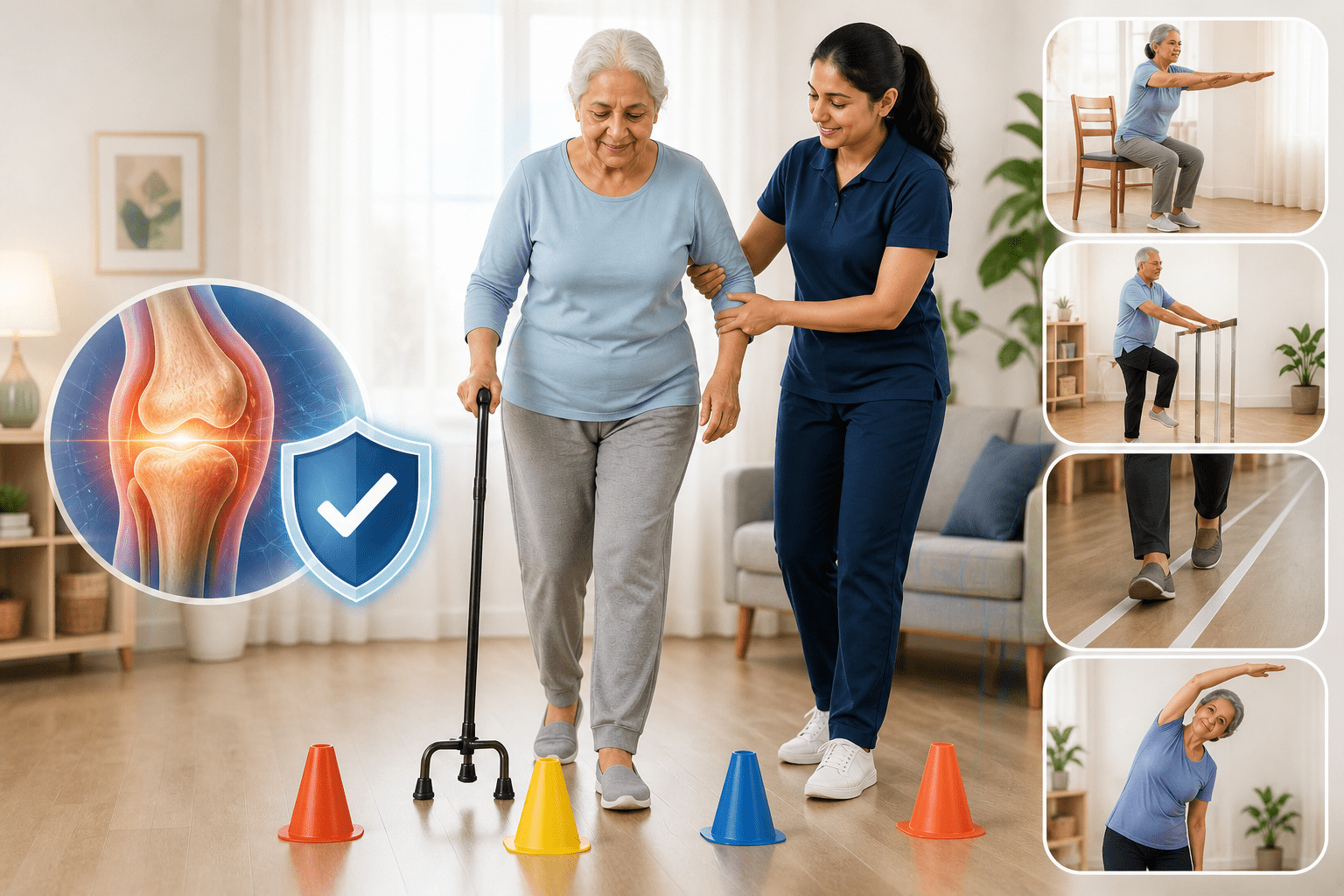
A physiotherapist can show the patient several useful exercises, such as:
1. The single-leg standing.
While holding a steady support, the patient has to try to hold a toe raise. This task is highly controlling of balance and coordination, so it has to be done with caution and only with enough support. It can be done at different levels of difficulty.
2. The heel-to-toe walking.
While walking in a straight line, the patient has to place one foot right in front of the other, trying to hold a balance. This exercise also requires much attention and has to be done in a safe area with enough support.
3. Shifting weight from one leg to another.
The patient has to shift their weight from one leg to another, trying to hold a vertical position. This task can be highly customizable and can be highly or less demanding based on the starting abilities of the patient. However, it always is useful, as it trains the ability to hold a new Centre of Mass position.
4. Sit to stand.
The patient has to sit down and then stand up from a chair. It is one of the most useful exercises, as it has considerable functional utility. This exercise is applicable to almost every patient, as it mimics a sitting-to-standing motion in every day-life.
5. Turning while walking.
It is often necessary to change direction while walking, and this capability can be trained. However, this exercise is highly dangerous and should be done only with enough supervision.
Strength Exercises for Older Adults
Strength training plays a vital role in senior mobility and strength rehabilitation programs.
Depending on the patient’s health status and physical capabilities, a physiotherapist might suggest a course of specific exercises targeting the following muscles:
- Quadriceps
- Hamstrings
- Gluteal muscles
- Calves
- Hip stabilizers’
- Core muscles
- Upper body
The suggested activities may involve the use of different equipment, such as elastic bands, and/or include such movements as supported squatting, sit-to-stand, heel raises, and others. The number of repetitions, resistance level, and the frequency of training sessions should be selected on an individual basis. A person whose activity level has been particularly low on a regular basis should not attempt to undertake a large amount of exercises at once. Instead, it may be wiser to start with less intense activities and gradually increase the load.
Osteoporosis and Exercise: Why Professional Guidance Matters
Osteoporosis decreases the bone strength, increasing the risk of fractures. Thus, it is essential to prevent falls.
Nevertheless, having osteoporosis does not mean that an older person may not exercise.
Exercise programs should include the properly selected weight-bearing activities, muscle strengthening, posture and balance training. The most appropriate ones and the intensity of workouts depend on how bad the condition of the bones is, whether the person already had a fracture, pains, mobility issues, and other health concerns.
Those with diagnosed osteoporosis, fractures, or severe balance problems should consult a healthcare professional before starting to exercise.
Senior mobility and strength rehabilitation programs can be particularly beneficial for people who need to adjust the regimen to achieve the best possible improvement without putting extra stress on the bones.
Improving Walking Ability
Walking is one of the most fundamental forms of functional mobility.
A physiotherapy assessment may include the evaluation of:
- Walking speed
- Step length
- Foot placement
- Posture
- Balance when walking
- Ability to turn
- Using a walking aid if required
- Navigating different surfaces
If a walking aid is required then an appropriate walking aid should be selected and adjusted.
A physiotherapist can also teach the individual how to use the aid correctly instead of simply providing one.
Walking regularly within safe limits can often maintain a person’s activity levels and confidence, however, one with significant instability should not be allowed to walk on their own when there is a significant risk of falling.
Flexibility and Joint Mobility
Stiff joints can make simple tasks challenging.
Limited range of motion in hips, knees, or ankles can limit your capacity to walk, stand, or climb stairs. Gentle mobility exercises may be introduced as part of a rehabilitative program. The goal is not necessarily to increase flexibility to the maximum but rather to allow comfortable movements that are required for day-to-day functions.
Rehabilitation of senior mobility and strength would combine a mobility and a strengthening program, instead of focusing on flexibility.
How Fear of Falling Can Affect Mobility
A fall can have psychological as well as physical repercussions.
Some elderly people become frightened of falling again and curtail their activities, leading to less exercise and possibly loss of independence.
Thus there is a vicious circle:
fall → fear → loss of confidence → weakness → less balance → more falls
A rehabilitation programme can help overcome this by encouraging the patient back to activity by starting them on exercises that they can manage and then gradually progressing the level of exercise.
Creating a Safer Home Environment
Exercise is only one part of fall prevention.
The living environment also needs to be checked for potential hazards.
- Some practical measures include
- removing loose rugs,
- keeping walkways clear,
- making sure there is enough light,
- having grab rails where necessary,
- using nonslip surfaces,
- keeping things within easy reach,
- avoiding wearing inappropriate footwear
- clearing stairs of obstacles and electrical cords.
Particular care should be taken in the bathroom as water on the floor can cause slips. A physiotherapist or an occupational health professional can give further advice if the person is very limited in their ability to move.
Building a Sustainable Exercise Routine
It is more important to be consistent than to occasionally perform complex exercises.
A properly designed maintenance programme could consist of a combination of the following:
Strength exercises: – to maintain strength capacity.
Balance exercises : – to challenge postural control.
Mobility drills: – to maintain functional joint mobility.
Walking or aerobic : – exercises for general conditioning.
Functional exercises : – to practice everyday movements.
The maintenance programme should be individualized according to the client’s lifestyle
Senior mobility and strength rehabilitation is most productive when the exercises can be incorporated into the client’s daily routine.
When Should a Senior See a Physiotherapist?
A professional assessment may be considered if you are experiencing any of these warning signs:
- You have had one or more falls
- You feel dizzy or lightheaded when walking
- You have difficulty rising from a chair
- You avoid physical activities due to the fear of falling
- There is significant loss of power or strength in your muscles
- You need an assistive device in order to walk
- You have osteoporosis or have suffered a fracture
- You have recently undergone orthopaedic surgery
- You have difficulty climbing up and down stairs
- You have stiffness in your joints that is persistent
- You feel less confident when performing everyday tasks
An assessment can allow you to discover limitations in mobility early on
What Happens During a Rehabilitation Assessment?
A physiotherapist may consider factors such as:
- Muscle strength
- Joint range of motion
- Static and dynamic balance
- Gait
- Function
- Posture
- Coordination
- The use of mobility aids
- Exercise tolerance
- And individual goals
The therapist can then develop a progressive program, starting from the individual’s abilities. For instance, if a person has difficulty rising from a chair, the therapist may progress them from supported standing to more challenging exercises over time. Meanwhile, the person who has good strength but impaired balance may need more focus on weight shifting and stepping activities.
This individualized approach is one of the key elements in senior mobility and strength rehabilitation.
Tips for Safe Exercise at Home
Older people need to focus on staying safe while doing exercises at home
maintain support
do exercises in a standing position away from a solid surface when instructed
wear supportive footwear
avoid exercising barefoot or wearing slippery footwear
start slowly
do not increase the intensity or duration of your exercises too quickly
avoid exercising through substantial pain
Muscle pains are normal after exercising but if you’re experiencing unusual or severe discomfort seek medical advice.
keep at it
It’s safer and more effective to do a little each day, rather than a lot once a week
listen to your doctor or physiotherapist
If you have osteoporosis, recent surgery, serious heart or lung problems, neurological conditions or other physical impairments you’ll need to listen to your doctor or physiotherapist
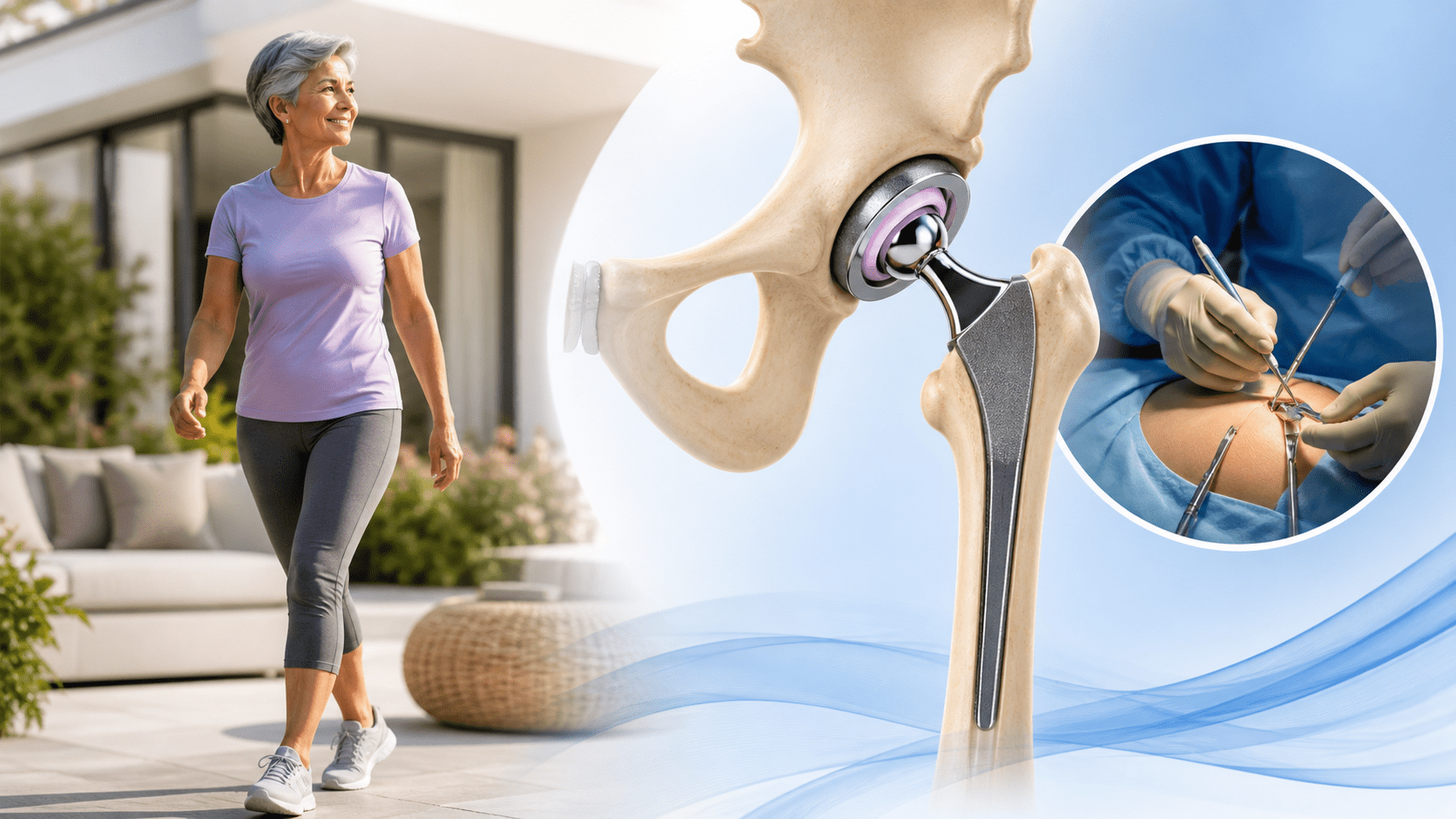
Senior Mobility and Strength Rehabilitation After Joint Problems
Arthritis, joint replacement, fractures and other orthopaedic problems can impact an older persons ability to move independently.
Following the appropriate medical assessment, a rehabilitation programme can aim to recover;
- Range of motion
- Muscle strength
- Walking ability
- Balance
- Functional independence
- Confidence with mobility stage of recovery, for example, following knee replacement, someone may need focusing on safe walking and gentle strengthening before progressing to more challenging balance and functional tasks.
Senior mobility and strength rehabilitation can help
The programme should be tailored to the person’s current bridge the gap between the clinical setting and the functional tasks that matter most in day to day life.
Conclusion
Maintaining mobility is an extremely important aspect of healthy aging. Through an appropriately designed rehabilitation programme, senior citizens can improve muscle strength, balance, joint range of motion and overall functional capacity. Fall prevention should include combined physical activity and medical management including medication reviews when appropriate, eye examinations, footwear and home safety assessments. Senior mobility and strength rehabilitation is an excellent opportunity to address physical limitations in a structured manner, which can help to promote independence and inspire confidence. In the case of senior citizens with osteoporosis, a history of falls, joint issues or significant muscle weakness, a professional assessment is a crucial element which ensures the safety and the efficacy of the proposed intervention. With the right approach and personal supervision, many older adults can learn to safely restore their mobility, function and independence.
Medical Disclaimer : – The information contained in this article is intended for general informative purposes only, and should not be construed as medical advice or recommendation. Senior citizens with any underlying health conditions, experiencing osteoporosis, history of recent fractures or orthopedic procedures and significant balance impairments should seek the advice of a medical professional before attempting any new exercise programme.
Frequently Asked Questions
-
Can exercise prevent falls in older adults?
Appropriately selected strength and balance exercises can prevent falls resulting from the physical decline associated with aging. Physiotherapists can recommend the most beneficial exercises for each individual patient.
-
Is strength training a good exercise for seniors?
Strength training is generally appropriate for most seniors, provided that it is designed and performed correctly. Individuals with serious health conditions, osteoporosis or fractures should consult their doctor before initiating a strength training program.
-
What are the best exercises to prevent falls for seniors?
The type of exercises that prevent falls for seniors depends on their individual capabilities. Some common examples are sit-to-stand movements, supported balance, heel raises, marching, weight shifts and appropriate gait training.
-
Can people with osteoporosis do any exercise?
People with osteoporosis can perform most exercises, but it is essential to consider their bone mineral density, previous fractures and individual limitations during the training regimen. Physiotherapists can recommend appropriate exercises for people with osteoporosis.
-
How often should senior citizens do exercise?
The frequency of exercise depends on the individual’s health status and capability. Physiotherapists can design an appropriate training regimen for a senior citizen that considers their health status and fitness level.
-
Can Physiotherapy help seniors who need assistance with mobility?
Physiotherapy can help seniors by targeting areas of weakness and developing their strength, balance, flexibility and walking ability. The effectiveness of physiotherapy depends on the individual’s condition and adherence to the training regimen.