Doctor’s Statement
Dr. Aditya Jain, Orthopaedic & Sports Injury Specialist, says:
“Severe knee pain in young patients should always be assessed carefully, as the cause may range from a growth-related overuse condition to a ligament, cartilage, or meniscus injury. Early diagnosis, activity modification, and a structured rehabilitation plan can help protect the developing knee and reduce the risk of long-term problems. Any knee pain with major swelling, locking, instability, fever, or inability to bear weight should be evaluated promptly.”
Summary
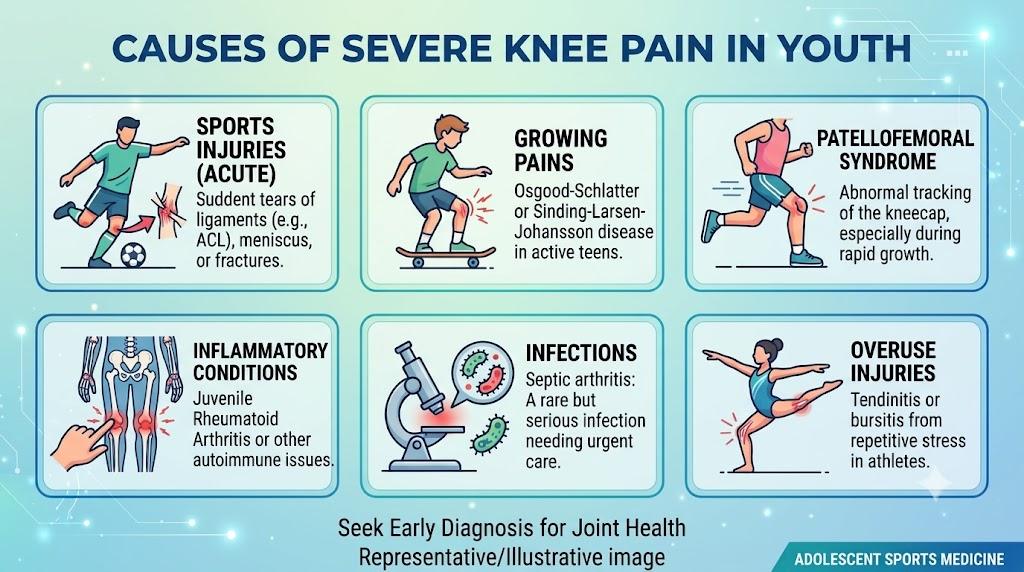
The causes of severe knee pain in youth include overuse injuries, patellofemoral pain syndrome, Osgood-Schlatter disease, patellar tendinopathy, ligament injuries, meniscus tears, growth-related conditions, inflammatory disorders, and rarely infection. Overuse and rapid increases in physical activity are among the most common contributing factors in young athletes.
Severe knee pain in youth should not be ignored, especially when it is associated with swelling, instability, locking, inability to walk, fever, or persistent symptoms. Early assessment, appropriate imaging when needed, activity modification, and guided rehabilitation can support safer recovery and protect long-term knee health.
Why Knee Pain Is Common in Youth
Knee pain is one of the most common complaints of adolescent and young sportspeople. In teenage, a person’s bones, muscles, tendons, and growth plates are still growing and rather delicate. A knee injury during this period can temporarily affect the knee area’s function. Rapid growth spurts may also temporarily tighten the muscles and place greater stress on the knee.
The most common causes of knee pain in children and adolescents during sports are overuse (especially during intense physical activity) leading to patellofemoral pain, Osgood-Schlatter disease, patellar tendinitis, ligament injuries, and meniscus injuries.
Common Causes of Severe Knee Pain in Youth
1. Patellofemoral Pain Syndrome
Patellofemoral pain syndrome (also known as anterior knee pain) is one of the most prevalent causes of knee pain in adolescents and young adults. It involves discomfort around or behind the patella, typically exacerbated by activity, particularly running, squatting, climbing stairs, sitting for extended periods, or jumping.
Risk factors:
Spikes in strenuous activity (e.g., increased distance or intensity of workouts)
- Reduced strength of the hip, quadriceps musculature, or a weak core
- Abnormal lower limb alignment or control mechanics
- Tightness of the quadriceps
- Flat feet or abnormal foot mechanics
- Lack of sufficient recovery time between activities
Symptoms are often activity-related and may occur with a dull ache about the front of the knee without oedema or a clearly defined precipitating event.
2. Osgood-Schlatter Disease
Osgood-Schlatter disease is a repetitive-use condition occurring at a growth plate on the upper portion of the tibia (shinbone). This is where the patellar tendon (connects the kneecap to the shinbone) inserts into the tibia just below the knee joint. Common in active adolescents, especially those participating in football (soccer or American football), basketball, volleyball, gymnastics, running, and other high-impact activities.pmc.ncbi.nlm.nih+2
Symptoms:
- Pain and tenderness just below the kneecap
- Bony protuberance with point tenderness
- Painful during running, jumping, kneeling, or climbing
- Often occurs during growth spurts.
Osgood-Schlatter disease is caused by overuse or repeated stress to the tibial tuberosity (bony bump at the top of the shinbone). The condition frequently resolves on its own as the child stops growing, but it can cause significant discomfort, requiring activity modification and physical therapy during the flare-ups.
3. Patellar Tendinopathy
Patellar tendinopathy, also known as jumper’s knee, is a condition characterized by pain or degenerative changes in the tendon that connects the kneecap to the shinbone. It is commonly associated with participation in sports that involve repeated jumping, sprinting, and landing activities.
The key features and warning signs of this condition may include:
- Pain at the lower part of the kneecap
- Painful jumping, squatting, or climbing
- Stiffness following physical activity
- Tenderness localized to the area of the tendon
While similar to Osgood-Schlatter disease, patellar tendinopathy is more commonly associated with overuse of the tendon and can affect the knees of older adolescents and young adults
4. Ligament Injuries
Ligament injuries can lead to sharp, intense pain in the affected knee, especially following a twisting movement, inappropriate landing, direct impact, or a forced knee movement. The anterior cruciate ligament (ACL) and medial collateral ligament (MCL) are among the most commonly injured ligaments in sports.
The main danger signs of ligament injuries may involve:
- A ‘popping’ sensation at the time of injury
- Swelling hours or days following the injury
- Giving way of the knee
- Inability to put weight on the affected leg
- Limited range of motion
Injuries to the ACL may occur during twisting movements or contact sports, and such injuries may lead to persistent knee instability if not appropriately managed.
5. Meniscus Tears
The menisci are the C-shaped cartilage tissues in the knees that cushion and stabilize the joint. The common causes of meniscus tears are twisting type injuries, deep squatting, pivoting on the knee, or a direct impact to the knee. Meniscus tears can also be caused by gradual overuse of the knee in active young people who participate in sports.ufhealth
Common symptoms that may be associated with a meniscus tear are:
- Pain on the inner or outer side of the knee
- Swelling
- Popping or clicking sounds or sensations or feeling that the knee is locked
- Inability to fully straighten or bend the knee
- Pain with twisting movements
A person with a meniscus injury should be examined by an orthopedic specialist if the knee locks or gives way or remains swollen.
6. Overuse Injuries and Stress Reactions
Overuse injuries are caused by excessive or improper use of a part of the body. This type of injury is more common in growing athletes and can affect tendons, the growth plate, bones, and muscle-tendon units.pmc.
The risk factors for an overuse injury are:
- Increase in the intensity or duration of activity or frequency or playing one sport year-round
- Inadequate recovery days between workouts
- Poor physical conditioning or improper technique or inadequate or inappropriate equipment
- Growth spurts
- Recent injury or illnesspmc
An overuse injury usually begins as a minor ache after activity but can become more severe if the activity is continued inappropriately
7. Osteohondritis Dissecans
Osteochondritis dissecans is a condition characterized by decreased blood supply to a small area of bone and cartilage within the joint. It can lead to knee pain, swelling, catching, or locking in children and adolescents.link.springer
The cause is often multifactorial, and may relate to repeated stress on the joints and growing bones. It is important that these conditions are assessed early, as left untreated, they can affect joint health.
8. Inflammatory and Systemic Conditions
Not all severe knee pain in youth is caused by sport and trauma! Inflammatory conditions such as juvenile idiopathic arthritis and other rheumatological conditions can cause joint pain, swelling, morning stiffness, and limited mobility.pmc.ncbi.nlm.nih+1
These conditions may also be accompanied by systemic symptoms such as fever, fatigue, rash, weight loss, or pain in other joints. These are red flags and should be investigated urgently.
9. Infection and Other Serious Causes
While rare, knee infection is a medical emergency! Septic arthritis can present with severe pain, swelling, warmth, redness, fever, and difficulty in moving the knee.pmc.ncbi.nlm.nih+1
Other rare but serious causes may include tumors, inflammatory conditions, or non-accidental injury. Red flags should always be taken seriously, especially if the knee pain is severe or persistent, or associated with fever or systemic upset.pmmonline
Symptoms That Need Prompt Medical Attention
Seek immediate medical attention if your child has severe knee pain with any of these symptoms:
- Can’t bear the weight or walk on the knee
- Sudden or extensive deep knee swelling
- Deformed knee
- A pop or snap followed by instability
- Locking or inability to fully extend knee
- Warmth, redness, fever, or feeling ill
- Severe pain after a fall, impact to the knee, or twisting of the knee
- Swelling or numbness or tingling in leg and changes in color
- Pain that doesn’t improve or gets worse when you stop
These could be signs of a torn ligament, broken bones, meniscus injury, infection, or other problems.
How Doctors Evaluate Knee Pain in Youth
A doctor asks about the history of the injury, the nature of the work or sport, the patient’s age, previous injuries, growth, and training. The doctor also checks the knee for swelling, tenderness, range of motion, and stability. The doctor also looks at the patient’s gait and assesses the strength of the muscles. The following tests are performed:
X-ray: To visualize the knee bones and diagnose fractures, misalignment, or problems with growing bones
MRI scan: To view the ligaments, cartilage, meniscuses, and bones
Ultrasound: It is done for specific soft tissues like tendons
Blood tests: They can assist in ruling out diseases such as infection
Depending on the diagnosis, the following treatments are performed:
- Altering or avoiding activities that cause discomfort
- Physiotherapy and strengthening exercises
- Use of braces
- Medication (as advised by a physician)
- Surgery to repair damaged tissues (in severe cases)
Prevention and Knee Care in Young Athletes
While not all knee injuries are preventable, adopting sensible training habits can help prevent many cases of severe knee pain due to overuse in youth.
- Strategies that may be helpful include
- steering clear of sudden increases in training loads,
- allowing for sufficient recovery,
- focusing on strengthening the hip muscles, thighs, core, and calves,
- practicing proper landing and directional change techniques,
- wearing appropriate footwear and equipment,
- avoiding participating in single-sport athletics year-round without breaks.
- It is also important to seek medical attention promptly when pain occurs and to follow a gradual return-to-play protocol after an injury.
In addition, young athletes should feel empowered to speak up to coaches, parents, or doctors about knee pain, fatigue, or perceived decreases in performance rather than ignoring or downplaying the symptoms.
Frequently Asked Questions
1. What is the leading cause of severe knee pain in youth?
The most common cause of knee pain in the young population is the result of overuse-related conditions, such as patellofemoral pain syndrome or Osgood-Schlatter disease, which are often associated with a sports-active lifestyle and puberty.
2. Can growth spurts contribute to knee pain?
Growth spurts can be the underlying mechanism for many causes of knee pain, as adolescents’ muscles and tendons can become too tight during the growth period, which increases the pressure on the knee joints.
3. The knee hurts in a teenager – when should I seek medical attention?
If a teenager cannot bear weight on the affected leg, one’s knee is significantly swollen or deformed, the leg cannot be bent or straightened, or if a young person experiences fever, redness around the knee, warmth, or painful sensations following an injury, the cause of the symptoms should be identified promptly, as those are the signs of a fracture, dislocation, infection, or other serious conditions.
4. Can participation in sports lead to knee pain in a teenager?
Sports can be a significant cause of knee pain and require a heightened level of caution due to the range of motions involved, such as squatting, twisting, jumping, or pivoting, and knee loading during the activity. A sudden increase in the intensity of sports can also be a cause of an overuse-related condition, a meniscus injury, or a ligament tear.
5. Can a young person’s knee ache without an apparent injury?
Knee pain in a young person can be caused by a variety of non-traumatic conditions, including inflammatory and infectious diseases, misalignment of the lower limbs, or other causes, therefore it is better to consult a healthcare professional in case of persistent knee pain, discomfort, or other worrying symptoms.
Disclaimer: This post is for educational and awareness purposes only. Please consult a doctor for personalized medical advice.