Doctor’s Statement
Medically guided Dr. Pallavi Sharma, Consultant Psychiatrist, says:
“Athletes often face intense physical and emotional demands, but mental-health concerns should never be ignored or considered a sign of weakness. A sports psychiatrist can help assess concerns such as performance anxiety, burnout, injury-related distress, sleep difficulties, depression, and anxiety in the context of an athlete’s overall health. Confidential, individualized, and evidence-based care can support both emotional wellbeing and safe participation in sport.”
Summary
A sports psychiatrist in Delhi provides specialized mental-health care for athletes and active individuals dealing with performance anxiety, burnout, injury-related distress, depression, anxiety, sleep problems, disordered eating concerns, or substance-use issues. Sports psychiatry focuses on prevention, accurate assessment, treatment, and safe participation in sport.onlinelibrary.
Mental-health support is an important part of athlete wellbeing. Early consultation, confidential care, and a multidisciplinary approach can help individuals manage symptoms, recover from setbacks, and participate in sport in a healthier and more sustainable way
What Is Sports Psychiatry?
Sports psychiatry is a specialty area of mental-health care that focuses on the prevention, assessment, and treatment of mental-health symptoms and disorders in people who are engaged in sport, exercise, and physical activity. This includes both common mental-health challenges and sport-specific issues such as competitive pressure, performance anxiety, injury-related distress, and burnout.
A sports psychiatrist is a qualified medical doctor who has received additional training in the field of psychiatry. This means they can evaluate a person’s mental state in context of their athletic career, considering factors such as injuries, training load, sleep patterns, nutritional habits, medication use, and substance abuse.
Unlike a sports psychologist, who typically works on improving an athlete’s mental skills and performance psychology, a sports psychiatrist can also provide diagnosis and medication management if needed. Treatment may involve psychotherapy, drug therapy, advice on lifestyle changes, and collaboration with coaches, physiotherapists, sports medicine doctors, and other professionals, with the athlete’s consent.
Why Athletes May Need Mental-Health Support
From the intense training schedule, competition, constant public gaze, selection pressures, injuries, career finishing, and balancing with education or work, all the way to a reduced sense of self, motivation, and focus: every athlete’s experience with the sport they love can take a toll on their psychological wellbeing.
Studies researching the prevalence of mental health symptoms in elite athletes report widely varying figures, and the issue is not specific to any group. For that reason, individual cases should always be evaluated by a professional, rather than relying on potentially irrelevant statistics from any online source.
A qualified sports psychiatrist based in Delhi can help both amateur and professional players: from representing your country to simply exercising at the local gym, every person can find assistance and support in managing their unique circumstances. Even if mental health issues are not a concern, a psychological evaluation may be indicated for a range of other factors, including injuries and personal concerns with training, performance, and lifestyle changes.
Common Concerns Addressed by a Sports Psychiatrist
Performance Anxiety
Performance anxiety is characterized by excessive worrying before a competition, increased heart rate or stomach ulcers, impaired concentration, fear of failure, avoidance of the sport, or other manifestations. The best way to deal with performance anxiety is to use cognitive behavioral therapy and mindfulness-based cognitive therapy. psychiatry
Burnout and Overtraining-Related Distress
Physical and mental overexertion without sufficient rest can lead to excessive tiredness, discouragement, and loss of interest in sport, as well as distractibility, irritability, and decreased performance. Athlete burnout was significantly related to lower levels of mental-health-related wellbeing and compromised positive wellbeing.
Injury-Related Emotional Distress
This condition is associated with a variety of challenging emotions, such as anger, frustration, hopelessness, and anxiety regarding the injury. Additionally, injuries could adversely affect an athlete’s identity, sleep patterns, and motivation to return to sports. An athlete who experiences significant distress due to an injury may benefit from a sports psychiatrist’s intervention, where the psychiatrist collaborates with the athlete’s rehabilitation team.
Depression and Anxiety Disorders
Like non-athletes, competitors can experience a range of mental health issues, including depression, generalized anxiety, panic disorder, and other psychiatric conditions. As a result, they may have alterations in sleeping patterns, energy levels, weight, motivation, interpersonal relationships, and overall functioning. However, cognitive behavioral therapy and family therapy, among other psychotherapies, can help treat these conditions.
Sleep Difficulties
Training routines, travel, evening events, screen time, stress, and pain from injuries could contribute to a wide range of sleep problems, including loss of sleep or insomnia. Addressing sleep difficulties is crucial to an athlete’s wellbeing since sleep deprivation could cause poor mood, poor performance, and poor healing of damaged tissues. A sports psychiatrist can help by evaluating the root cause and referring to the relevant professional if necessary.
Disordered Eating and Body-Image Issues
Some athletes may struggle with concerns about weight, body composition, appearance, or performance. Disordered eating and body-image issues often require confidential and competent care, as the nutrition of the body has a direct influence on a person’s physical and mental health.
Substance Use and Medication Matters
Some athletes may be tempted to use alcohol, nicotine, stimulant medications, sleeping pills, or other drugs to cope with stress, enhance performance, or manage pain. The sports psychiatrist can evaluate such concerns and carefully consider the potential treatment options that would be appropriate in the context of an athlete’s health and sport needs.
When Should an Athlete See a Sports Psychiatrist?
An athlete or an active person may decide to consult a sports psychiatrist in Delhi if he/she has any of the following symptoms:
Depression, loss of interest or pleasure in sport or other activities, feelings of hopelessness, and lack of motivation
- Anxiety, persistent fear, panic or nervousness, especially before competitions
- Insomnia or sleeping problems
- Burnout, emotional or physical exhaustion, or overtraining
- Lack of concentration, indecisiveness, or inability to make decisions
- Emotional problems following an injury or surgery
- Fear or anxiety about re-injury and decreased performance
- Eating or image-related issues
- Substance abuse or alcoholism
- Thoughts of or attempts to take one’s own life
Consultation with a psychiatrist is important to avoid further complications, to allow safe return to sport, and to help the patient deal with the psychological stressor. It is crucial to note that the assessment is the key to successful treatment. This is why a thorough individual assessment is needed to identify the patient’s symptoms, medical history, and other factors.
What Happens During a Consultation?
A consultation with a sports psychiatrist typically begins with a confidential discussion of the athlete’s concerns, symptoms, sport, training, injury history, sleep, nutrition, medications, and family or personal mental-health history.
The psychiatrist may evaluate:
- Mood, anxiety, stress, and coping
- Sleep patterns and routines
- Training and competition stresses
- Injuries and recovery challenges
- Concentration, motivation, and fears related to athletic performance
- Alcohol, tobacco, supplement, or illicit substance use
- Medical concerns and current medications
Based on this discussion, the psychiatrist may recommend psychotherapy, lifestyle and sleep modifications, medication (when indicated), or referrals to other medical specialists. Treatment should be individualized and evidence-based, not one-size-fits-all.
How Sports Psychiatry Supports Performance
Sports psychiatry is not a matter of forcing an athlete to undergo treatment against his will. Rather, the key concern is with protecting, maintaining, and restoring mental health and, by extension, the athlete’s ability to function effectively in his sport.
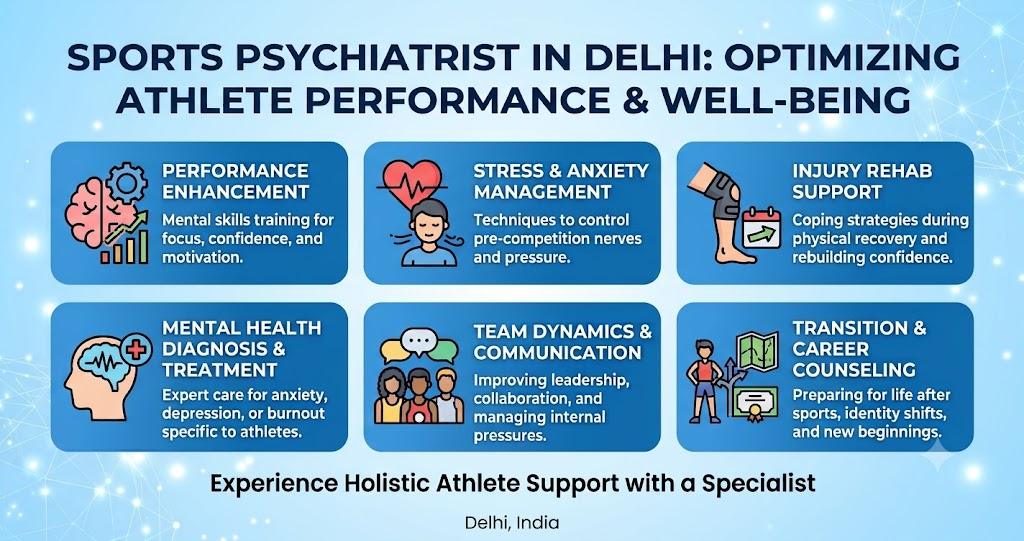
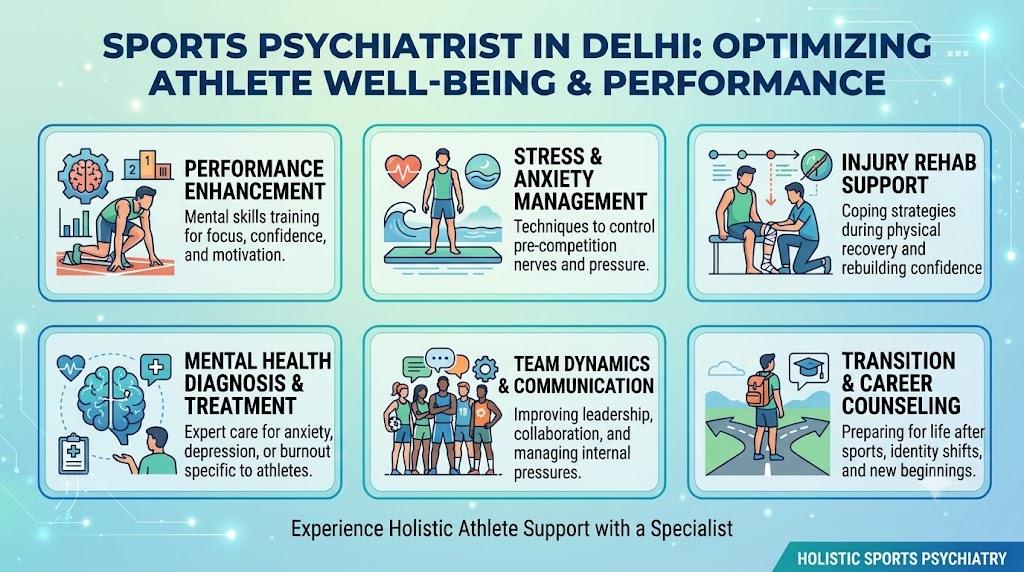
If reduced sporting performance is a secondary feature of a mental illness, the treatment will be aimed at restoring the patient’s everyday functioning as well as his performance in the sport. A sports psychiatrist may deal with the following areas:
Restoration of performance: Helping the athlete to resume normal functioning after such conditions as anxiety, depression, overtraining, and injury
Maintenance of performance: Assisting the athlete in continuing to perform consistently well by attending to other problems that may arise during training and competition
Performance enhancement: Improving performance by means of appropriate interventions to achieve optimal focus and resilience during challenging situationsonlinelibrary.wiley
The treatment should always be confidential and should consider the client’s goals. The disclosure of any information to the coach, team, or family is only possible with the athlete’s consent, if there are no safety concerns.
Role of a Multidisciplinary Team
Athlete care professionals often work most effectively when working in cooperation with mental-health experts. This can include collaboration with sports medicine doctors, physiotherapists, nutritionists, coaches, and family members.
For example, an athlete who has undergone ACL surgery can be supported both by a physiotherapist and a sports psychiatrist. The latter can help the individual overcome anxiety, depression, insomnia, and fear of re-injury, addressing the emotional dimension of recovery. Such a method allows following all the necessary steps for the practical and psychological rehabilitation of the athlete while maintaining the confidentiality of the personal and professional aspects of the athlete’s life.
Choosing a Sports Psychiatrist in Delhi
Consider the following advice while looking for a sports psychiatrist in Delhi:
Ask if the doctor is a qualified medical practitioner with additional training in psychiatry.
- Check whether they have any experience with athletes or active people.
- Ask them to provide a comprehensive assessment of your case instead of immediately prescribing psychotropic drugs.
- See if the doctor offers confidentiality and what their policy on sharing information is, if any.
- Ask whether you can work together to determine what course of treatment is best for you and your athletic life.
- Choose a psychiatrist familiar with your sport, its peculiarities, schedule, and other related aspects.
A responsible professional will always take the time to listen to your concerns and explain the situation and possible treatments in detail while looking for the most comfortable and effective solution.
Frequently Asked Questions
1. What does a sports psychiatrist in Delhi treat?
A sports psychiatrist evaluates and treats mental-health issues of an athlete and a sportsperson, including anxiety, depression, burnout, performance anxiety, sleep disorders, injuries, eating disorders and substance abuse.psychiatry+1
2. Is a sports psychiatrist the same as a sports psychologist?
No. A sports psychiatrist is a medical doctor and can diagnose psychiatric conditions and prescribe medication when needed. A sports psychologist usually works with a mental-coaching approach, but the two types of specialists can consult together.psychiatry+1
3. Can a sports psychiatrist help with performance anxiety?
Yes. A sports psychiatrist can evaluate performance anxiety and recommend various forms of treatment, such as cognitive behavioral therapy, mindfulness practices, lifestyle adjustments, or medication, if necessary.psychiatry
4. When should an athlete seek psychiatric help?
An athlete should consult one if he or she experiences symptoms of depression, anxiety, sleep disorders, burnout, loss of motivation, panic, substance abuse, or distress following injuries that impair everyday life or sport activities.onlinelibrary.wiley+1
5. Is mental-health treatment confidential?
In most cases, a psychiatrist cannot disclose any information to anyone else, including team coaches, without a client’s consent. Some exceptions may apply in dangerous situations or depending on the jurisdiction.
Disclaimer: This post is for educational and awareness purposes only. Please consult a doctor for personalized medical advice.