Medically guided by Dr. Naman Wahal, Senior Orthopaedic Consultant, StepUp Joints
Doctor’s Clinical Statement
“Osteoporosis can weaken bones silently until a fracture occurs, which is why early screening and risk assessment are important, particularly for people at higher risk. Identifying reduced bone strength early, assessing bone mineral density when appropriate, and addressing factors such as muscle strength and balance can help reduce fracture risk and support healthier mobility and independence.”
Summary : –
Osteoporosis is a condition in which bones become weaker and more fragile, increasing the risk of fractures. Because bone loss can develop silently, early screening and fracture-risk assessment are important, especially for people who may be at higher risk.
The blog highlights the importance of identifying reduced bone strength early through appropriate evaluation, including bone mineral density assessment when recommended. Improving muscle strength, balance, and mobility can also support fracture prevention and help maintain independence and quality of life.
What Is Osteoporosis?
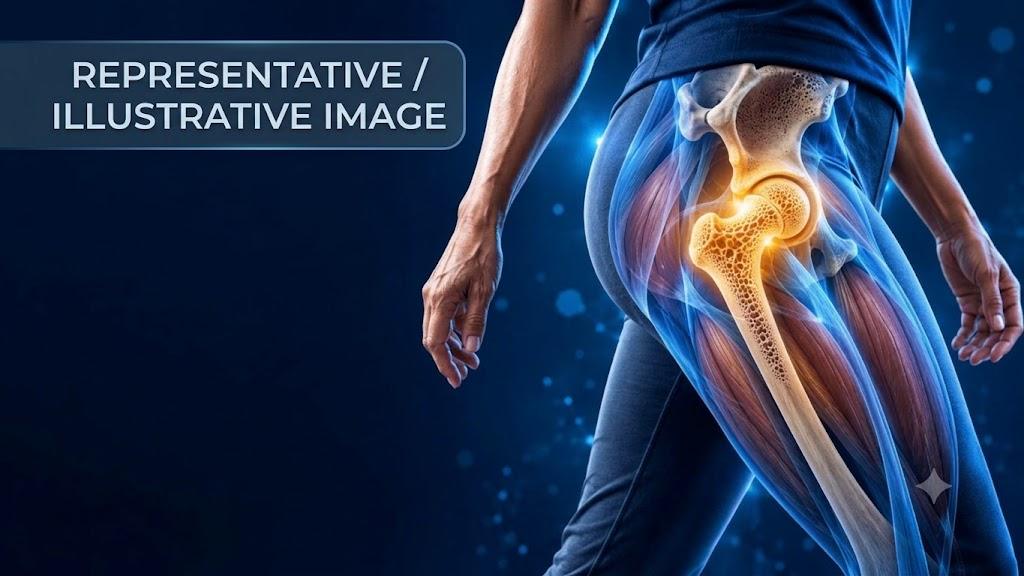
Osteoporosis is a disorder of the bones resulting in the loss of strength of the bones and in increased chances of fractures. Bone is a living tissue that gets destroyed and rebuilt on its own. With time, if the breakdown is greater than formation, bone strength and bone density may decrease.
The common sites of osteoporosis fractures include the hip, back, and wrist. Sometimes, in certain cases, fractures of the vertebra may occur with very little trauma, confusing them with regular pain in the back. ICMR considers a fragility fracture any fracture that results from minimal trauma of the body or falls from standing position or lower.
Because osteoporosis may remain undetected until a fracture occurs, it is important to assess the risk early and take steps to prevent bone loss.
Need for Early Bone Loss Screenings
Unlike other wasting diseases displaying early symptoms, osteoporosis can be developed without any warning. A person can be doing well while bones are gradually losing their strength.
Screening and evaluation of the risk carry weight identifying patients who might be in need of further examination. The doctor might consider many factors like age, gender, history of fractures, family history, body weight
Currently, recommendations for screening differ according to each individual presented. For instance, U.S. Preventive Services Task Force recommends screening every woman aged over 65 and post-menopausal women younger than 65 with an increased risk for fractures. The recommendations provided by U.S. Preventive Services Task Force for men depend on the circumstances of each person, which are more essential than general figures in the population.
In practice, there is a higher benefit associated with evaluating each patient separately than simply considering his/her age. In case an individual has suffered a low-energy injury, or has other important risk factors, appropriate screening is essential.
Who May Be at Higher Risk of Osteoporosis?
The development of osteoporosis can take place in both males and females. Aging plays a significant role in the development of this disease, but several other reasons can cause bone loss.
Your risk increase with:
- Previous damage to bone with minimum injuries or falls
- A history of osteoporosis or hip injuries in family
- Bone loss after menopause
- Low weight
- Low activity levels
- Smoking
- Excessive alcohol intake
- Deficiency in vitamin D and calcium intake
- Prolonged use of corticosteroids
- Diseases of the kidney, liver, thyroid or parathyroid
- Inability to absorb nutrients
- Usage of drugs which has been linked to osteoporosis
According to the guidelines presented by ICMR for fragile fractures, there are a lot of factors that may enhance the risk of getting the disease, including post-menopausal state, past fractures, family history of the disease, corticosteroid treatment, diabetes, and chronic kidney and liver diseases, thyroid and chronic illnesses.
What Is a Bone Mineral Density Test?
A bone mineral density examination evaluates the mineral content of the bones, which aids in determining the strength of the bones. The DXA approach known as dual-energy X-ray Absorptiometry is the standard method for diagnosing osteoporosis.
Typically, central DXA is used to measure bone mineral density in the hip and spine region. As per the International Society for Clinical Densitometry, a T-score of -2.5 or lesser in the lumbar spine, total hip, or femoral neck satisfies the densitometric criterion for diagnosing osteoporosis among older men aged fifty and above and women whose age is beyound fifty.
The commonly known significance is:
- T-score of -1.0: Normal bone density
- T-score of -1.0 to -2.5: Low bone mass (osteopenia).
- T-score of -2.5: Osteoporosis
But, while interpreting the DXA results, the medical history, age, and risk factors of the patient must also be considered.
Looking for a Bone Mineral Density Test in Lajpat Nagar?
Individuals who want to avail a Bone mineral density test Lajpat Nagar should remember that which test is right for them depends on their health conditions and fracture risk. A physician can determine if DXA testing is warranted and interpret the results appropriately in reference to one’s health condition.
A low BMD test result does not necessarily mean that all patients receive the same treatment. The entire clinical picture and fracture risk must be assessed.
What Are Fragility Fractures?
A fragility fracture is generally considered a fracture sustained by trauma that is not excessive. The incidence of fragility fractures usually occurs in the hip, vertebrae, and forearm.
A fragility fracture should not be regarded as an unfortunate incident but as an indicator of possible underlying bone weakness.
For instance, the adult individual suffering from a wrist fracture after minor trauma should undergo assessment for osteoporosis because this individual may be at risk of future fractures.
This is where the prevention of fragility fractures comes into play. The prevention of second fragility fractures can include bone health assessment, treatment, physical rehabilitation, fall prevention, and lifestyle measures.
How Is Osteoporosis Diagnosed?
An evaluation for osteoporosis might include more than just the bone density scan.
Medical history
Your doctor may ask questions about past fractures and family history, menopause status, medications taken, diet and exercise habits, and any health conditions that might affect the bones.
Physical examination
A physical examination can help to point out mobility issues, faults with posture, weakness of the muscles, etc., which might lead to falls/fractures.
DXA scan
DXA gives a measurement of bone density and is a very important procedure in evaluation for osteoporosis.
Blood tests
Blood tests as part of the evaluation of osteoporosis may include detection of vitamin D deficiency as well as identifying any other illnesses, based on the patient’s medical history. The workflow of ICMR that deals with fragility fractures and relevant research includes calcium, phosphates, alkaline phosphatase, vitamin D, kidney, and thyroid investigations complete with the necessary parathyroid tests.
Fracture-risk assessment
Risk of fracture can be evaluated along with the measurement of bone density. A set of analyses such as FRAX allows one to estimate fracture risk using risk factors and sometimes bone density as well.
Thus, two people who have the same DXA index might have different levels
How Can You Help Prevent Bone Loss?
Good bone health is not a one-time test or process; it is a long-term project.
1. Get enough calcium and vitamin D
Calcium is the key mineral for strong bones, and vitamin D is there to assist in calcium absorption by the body. Best food sources are dairy, calcium-fortified products, leafy vegetables, tofu, and some fish.
Nutrition needs will be different for every individual, and the use of supplements should be consulted with health specialists, especially if the person suffers from an illness or takes medications.
2. Be physically active
Exercise is vital for wellness of bones and muscles. Weight training and proper load-bearing activity help keep muscle mass and bones strong, respectively. Physical activity can also enhance coordination and balance, thus reducing chances for falling injury.
In any case, people with osteoporosis or old fractures are advised not to start strenuous exercise training without proper supervision.
4. Prevent falls at home
Falls can lead to fractures, especially in the elderly.
Preventative strategies might include improvements in lighting, removing impediments in walking areas, installing handrails on stairs and solving issues related to eyesight, shoes, or equilibrium.
Physiotherapists may also suggest exercises aimed to build up strength, stability and coordination of lower limbs.
5. Do not smoke or drink too much alcohol
Smoking leads to weaker bones, and drinking too much alcohol may advance chances of suffering bone injuries. Thus, avoiding smoking and controlling one’s alcohol consumption should be included in a general programme for bone health.
6. Check medications and health issues
Certain drugs such as corticosteroids taken for a long time may harm the bone. Certain diseases may also result in secondary osteoporosis.
However, stopping medicines on one’s own is not advised.
What Treatments Are Available for Osteoporosis?
Treatment may vary depending on how sever the bone has been lost, which fractures the person has suffered in the past, and the danger of future fractures.
Some people can be treated only by using lifestyle changes and trying to change their risk factors, while other patients may need to take medications that are indicated for osteoporosis treatment.
Those people who are at highest risk of having fractures can be treated by using drugs according to recommendations of experts. For instance, the Endocrine society states that elderly women after menopause, who are usually at risk of having many fractures and have had one of them recently, should receive treatment.
There are a number of more specialized therapies that can be recommended according to the risk profile of a particular patient. For example, the ICMR has developed instructions for therapy for fragility fractures that may include zoledronic acid, denosumab and PTH therapy.
The choice of the drug a patient is going to take should be based on his/her unique situation. Factors such as kidney functions, history of fractures, existence of comorbidities and drug interactions have to be taken into account when determining what treatment is suitable for the patient.
When Should You See a Doctor for Osteoporosis?
You should think about consulting a doctor regarding your bone health if you have:
- A fracture after a trivial fall
- A previous fracture of hip, spine or wrist
- Serious height loss
- Chronic or unexplained back pain
- A family history of fractures due to osteoporosis
- Risk factors after menopause
- Long term treatment with corticosteroids
- Known low bone density
- A condition that can be associated with loss of bone mass
- A fracture after not serious trauma is particularly significant because it may suggest the presence of a weakness in the skeleton. Early examination can determine if further tests or treatment is needed.
Choosing an Osteoporosis Doctor in Delhi
When searching for the Best doctor for osteoporosis treatment in Delhi, patients must pay attention to more than just online rankings or a single test result. A proper assessment should take into consideration the full spectrum of factors: previous fractures, bone mineral density, medications, lifestyle, health problems, and future fracture risk.
It is also beneficial to select a physician who takes a multidisciplinary approach if needed. Osteoporosis treatment can involve orthopedic evaluation, medical examination, rehabilitation, nutrition, and fall prevention depending on the requirements of a patient.
At the StepUp Joints clinic located at 1st Floor, 17-A, Ring Road, Vikram Vihar, Lajpat Nagar 4, New Delhi, Dr. Naman Wahal is known as a Senior Orthopedic Consultant.
When selecting the Best doctor for osteoporosis treatment in Delhi, patients should not rely exclusively on the DXA result but instead prioritize clinical evaluation and individual treatment plan.
Osteoporosis & Bone Health: Think Beyond the Scan
Despite the usefulness of a bone density test, the need to protect your bones goes beyond just that number. Effective Osteoporosis & Bone Health care entails the early identify of risk factors coupled with relevant screening, dietary recommendations, exercise, fall prevention measures and medical interventions if required. The aim here is not just to improve on the test results, but to reduce the risk of fractures, maintain bodily mobility and enable the elderly to stay active and independent during their golden years. This becomes even more important for those who are already suffering from a fragility fracture, and the ICMR guidelines include the proper management of fractures along with the assessment of osteoporosis to take proper care of the fracture and bone condition itself.
conclusion
though osteoporosis is a silent disease, its damage does not have to come as a surprise. Early risk evaluation, bone density testing, and efficient fracture-prevention measures have a significant role in ensuring mobility and independence for the future.
For the residents of Delhi, it is important to be aware of bone health and osteoporosis in situations where there is a history of low-impact fractures, low mineral density in bones, a family history of osteoporosis, being a woman around time of menopause, or receiving treatment that may cause the disease.
When you have any concerns about bone strength and fracture risk, see a qualified healthcare provider for individual assessment rather than only depend on an online checklist or DXA score.
Medical Disclaimer: This article is intended for general educational purposes only and should not replace personalized medical consultation, diagnosis, or treatment.
Frequently Asked Questions
1.Can osteoporosis be diagnosed before a fracture occurs?
Doctors can diagnose osteoporosis before a fracture occurs using a bone mineral density test, which can detect low bone density. However, doctors also consider a person’s health history and fracture risk when deciding which tests they need, as not everyone requires the same diagnostic evaluation.
2.Is the word osteopenia equivalent to osteoporosis?
No, osteopenia is defined as the lack of low bone density as in osteoporosis, thus it does not merit the diagnosis of osteoporosis. For example, a T-score of greater than -1.0 and not greater than -2.5 indicates low bone mass and scores of -2.5 and lower indicate osteoporosis as compared to DXA.
3.Is exercise effective in avoiding fractures?
Exercising can help make muscles and bones stronger, which in turn can lower the risk of his or her falling and breaking a bone. Therefore, people who suffer from osteoporosis should only do the exercises recommended to them.
Is it necessary for all patients suffering from osteoporosis to take calcium supplements?
Whether calcium supplements are necessary or not depends on the person’s age, health condition and his or her diet. That is why it is important to consult a doctor in order to know what amount of calcium daily is essential for them.
4.Is it possible to heal osteoporosis?
Definitely, as the treatment consists of the lifestyle changes and medications aimed to address the medical condition in question depending on one’s fracture risks and other personal factors. The treatment plan has to be worked out by a qualified physician based on the level of fracture risk a patient is facing.
StepUp Joints – Location & Appointment Information
Clinic: StepUp Joints, 1st Floor, 17-A Ring Road, Vikram Vihar, Lajpat Nagar 4, New Delhi 110024
OPD Timings: Monday – Saturday: 9:00 AM – 9:00 PM
Direct Call: +91-7042787560