Medically guided by Dr. Aditya Jain, Director, StepUp Joints | Orthopaedic Surgeon — Joint Replacement, Sports Injury & Trauma
Doctor’s Clinical Statement
“Acute sports injuries and fractures should not be ignored, even when pain or swelling initially appears manageable. Same-day clinical evaluation can help identify fractures, ligament or soft-tissue injuries, and other complications early, allowing appropriate treatment to begin promptly and supporting a safer, more effective recovery.”
Summary : –
Acute sports trauma and fractures can require prompt medical attention, even when symptoms initially seem mild. A same-day clinical evaluation can help assess the injury, identify possible fractures or associated soft-tissue damage, and determine the appropriate treatment plan early.
Timely assessment can help prevent complications, manage pain and swelling appropriately, and support a safer and more effective recovery. Athletes should avoid ignoring persistent pain, significant swelling, deformity, or difficulty bearing weight after an injury and should seek professional orthopaedic evaluation.
Why Sports Trauma Should Not Always Be “Wait and See”
Pain can be masked by the adrenaline inside the body immediately after an injury. It leads to people thinking that they can wait for the swelling to subside before getting a consultation regarding the injury.
Unfortunately, waiting for the assessment often leads to the delay in diagnosis.
A seemingly simple injury of the ankle may hide fractures and serious issues with ligaments or joints. The American College of Radiology states that when it comes to acute injuries of the ankle, the differentiation between fractures, sprains, dislocations and neurovascular problems is essential for successful treatment.
The same thing can be said about significant injuries to the knee. If someone is experiencing symptoms of knee injury like swelling, instability, popping sensation, etc. they should undergo evaluation for ACL or other internal knee injury.
What Counts as Acute Sports Trauma?
Acute sports trauma typically refers to a type of injury that occurs suddenly, not gradually over a period of days, weeks, or months.
Examples of acute sports trauma include:
- Falling while running or cycling.
- A direct hit in football or cricket.
- Sudden twisting of the knee.
- Awkward landings after jumping.
- Strong hit of the shoulder.
- Sudden roll of the ankle.
- A severe impact on the arm or leg.
- A possible fracture after a sports accident.
The category of acute sports trauma includes injuries that affect bones, tendons, ligaments, muscle tissue, cartilage, and blood vessels.
Not all acute injuries are emergencies; nevertheless, an injury that could be traumatic must be evaluated properly.
Common Acute Sports Injuries
Fractures
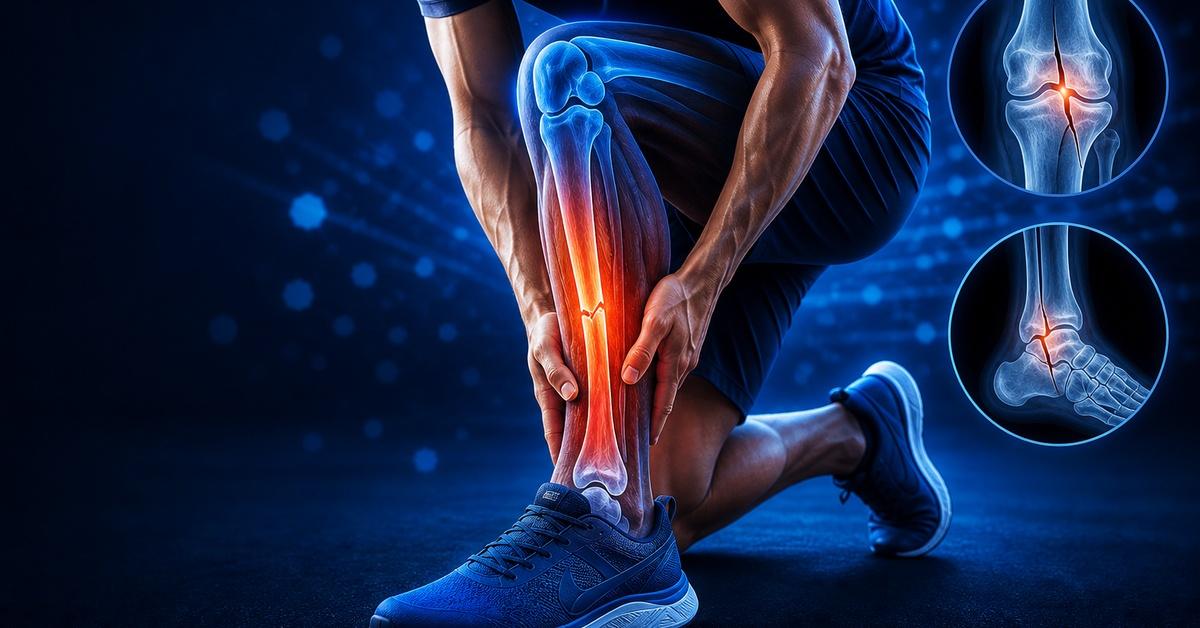
A fracture is the medical term for the breaking of a bone. Sports fractures might be as inconsequential as minor stable fractures or as complicated as broken bones that have been displaced or broken into pieces. Possible symptoms include:
- Severe pain
- Swelling
- Bruising
- Difficulty in moving the body part
- Inability to walk
- Bending of the bone
When considering whether a bone has been broken or not, it is not sufficient to just check it. An X-ray is commonly used to show if there is a break. NHS advice recommends urgent evaluation when there is a possibility of a broken arm, wrist, or ankle, especially when pain, swelling, or unusable body part is suspected.
Ligament Injuries
The joint stability is due to ligaments but twisting, pivoting and landing can result in ligament injuries.
For example, the ACL of the knee can be injured very easily during sports with quick direction changes, jumping and landing.
To know that an injured patient may feel:
- A pop that is felt,
- Swelling that happens quickly,
- The knee is unstable,
- Trouble putting weight on the injured leg,
- Stability that is not present,
Moreover, the ACL injury does not necessarily mean that the individual must have surgery done. The treatment will depend on the condition of the knee and the patient’s lifestyle.
Meniscus Injuries
The role of the meniscus is to evenly distribute forces and to stabilize the knee joint. Twisting injuries may lead to the meniscus being torn.
The following symptoms may occur in patients:
- Pain in the knee
- Swelling in the knee
- Inability to bend or straighten the knee
- You may feel a catch or that your knee is locked
AAOS specifies the following symptoms of a torn meniscus: pain, swelling, catching or locking, and giving-way.
Ankle Sprains
Ankle sprains are typical for athletes. They usually happen when the foot rolls over or the ankle twists suddenly.
Treatment for mild sprains can be conservative, but people suffering from severe pain that doesn’t let them put weight on their foot might need to be examined for a fracture or a severe injury.
Injuries to Muscles and Tendons
Injuries to the hamstring, calf, quadriceps, and groin are common when performing sprinting, jumping, or explosive motion.
Tendon damage can also occur as a result of sudden excessive loading. The type of treatment needed is specific to the tissue type and severity of injury.
Why Same-Day Evaluation Matters After a Suspected Fracture
The treatment approach for a fracture depends on the area of injury and the degree of seriousness. This means that, as long as an individual does not feel a protracted suffering, the person can walk or use the injured body part. It is known that for broken bone assessment in accordance with the guidelines of the NHS, the person must be assessed immediately. The irregular form of limb, the visible bone, numbness, change of colour, and staunch symptoms point out that urgent help should be rendered. The benefits of early diagnosis include the identification whether the injury is stable or unstable and whether a consultation with a specialist is necessary.
How Is an Acute Sports Injury Diagnosed?
The diagnosis starts by obtaining the relevant medical history and carrying out the necessary clinical examination.
The physician may inquire about:
- How was the injury sustained?
- Was the injury caused by twisting, falling, collision, or blunt force?
- Did the affected area make a popping sound?
- Was there swelling at the moment?
- Can you move the leg?
- Does the affected joint feel unstable?
- Have you suffered an injury at the same body part previously?
The clinical examination will then be able to assess the state of swelling, tenderness, range of motion, stability, strength, and blood circulation nerve function.
X-Rays
X-rays are often used to check for the presence of a fracture.
In cases of acute trauma, clinical decision-making aids can play an important role in determining whether imaging is needed. The American College of Radiology has developed the Ottawa Ankle Rule which is used to recommend ankle X-rays in suitable cases.
MRIs
MRI is a useful tool when a soft tissue injury such as ACL, meniscal, tendon or muscle injury cannot be diagnosed otherwise with clinical examination and conventional imaging.
Imaging techniques chosen for investigation of sports injuries should depend on the actual nature of the injury and the results of the examination rather than requests for advanced techniques in every case.
When Is a Sports Injury an Emergency?
While not all injuries necessitate a trip to the emergency room, certain indicators demand urgent or emergency medical treatment.
. On some occasions, it is required to visit an emergency department.
The following signs require immediate emergency assistance:
- A limb that is visually deformed or bent in an unusual way
- Bone sticking out from the skin
- Heavy bleeding
- Severe uncontrolled pain
- Loss of feeling or inability to feel anything
- Limb or joint turns cold, pale, blue or grey
- Serious head or spine injury suspected
- Unable to walk properly due to injury or suspected fracture
NHS medical advice includes deformity, exposed bone, serious numbness or changes in colour as symptoms that necessitate direct emergency treatment.
Concussions and serious head injuries must be treated with caution as well especially if symptoms worsen or the person experiences loss of consciousness.
The injured person should not drive on their own if it is unsafe to do so.
Same-Day Orthopaedic Assessment vs Emergency Hospital Care
It is necessary to know how to differentiate between the necessary orthopaedic evaluation and life-threatening condition.
Patients with acute injuries due to sport who need an urgent diagnosis may benefit from the evaluation on the same day.
For instance:
- Probable fracture
- Severe pain in a joint/head after trauma
- Major swelling
- Probable tear of ligaments
- Unstable knee after sport accident
- Probable meniscus injury
- The ankle injury has occurred
- Muscle/tendon injury
In contrast, patients with significant bleeding, dramatic injuries, loss of touch, not functioning blood vessels, serious head injury, or any life-threatening condition must go to the emergency hospital as soon as possible.
The right destination depends on the severity of patient’s injury.
What Should You Do Immediately After a Sports Injury?
It is advisable to shield the injured part from any harm until evaluation is conducted with respect to the nature of the injury.
Depending on the type of injury:
Pause any activity immediately. Be careful not to persist in sports just because you assume you could withstand the pain.
Safeguard the injured area. Avoid doing anything that may aggravate the suspected dislocation, fracture, or significant ligament injury.
Be cautious with using cold. Ice packs applied over the cloth should be used in moderation to control the swelling in the involved area.
Apply elevation where needed, as raising an injured limb is likely to reduce swelling.
Do not try to put the joint back into its place yourself. If dislocation is suspected, it should be examined by a medical professional instead of attempting to fix it on your own.
Do not keep “testing” the injury by continuing to run, jump, twist or place weight if you wish to determine whether the limb is still causing you discomfort.
When you have a suspected fracture, more importance should be placed to proper immobilization and professional evaluation than to the attempts of using a selection of home treatments.
Why Accurate Diagnosis Changes Treatment
Athletes may feel the same pain in their bodies, but the injuries may differ.
For instance, front knee pain may be due to patellofemoral pain, meniscus injury, ligament injury, bone damage, or some other issue. Treatment for each of these may differ.
Similarly, swelling in the ankle does not always mean that there has been a trivial sprain.
This is the reason why the importance of a good clinical assessment must not be ignored.
Specific diagnosis allows you to find out whether the patient needs:
- Limitations on physical activity
- Use of a brace
- Medication for controlling symptoms
- Physiotherapy
- Achieving a rehabilitation outcome
- Advanced imaging
- Orthopedic surgery
Thus, the purpose of same-day evaluation is not the achievement of immediate surgery in all the cases. In most cases, it is about making the right decision timely.
Recovery After Acute Sports Trauma
Recovery should be progressive instead of being based simply on the amount of days since getting injured.
Depending on the situation, rehabilitation can be used to achieve:
Moving again
Stiffness may occur due to the injury or rest. Mobility exercises should be done at the right moment.
Strengthening again
The muscles may be weak after the inactivity. Progressive strength workouts will help regain functional capabilities.
Improving coordination and balance
Balance and coordination are very important for ankle, knee and lower limb injuries.
Specific sport recovery
A football player and a runner will have completely different rehabilitation needs.
Returning to sport gradually
Getting back to sport activities usually involves gradual progress from common everyday moves to exercises, sports-specific trainings and finally competitive activities.
Getting back too soon simply due to the decrease of pain is not an evidence that the tissues are actually ready for full sports loads.
Preventing Future Sports Injuries
Injury prevention goes beyond the affected area.
Increase strength
Strength training is advantageous for teaching runners to run, jump, turn and take on loads.
Be gradual in progressing with training
Too large increases in the volume or intensity can exert strain on muscles, tendons and joints.
Work on the quality of movements
Jumping, stopping, slowing down and changing direction must be done with certain coordination.
Make recovery your priority
Recovery is defined by sleep, nutrition and adequate rest time.
Never ignore pain that returns
This recurrent pain can signify that one needs to analyze exercise load, movement patterns, strength or recovery.
Choosing an Emergency Orthopaedic Doctor Near Lajpat Nagar
While looking for an emergency orthopedic specialist in Lajpat Nagar, patients must determine whether the hospital can diagnose sudden injuries and suggest the right path of action regarding imaging, treatment and rehabilitation.
StepUp Joints is located at 1st Floor, 17-A Ring Road, Vikram Vihar, Lajpat Nagar 4, New Delhi 110024. Their website currently presents information about their trauma service and complex fracture reconstruction, physiotherapy, digital X-ray and same-day orthopedic visits for trauma and sports injuries.
StepUp Joints’ website indicates that Dr. Aditya Jain is listed as the Director and Orthopedic Surgeon specialized in Joint Replacement, Sports Injury and Trauma. The information published about Dr. Jain mentions his qualifications received in AIIMS New Delhi including MBBS, MS Orthopedics, DNB and MNAMS.
Why an Integrated Trauma and Rehabilitation Approach Helps
The conclusion of fracture care is not solely dependent on stabilization.
In fact, depending on the severity of the condition, the patient may also require rehabilitation in order to achieve:
- Mobility in joints
- Strength in muscles
- Balance and equilibrium
- Gait and walking capabilities
- Ability to regain full independence
Ability to perform athletic movements specific to the sport.
StepUp Joints has described a continuous model where orthopedic physicians, physiotherapists, other health professionals, and rehabilitation specialists work together.
Conclusion
Acute injury from sporting activities should not necessarily be considered something that would heal with rest. A bone fracture, ligament damage, meniscal tear, or a severe strain may need timely diagnosis and proper treatment.
Immediate clinical evaluation might come in handy when the symptoms point to a substantial musculoskeletal injury, since an early diagnosis will help to determine the best course of action. At the same time, people with heavy bleeding, a considerable deformation, sensory changes, impaired blood flow, and other symptoms should seek immediate hospital care.
In case you are seeking an Emergency Orthopaedic doctor near me Lajpat Nagar, timely diagnosis, followed by proper treatment and recovery for the injury, should be your primary consideration.
As a part of the current profile at StepUp Joints, Dr. Aditya Jain specializes in orthopedic trauma and sports-related injuries, while the StepUp Joint provides information about the integrated fracture management and recovery, and immediate evaluation of acute injuries.
Medical Disclaimer: This article is written for educational purposes only and doesn’t replace an in-person medical consultation. Acute injuries may be very different in their severity. If you suspect a medical emergency, consult an emergency medical service right away.
Frequently Asked Questions
Should I visit the doctor on the same day due to a sports injury?
A consultation on the day of the injury is required if there is intense pain, large swelling, inability to walk, instability and limited movement or if a fracture or ligament damage seems possible. Urgency depends on the symptoms and kind of injury sustained.
How do I see if an injury is a fracture or a sprain?
Relying on symptoms only is not enough to make the diagnosis. Along with the pain and swelling, difficulties in moving might also appear in both cases. Medical examination and, if necessary, X-ray or other imaging methods could be required.
Can fractures be treated successfully without surgery?
In general, some fractures might be treated without the need of surgery depending on the location, alignment, stability and other factors.
Is there an MRI for every sports injury?
No, the use of imaging depends on the history and physical exam. Fractures usually require an x-ray, while MRI could help with some soft tissue injuries or in cases of unclear diagnosis.
Can I play my sport even if I have pain in my sports injury?
Playing sports with pain might worsen some sports injuries. If the injury results from an acute trauma, it would be wise to know the reason behind it before resuming high-intensity activity.
How is physiotherapy involved after a bone fracture?
After bone healing and stabilization, physiotherapy could help regain movement, strength and balance depending on the type of injury.
StepUp Joints – Location & Appointment Information
Clinic: StepUp Joints, 1st Floor, 17-A Ring Road, Vikram Vihar, Lajpat Nagar 4, New Delhi 110024
OPD Timings: Monday – Saturday: 9:00 AM – 9:00 PM
Direct Call: +91-7042787560
Patients seeking assessment for acute fractures, sports injuries or other orthopaedic concerns can contact the clinic to enquire about appointment availability.