Medically guided by Dr. Neha Narula (PT), Head of Physiotherapy & Rehabilitation
Doctor’s Statement
“In good sports rehabilitation the painful site isn’t necessarily the cause. The focus needs to be on how the athlete moves, how they train, how the muscle performs, how the body reacts when adding load, and how with movement evaluation, strengthening progressions & sports-specific training we are more capable of a sustainable and safe return to sport”.
Summary: –
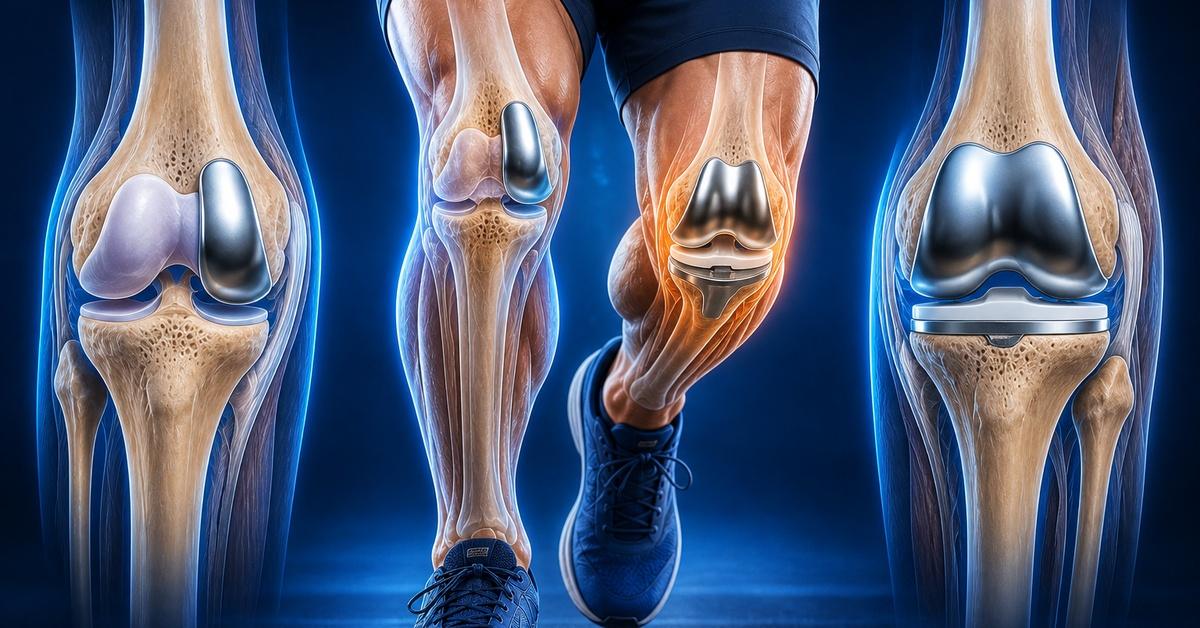
Partial and total knee replacement are two surgical options used to treat advanced knee arthritis, but they differ in how much of the natural knee is preserved. Total knee replacement may be recommended when arthritis affects multiple compartments of the knee, while partial knee replacement replaces only the damaged portion and preserves healthy bone, cartilage, and ligaments in appropriately selected patients. Preserving these natural structures may help maintain more natural knee movement and biomechanics.
The goal of both procedures is to reduce pain, restore knee function, improve mobility, and enhance quality of life. The choice between partial and total knee replacement depends on factors such as the extent and location of arthritis, ligament stability, knee alignment, activity level, age, and overall joint condition. A detailed evaluation by an orthopaedic specialist helps determine which procedure is most appropriate for each patient.
This is the essence of full person sports rehabilitation.
Running and sports activities are great forms of exercising in order to get fit, gain endurance, build up strength and boost your psychological well-being. At the same time, excessive training, abrupt increase of activity levels, improper movement patterns, lack of rest, and imbalance of muscles may lead to developing overuse injuries.
Such conditions as runner’s knee, shin splints, Achilles pain, foot pain and muscle strains can persist despite rest, medications, or even reduction of the intensity of training regimen. Many times the source of the problem may lie not in the affected part of the body, but in the way the body functions.
This is when sports physiotherapy for runners and athletes can become very helpful. Sports physiotherapy will not concentrate on treating the pain alone, but also assess the movement of the body, muscles’ strength and flexibility, balance, running technique and joint mechanics to understand what can be causing repeat injuries.
Biomechanical correction in athletes is one of the key aspects of this approach.
What Is Biomechanical Correction in Athletes?
Biomechanics is defined as the study of how forces and motion act upon the body.
During running, jumping, landing, changing direction, and lifting, there is always a combination of several joints and muscle groups.
These include the foot, ankle joint, knee joint, hip joint, pelvis and the core.
If any one of these components doesn’t function effectively, other components will try to help and compensate.
Such constant and repeated compensation of biomechanically inefficient movements can create excessive stress on particular structures.
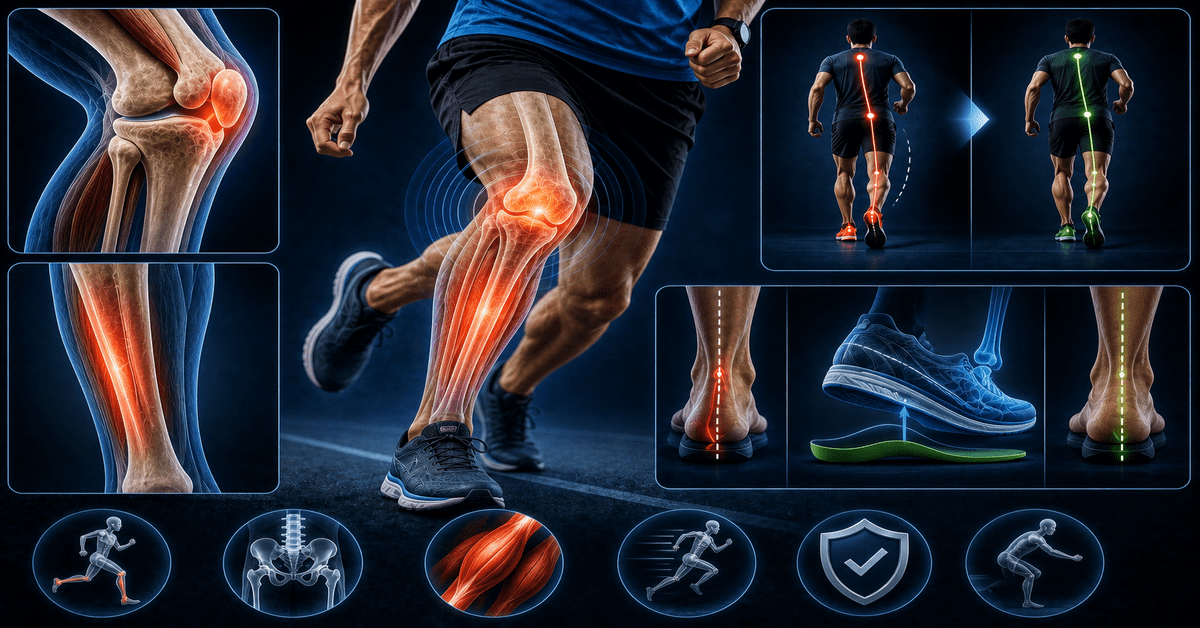
For instance, excessive inward knee joint position while running could result from poor hip joint control and foot structure. Poor strength in calf muscles could contribute to poor force absorption in running.
The purpose of biomechanical correction in athletes is to assess movement patterns and to correct them using individual exercises, movement pattern correction, strengthening, stretching and technique improvement.
However, it does not imply that all athletes should run in a “perfect” manner. Rather, the task is to discover effective movement strategy for particular athletes.
Why Do Runners Develop Overuse Injuries?
Running imposes repetitive stress on the legs.
The body is able to cope with the demands made on it through proper training progression and recovery.
The problem occurs if the overall training load is too much for the body to cope with.
These are some of the possible contributing factors:
- Rapid increase in training mileage
- Improper increase in running speed
- Not enough rest in between sessions
- Weakness in hip, knee, or calf muscles
- Restriction of joint range of motion
- Poor loading
- Poor choice of running shoes
- Lack of strength conditioning
- Repetitive movement pattern increasing tissue stress
- Getting back to sport too soon after injury
It may be useful to get a physiotherapy evaluation to find out what factors are important rather than just looking for one cause for all injuries.
Runner’s Knee: More Than Just Knee Pain
“Runner’s knee” is a frequently used name for the pain in the front or back part of the kneecap.
The athlete might feel pain during:
- running
- descending stairs
- squatting
- prolonged sitting
- jumping
- training intensification.
In most cases, the reasons are multiple.
Weak muscles and poor muscle control at the hip and knee joints might play a role in abnormal leg biomechanics. Limited ankle range of motion or variations in training might also affect pain.
That is the reason why sports physiotherapy for runners and athletes cannot be limited only to the knee joint.
It might provide a full examination of the lower limb movement chain and find out what is the reason for the pain.
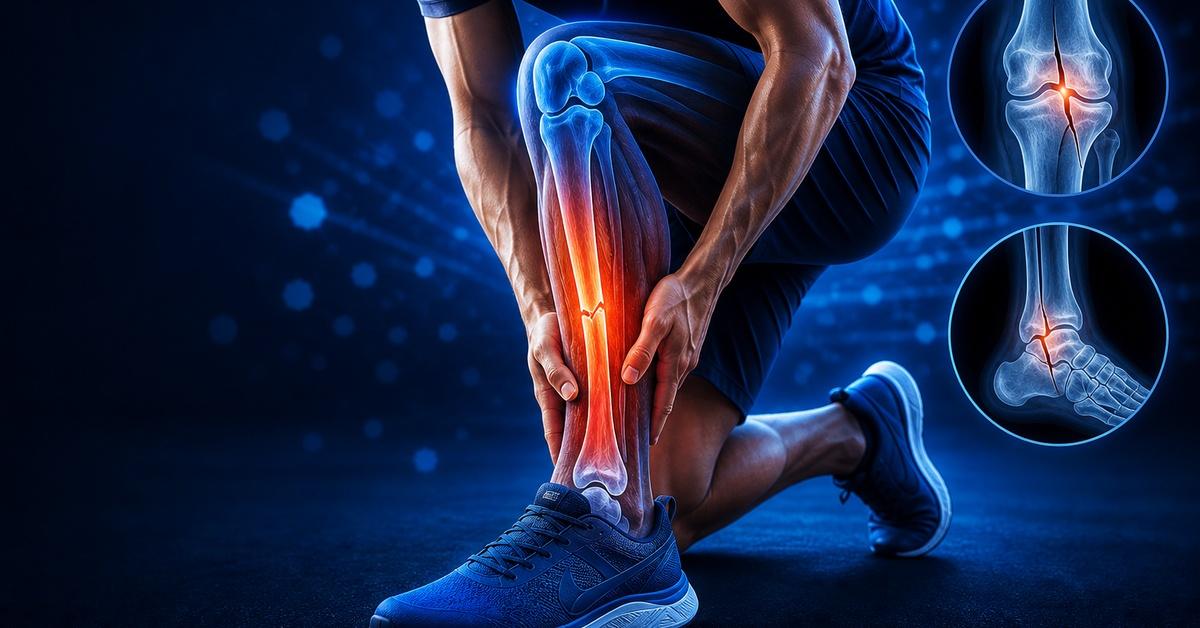
Shin Splints and Medial Tibial Stress
Shin splints, which is medically termed “medial tibial stress syndrome,” are conditions that bring about pain in the area around the medial aspect of the shin.
This condition could arise among runners who:
- Start running after a long period of being idle
- Increase mileage too fast
- Change the running surface
- Increase the pace of running and run on hills
- Do not have adequate rest between runs
- Are not well-prepared for the training
Disregarding shin pain could become dangerous since all shin pains are not necessarily “shin splints.” It is wise sometimes to get an assessment to determine whether the condition is shin splints or not.
There are cases where the symptoms point to other issues, such as bone stress injury. A physiotherapist can make these assessments.
Understanding the Running Movement Chain
One of the most valuable concepts in biomechanical correction among athletes is that of the painful body part being not the only affected part of the body.
In running, when the foot touches the ground, all of the forces go to the ankle, knee, hip, pelvis, and trunk.
For instance:
Foot -> Ankle -> Knee -> Hip -> Pelvis -> Trunk
However, it does not necessarily mean that all the injuries occur due to problems above or below the injured body part. It just shows that all the body needs to be assessed as a single system.
A physiotherapist will look at:
- Foot positioning and loading
- Ankle joint flexibility
- Calf muscle strength
- Knee alignment while moving
- Hip strength
- Pelvic stability
- Balance on one leg
- Squats and landings
- Running technique
- Workload
The results will help build an individualized rehab program.
The Role of Gait Analysis
Runners may look to find a “gait analysis clinic Delhi” if they have chronic pain or simply want to ensure their running form can be more efficient. Gait analysis can involve watching how a person walks or runs and looking at parameters like: Step and stride measures, The foot-strike pattern, Foot and leg positioning in terms of alignment, Hip and pelvic movements, Position of the upper trunk, Balance & Coordination and Cadence. Gait analysis doesn’t set out to show which is the better or worse runner or identify a “perfect” running form because that isn’t realistic for an individual. Gait analysis is used to establish certain movement characteristics that could be significant to the injury, condition, sports-playing requirements and aspirations of a person with an injury.
How Strength Training Supports Injury Prevention
For runners and athletes, strength training is a key part of sports physiotherapy. Running involves repeatedly pushing off and absorbing impact. Having strong, conditioned muscles helps the body handle training loads better.
Physios often check these main muscle groups:
Calf muscles
These are important for pushing off and absorbing shock when running.
Quadriceps
Strong quads help control the knee and produce force for running, climbing, jumping, and landing.
Hamstrings
These muscles support the knee and hip, and help control the lower body.
Gluteal muscles
The glutes are crucial for extending the hip and keeping the pelvis stable.
Core muscles
A strong core helps with efficient movement while running and during activities specific to a sport.
Instead of just using a general list of exercises, the specific ones chosen should depend on the athlete’s sport, past injuries, current training phase, and what the individual assessment shows.
Can Poor Running Form Cause Injury?
However, technique is only one piece of the pie for injury risk factors. It’s tempting to say that a particular foot strike, stride technique or foot placement directly “causes” an injury in an athlete. The reality, especially with sports injuries, is that injuries are very multifactorial.
Two athletes can use the same running mechanic and have a completely different injury story.
Variables that affect sport injury in athletes can include; training load, training volume, recovery, past injuries, conditioning level, sleep, workload, strength and body structure. As such, the biomechanical correction needed in individual athletes should be based individually, instead of a cookie cut protocol. We want to manipulate movement when it has a clear benefit and goal like that the one provided above like reducing loading on tissues, giving the individual more control or ensuring athletes return to activities in a safe manner.
Dry Needling in Sports Physiotherapy
Dry needling South Delhi is the other service commonly undertaken by athletes in South Delhi that could present during muscular tightness, with trigger points present or conditions related to certain musculoskeletal pain.
>Dry needling is the insertion of fine needles into certain tissues using certain clinical procedures and guidelines.
It may be undertaken as part of a sports physiotherapy program in certain patient presentations that are appropriate to it and, depending on the patient, could assist in reducing pain related to the muscles and increase movement tolerance.
Underlying biomechanical and/or training issues need to be addressed through the management strategy as, when considering an athlete presenting with recurring knee pain, poor strength, load mismanagement or movement control issues may contribute to such.
How Sports Physiotherapy Helps Runners
This approach is very useful where an athlete consistently has re occurring injuries or an inability to return to pre injury performance levels after treatment. Treatment in these cases would typically include:
Assessment : – History of injury/ symptoms, training, lifestyle and sport to be taken in account.
Functional movement assessment (and sport specific or running analysis if appropriate).
Strength assessment (to assess deficits).
Mobility : – Rehab through the use of manual therapy, exercise therapy, education.
Retraining improved strategies/ sport specific work capacity.
Return to Sport : – All athlete should ideally participate in sports physiotherapy both at treatment stage and to promote prevention of reoccurring injuries
Returning to Running After an Injury
Most runners will fall back into old habits too quickly by returning to the same weekly volume. The actual symptoms of the injury can resolve before the body can handle what the body had been dealing with in the first place. This implies the possibility of need for a graded return to running program where activities might initially be very low impact and then progress with time (duration), time (intensity), frequency and also potentially the type of activity performed and terrains etc.
This progression should also be guided by patient reports of symptoms, observed changes in function, athlete’s requirements specific to their chosen sport.
The outcome of sports physiotherapy for running athletes and all athletes alike should be to not just get the body symptom-free at rest, but to rebuild the ability to perform at their desired capacity and Confidence
When Should an Athlete See a Physiotherapist?
A physio consultation could be beneficial if you suffer from the following in relation to sport.
- Ongoing pain during or after sport.
- A knee pain that returns as soon as the volume of training increased.
- An ongoing problem with the shin.
- A persistent Achilles or heel pain.
- Persistent recurrent muscle strains.
- An unexplained decline in sport related performance.
- An inability to get back to sport post-injury.
- A change noticed in a movement or running style.
- Concerns about recurrent injuries.
- Single leg stability and/or weakness.
An early assessment is beneficial to prevent small niggles becoming major issues that have a significant impact on training.
How to Prevent Runner’s Knee and Shin Splints
To help prevent injury the proper training and recovery needs to be in place. Runners and athletes may like to look into:
Increasing load gradually
Progress gradual with little jumps, if distances, speeds, inclines or intensities don’t increase drastically through training there’s a lesser chance of a runner sustaining an injury.
Strengthen up
Through consistent strength work this will aid in building robustness of structures which is what we aim for, to increase tolerance to load.
Prioritize rest/recovery
Rest/recovery, this is a part of the training regime, not weakness.
Don’t just dismiss painful tissues that repeatedly reinjury with training
These patients could be better evaluated than repeated bouts of rest and reinjury.
Work on the mechanics
Good biomechanical correction with individuals will address movement deficiencies that contribute to the patient’s symptoms.
Adhere to an appropriate return-to-sport progression
Post-injury, the progression should be function-based and gradual not time based.
Why Individualized Sports Physiotherapy Matters
Although some very minor issues may be helped by simple on line exercises or even a general mobility regime, ongoing and repeating sport injuries require more individually focused rehabilitation.
The fact is, every single athlete and sportsperson is an individual entity.
A recreational runner who completes three running sessions each week has different physical requirements to the marathon runner, the football player, the badminton competitor, or the competitive sprinter.
Factors such as the type of sport, volume of training, the type and history of sport injury experienced previously, the athlete’s strength and range of movement characteristics, their current objectives and their recovery techniques will all impact their rehabilitation.
And thus, there is no set protocol for running, and other sport Physiotherapy programs to follow.
Conclusion
Runner’s knee and shin splints are common but recurring sports pain should not be accepted as fact. A good sports physiotherapist will help you figure out the cause, this may be due to training load, strength deficits, lack of mobility, poor recovery or poor movement patterns. Through correct biomechanical correction it is possible to improve athletes movement patterns as it is often inefficient or puts too much pressure through the injured body part.
In terms of correction exercises it can be either mobility or strengthening specific to that faulty movement pattern, alongside sport specific movements.
Whether dealing with pain from knee problems orshin splints or other recurrent muscle complaints or returning from injury, sports physios and rehab is the way athletes can recover with the appropriate approach. For those athletes looking for a gait analysis clinic Delhi, or dry needling South Delhi, it’s vital first to undergo thorough assessment before any treatments are considered. StepUp Joints has Dr. Neha Narula (PT) head of physiotherapy & rehabilitation looking into athlete rehabilitation with programs that combine movement, conditioning and a patients personal training goals.
Frequently Asked Questions
1. What sport physiotherapy for runners and athletes entail?
It involves the evaluation and treatment of sport-related injuries and movement faults, muscle weakness and mobility limitation, needs to return to play. For runners and athletes, sport physiotherapy should includes appropriate exercises and movement retraining, manual therapy techniques, gait analysis, strengthening program and sport-specific rehabilitation plan tailored specifically to the athlete.
2. Is sports physiotherapy helpful to knee runners?
Yes. Physio therapy will be used to find possible cause of your runner’s knee, e.g. weakness and movement fault in your hipand knee, level of training, restricted movement and Running mechanics. Then individual treatment will be conducted according to the symptom and physical need of athlete.
3. What is the biomechanical correction in athletes?
Biomechanical correction in an athlete focuses on identifying the movement pattern that may have lead to the undue stress put on the body tissues, and that makes the movement inefficient or recurrently injured the athlete. Physiotherapist will then focus on addressing these identified issues through sport and exercise rehab, strength training, movement retraining, technique correction and exercises on mobility as appropriate.
4. What are shin splints?
Shin splints also called medial tibial stress syndrome that is generally accompanied by dull ach on the inner part of the shin bone while running, and can be reproduced during or post exercise. Training errors, abrupt increase of physical activity levels, and inadequate conditioning can predispose shin splints, and however persisent shin ache would require investigation to exclude further medical issues.
5. What is gait analysis?
Gait analysis is the analysis of the characteristics of a person’s locomotion, typically walking or running. An appropriate movement observation could enable physiotherapist to better identify if movement patterns in an athlete are likely to contribute to symptoms or performance concerns. Analysis of lower limb kinematic and kinetics during locomotion could be performed by physiotherapist and interpreted by using a physiotherapist’s analytical skills.
StepUp Joints – Location & Appointment Information
Clinic: StepUp Joints, 1st Floor, 17-A Ring Road, Vikram Vihar, Lajpat Nagar 4, New Delhi 110024
OPD Timings: Monday – Saturday: 9:00 AM – 9:00 PM
Direct Call: +91-7042787560