Medically reviewed by: Dr. Devender Bairwa,
[Qualification : – Trained at premier institutes including AIIMS, JIPMER and MAMC ]
[Specialty : – Dr. Bairwa has over 13 years of experience in Clinical Immunology and Rheumatology ]
[DMC Registration No : – 9133]
Clinic: StepUp Joints, Lajpat Nagar, South Delhi
Last reviewed: – [21 – November -2026]
Doctor’s Statement – Dr. Devender Bairwa
Consultant Rheumatology & Clinical Immunology | AIIMS, JIPMER & MAMC
“Persistent back pain in young adults should not always be attributed to poor posture, prolonged sitting or muscle strain. When back pain is accompanied by morning stiffness, night-time discomfort and improvement with physical activity, inflammatory conditions such as axial spondylarthritis should also be considered. Early clinical assessment, appropriate investigations and an individualized management plan can help identify the condition and address its effects on spinal mobility and daily activities.”
Introduction
Back pain is very common, but in younger people persistent back pain could be caused by inflammation. An example of this is ankylosing spondylitis (AS). This chronic disease causes inflammation in the Sacro-iliac joints and spine.
Inflammatory back pain tends to develop slowly, and may worsen when at rest. Symptoms include morning stiffness, pain later in the night, and relief with movement.
Early recognition of symptoms of ankylosing spondylitis is important as it can cause loss of mobility in the spine and other areas of the body. AS usually presents before 45 years old, however presentation varies between individuals.
Knowing that inflammatory back pain can be associated with HLA-B27 genes and affecting the health of the spine can prompt young people to get assessed by medical professionals.
What Is Ankylosing Spondylitis?
Ankylosing spondylitis is a type of inflammatory arthritis. It mainly affects the sacroiliac joints (joints between the spine and pelvis). It is a type of axial spondyloarthropathy.
Joint inflammation may occur in the sacroiliac joints, vertebrae and at points where tendons/ligaments attach to bones.
After long periods of inflammation, new bone development can occur, limiting movement in the spine. However, the severity of the condition varies greatly in different people. Not all people will develop bony bridging and severely restricted movement in their spines.
Joints in other parts of the body can be affected, including the eyes, hip, shoulder, heels and digestive tract.
Ankylosing Spondylitis Symptoms in Young Adults
Sometimes symptoms may get gradually worse. Symptoms may be similar to those seen in common back pain.
However, be aware of the following symptoms:
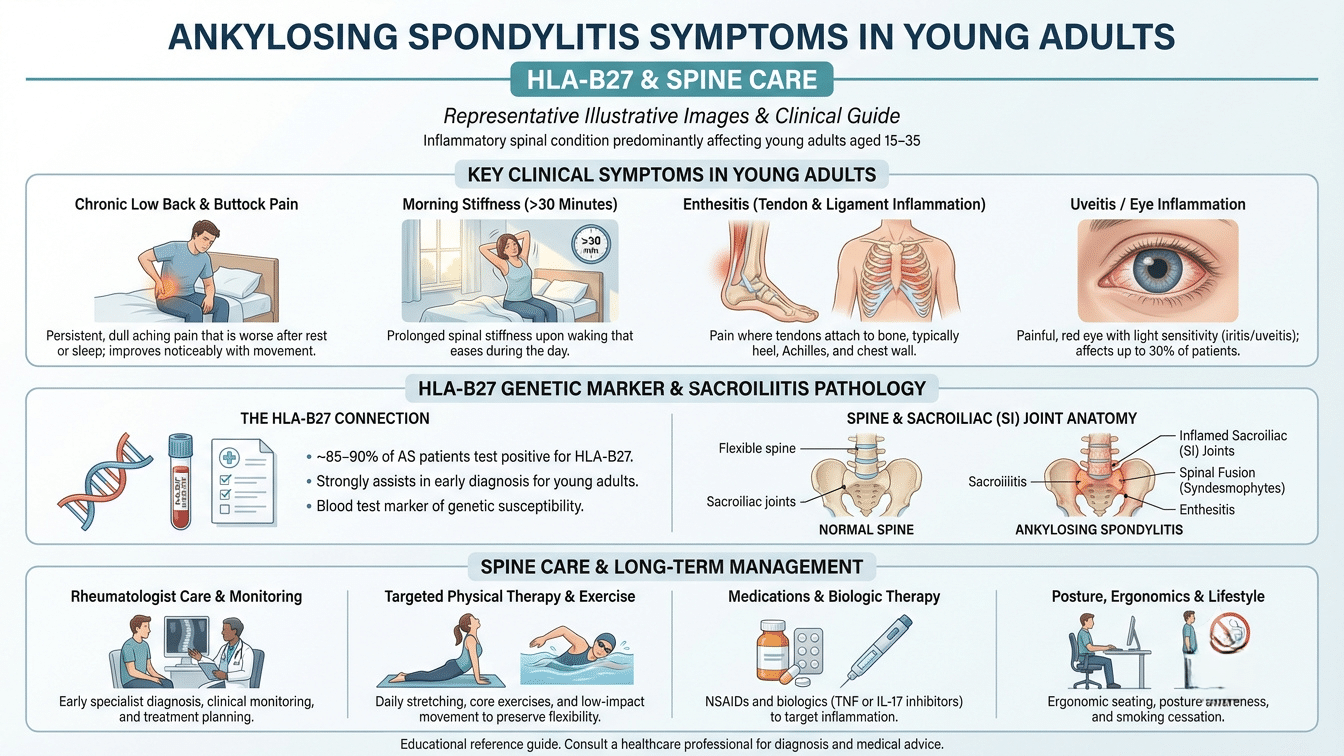
1. Lower Back Pain
Persistent low back pain is a common symptom. Pain can start slowly and persist over several months.
As the pain is due to inflammation, it may not improve much with rest. People may have pain in their lower back, pelvis or hip.
2. Stiffness in the morning
Stiffness in the morning can occur. This may cause difficulty in movement, standing up from bed, or general discomfort when moving.
Stiffness may improve after walking or gentle exercise.
3. Back pain in the latter part of the night
Pain may worsen in the second half of the night. People may be woken by back or hip pain.
Moving position in bed or getting up and walking may temporarily relieve pain.
4. Intermittent pain in the hips
If inflammation occurs in the Sacro-iliac joints, pain may occur in the hips. Pain may alternate between sides.
This can sometimes be confused with sciatic or muscular pain.
5. Stiffness in the spine
With ongoing inflammation, you may find that you have less flexibility in your spine. You may struggle to bend forwards, twist in the trunk or move your spine in a comfortable way.
Flexibility in the spine may gradually decrease. This should be assessed by a doctor.
6. Tiredness and a feeling of generally unwell
Long-term inflammation can make people feel tired. Despite having enough sleep, people with Ankylosing Spondylitis may still feel very tired.
Tiredness may mean that concentration, work performance and normal activities may be affected.
7. Joint pain in other areas
Inflammation may occur in:
- Hips
- Shoulders
- Knees
- Ankles
- Heels
- Feet
Where tendons join onto bone.
This can occur in addition to back pain or at different times.
8. Eye inflammation
Some people with Ankylosing Spondylitis will develop inflammation in their eyes (anterior uveitis).
This can cause redness, pain, light sensitivity and blurring. Red, painful eyes with light sensitivity require urgent assessment by an Ophthalmologist.
Being aware of these symptoms of Ankylosing Spondylitis can therefore help you identify if you may be experiencing inflammatory issues within your spine rather than non-specific back pain.
Mechanical vs Inflammatory Back Pain: Understanding the Difference
Not every episode of back pain indicates an inflammatory condition. Mechanical and inflammatory back pain have different patterns, although symptoms can sometimes overlap.
The following comparison explains some commonly observed differences.
| Feature | Mechanical Back Pain | Inflammatory Back Pain |
| Onset | May follow lifting, injury or physical strain | Usually develops gradually |
| Morning stiffness | Often brief | May last longer |
| Effect of rest | Often improves with rest | May worsen with prolonged rest |
| Effect of movement | Excessive movement may increase pain | Movement often provides relief |
| Night-time pain | Depends on the underlying cause | May wake the person during the night |
| Common location | Lower back or affected muscles | Lower back, buttocks and sacroiliac region |
| Duration | Often improves as an injury settles | May persist for months |
Important: This comparison is educational and cannot establish a diagnosis. Mechanical and inflammatory conditions can coexist.
What Is the Role of HLA-B27 in Ankylosing Spondylitis?
Human Leukocyte Antigen (HLA) B27
This gene is associated with an increased risk of developing certain inflammatory diseases, such as ankylosing spondylitis.
Function
The HLA B27 gene allows the immune system to respond to certain substances.
Studies have shown that this gene is associated with axial spondylarthritis. However, simply having this gene does not mean that you will develop the disease.
Does a Positive HLA-B27 Test Mean You Have Ankylosing Spondylitis?
No. It does not confirm if you have the condition.
Not everyone with HLA-B27 will develop ankylosing spondylitis. And some people with the disease may not have this gene.
Your doctor will take into account:
- How long you have had back pain for.
- Morning stiffness and pain at night.
- Family history of inflammatory arthritis.
- Findings from the physical examination.
- Blood tests and scans.
Can Ankylosing Spondylitis Occur With a Negative HLA-B27 Result?
No.
Clinical features, physical examination findings and imaging are still very important in diagnosing suspected inflammatory spine disease.
The presence of HLA-B27 should be considered one tool within the overall diagnostic process. It should not be used alone for screening or diagnosis.
How Is Ankylosing Spondylitis Diagnosed?
There is no one blood test that can be used to diagnose ankylosing spondylitis. A diagnosis is made based on clinical findings, investigations and imaging.
1. Clinical assessment
Your rheumatologist will want to know:
- When pain in your back started
- If pain is relieved by movement
- Morning stiffness and discomfort at night
- Inflammatory conditions in family members
- Previous swellings in joints or inflammation in eyes
- Skin conditions (such as psoriasis)
During the physical exam, the following may be assessed;
- Mobility of the spine
- Tenderness in joints
- Posture
- Chest expansion
2. HLA B27
This blood test will confirm if you have this genetic marker. If there is suspicion of inflammatory disease within the spine, this blood test can be useful.
It should not be taken alone.
3. ESR/CRP
These blood tests are used to measure inflammation.
High levels can indicate there is inflammation. However, even if results are normal, it does not completely rule out axial spondylarthritis.
4. X-ray
An x-ray of the Sacro-iliac joint may show structural changes due to chronic inflammation.
However, in early stages of disease changes may not be visible on x-ray.
5. MRI
An MRI scan can identify inflammation around the Sacro-iliac joints earlier than can be seen on x-ray.
Whether an MRI is performed will depend on clinical findings.
Why Early Assessment Matters for Young Adults
Causes of chronic back pain in young people may be attributed to occupational factors, physical activity or lifestyle factors. However, if a pattern is apparent in the symptoms, inflammatory causes should be considered.
Benefits of early diagnosis of symptoms of ankylosing spondylitis
Enables appropriate referral to specialist services
May allow:
- Diagnosis of inflammation within the spine and sacroiliac joints
- Evaluation of joint and organ involvement.
- Appropriate treatment
- Management of issues relating to spinal flexibility and alignment
- Monitoring of disease activity and functional changes
Whilst early diagnosis does not necessarily prevent structural damage from occurring, appropriately informed management may be provided.
Treatment and Spine Care for Ankylosing Spondylitis
Management will depend on the patient’s symptoms, severity of disease, functional disability, comorbidities and personal factors.
Treatment may involve a variety of approaches including medications, physical activity, and regular follow up. This will need to be individually tailored by a Rheumatologist.
Medication
NSAIDS may be used to treat pain and inflammation.
In patients with ongoing active disease, disease modifying treatments may be used. These may be targeted synthetic drugs or biologicals.
The choice of medication will depend on the severity of disease, medical history, any contraindications and response to treatment.
If taking, stopping or altering medication please seek advice from your doctor.
Physical Activity/Physiotherapy
Regular physical activity is an important part of managing this condition.
A physiotherapist may design a physical activity/physiotherapy plan to suit you. This may include:
- Mobility exercises for the spine.
- Posture and flexibility exercises.
- Gentle stretching.
- Strengthening exercises.
- Breathing exercises (depending on the individual).
- Low impact aerobic exercises.
The intensity of exercise should be tailored depending on symptoms, functional ability and individual physical ability.
Good Posture
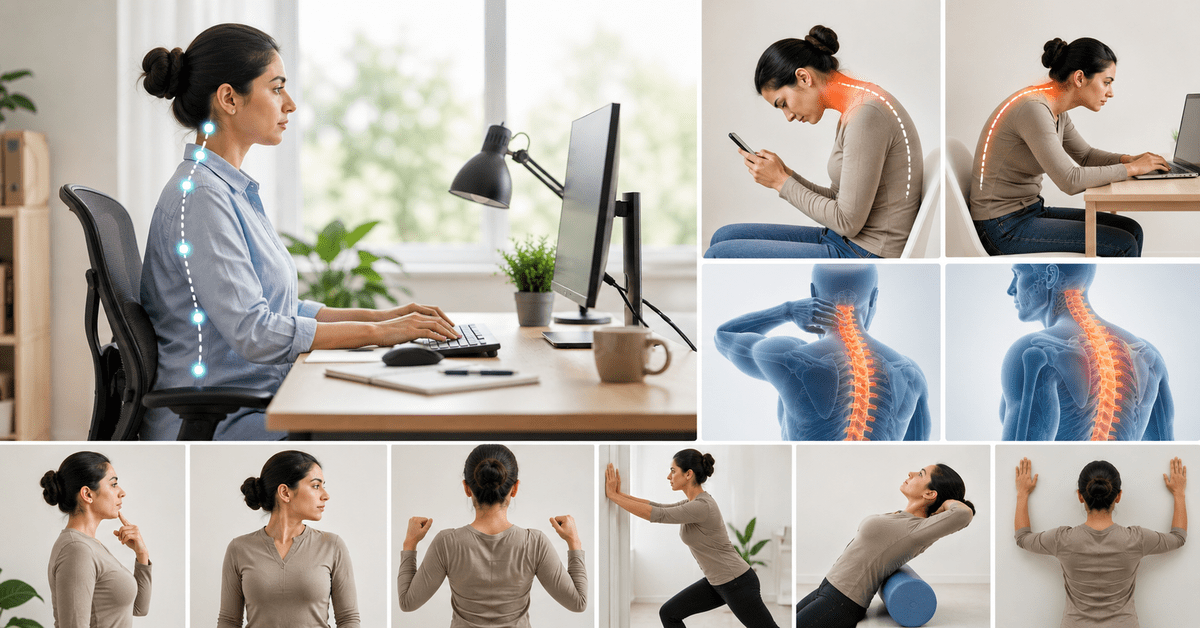
Adopting good posture in daily activity can help to manage this condition.
Consider:
- Taking regular breaks to move around if sitting for long periods.
- Avoid sitting in the same position for long periods.
- Ensure the work station is set to an appropriate height and appropriate seating.
- Carry out regular physical activity.
- Follow the correct exercise regimes.
- Follow Up
- Regular follow ups can help to assess symptoms, function, response to treatment and any complications.
Blood tests and imaging may be recommended again by your doctor if required.
When Should Young Adults Consult a Rheumatologist?
Back pain
See a doctor if you have chronic back pain (lasting longer than 3 months) before the age of 45.
Consider seeing a rheumatologist if your back pain includes more than one of the following:
- Stiffness in the morning.
- Improvement with activity.
- Waking in the second half of the night.
- Intermittent pain in the buttocks.
- A family history of spondylarthritis.
- A previous diagnosis of psoriasis or inflammatory bowel disease.
- Joint swelling, or heel pain.
While these symptoms do not in themselves mean you have a particular diagnosis, they may help your doctor decide if further investigations are needed.
If you are experiencing a sudden episode of severe back pain, and lose bladder/bowel control, significant weakness or numbness in the groin area, seek immediate medical attention.
Conclusion
Persistent low back pain in young people may be caused by inflammatory joint disease such as ankylosing spondylitis.
Signs of ankylosing spondylitis (morning stiffness, low back pain at night, alternating pain in the gluteal area, and pain that improves with movement) may indicate that specialist referral is required.
Testing for HLA-B27 status, inflammatory markers, x-ray imaging and MRI will be useful in conjunction with clinical findings. However, there is no single diagnostic test to confirm or rule out this diagnosis.
With correct medical management, individualized treatment, exercise and regular follow-up, patients with this condition can maintain mobility and manage their condition effectively.
Consider referring to a competent rheumatologist if a patient has persistent inflammatory back pain.
Frequently Asked Questions (FAQs)
1. What are the initial symptoms?
Back pain, stiffness on waking, back pain at night, pain in gluteal region and pain relief with movement. The presentation of symptoms may be slow and can be very variable between individuals.
2. What age does it typically present in?
Typically in adolescents/young adults. Most people present symptoms before the age of 45; however presentation can vary between individuals.
3. If HLA-B27 is positive, can we make a diagnosis of Ankylosing Spondylitis?
Not necessarily. HLA-B27 is a genetic marker that indicates an increased risk of developing AS. To make a diagnosis, clinical symptoms and investigations must also be considered.
4. Can Ankylosing Spondylitis present in patients who are HLA-B27 negative?
Yes. There are patients with axial spondylarthritis who are HLA-B27 negative, therefore a negative HLA-B27 should not rule out the condition.
5. How is inflammatory back pain different from mechanical back pain?
Inflammatory back pain often gets worse at rest, stiffness lasting >30 minutes upon waking and is relieved by movement. Mechanical back pain may be related to activity. These categories can overlap.