Medically reviewed by: Dr. Aditya Jain
Qualification: MBBS, MS Orthopaedics, DNB, MNAMS
Specialty: Delhi’s leading orthopaedic surgeons, specializing in sports injuries, ACL reconstruction, and arthroscopic procedures.
Clinic: StepUp Joints, Lajpat Nagar, South Delhi
Last reviewed: [31 – 10 – 2026]
Doctor’s Statement
“Advanced orthopedic care is built on precision diagnosis, patient-centric planning, and a strong commitment to faster functional recovery. Whether managing a complex sports injury, a ligament tear, or advanced joint degeneration, our goal is to bridge the gap between short-term pain relief and long-term joint health. By utilizing minimally invasive arthroscopic techniques and modern surgical protocols, we aim to restore mobility, protect natural joint structures, and help every patient return to an active, pain-free lifestyle with confidence.”
— Dr. Aditya Jain
Summary:
Arthroscopic knee surgery is a minimally invasive procedure used to diagnose and treat knee problems such as meniscus tears, ligament injuries, cartilage damage, and loose bodies. Recovery usually takes 6 to 12 weeks, depending on the type of surgery and your overall health. This guide explains the recovery timeline, early exercises, pain-control tips, and when to contact your doctor.
Understanding Arthroscopic Knee Surgery
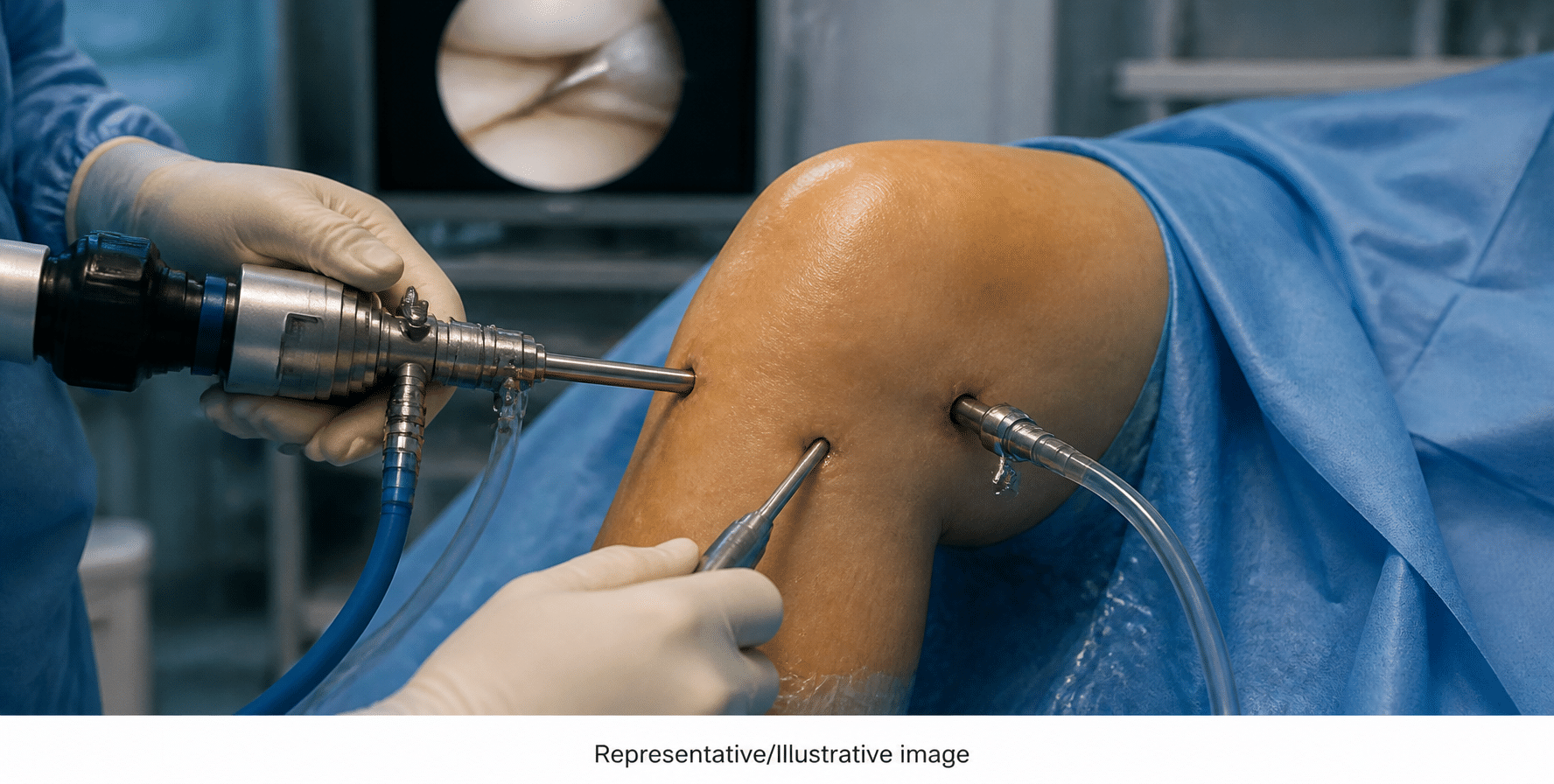
Before covering the recovery timeline, it’s important to learn about what happens during the procedure. An orthopedic surgeon will make a few small buttonhole incisions around the knee joint. Then, a small camera (arthroscope) is inserted into one of the incisions and transmits high-definition images to a monitor. Lastly, different types of surgical instruments are inserted to perform a repair or reconstruction of damaged tissues.
While the level of trauma to the structures of the joint is minimized, the joint still endures stress from the procedure. It is important to allow the joint adequate time to heal and for inflammation to subside before regaining full function of the joint.
The Recovery Timeline: Week-by-Week
Each patient heals at a different rate depending on the specifics of their procedure (i.e. a simple diagnostic scope versus a complex meniscal repair). That being said, here are the standard phases of recovery.
Phases 1 & 2: The First Few Days
Phase 1: The first 24 to 48 hours
Immediately Post-Op: You will be in the recovery room for a few hours until the anesthesia wears off. It is completely normal to have some discomfort and swelling at this time.
Weight-Bearing: Your surgeon will decide if you can bear full- or partial-weight. If only partial weight-bearing is allowed, then crutches will be ordered.
Wound Care: Ice and keep the dressing dry and free of blood.
Phase 2: The first 1 to 2 weeks
Pain and Swelling: Continue to diminish and can be managed with anti-inflammatories.
Mobility: Patients are often able to walk without a significant limp and therefore are able to get rid of their crutches.
Phase 3: Weeks 2 to 3 (Late Healing)
Pain & Swelling: Continue to diminish and can be managed with anti-inflammatories.
Mobility: Continue to improve, and patients often feel they can perform at 80-90% of their normal self.
Phase 4: Weeks 3 to 4 (Late Recovery)
Pain & Swelling: Further diminish and become tolerable.
Mobility: Continue to improve, often feeling they can perform at approximately 90% of normal.
Physical Therapy: Stiffness prevention and normal range of motion are maintained through use of passive and active-assisted ROM exercises. Gentle active ROM stretching exercises are initiated to restore flexibility in previously contracted tissues.
Phase 5: Weeks 3 to 6 (Restoring Strength & Function)
Normalizing Gait: Able to walk without an assistive device.
Strengthening: Quadriceps and hamstrings are incrementally challenged with low-impact resistance exercises.
Daily Activities: Able to return to job duties involving prolonged periods of sitting (i.e. desk job). Able to return to basic household chores. If surgery was performed on the left knee (or right knee once off narcotics, and fully responsive), able to return to driving.
Phase 6: Weeks 6 to 12 and Beyond (Full Recovery & Return to Activity)
Advanced Conditioning: If an athlete or physically active individual, able to participate in sport-specific and agility training.
Full Tissue Maturation: While feeling back to normal by 3 months post-op, full internal tissue healing and maximum muscle atrophy/recovery can take 6 months.
Essential Post-Operative Exercises
Rehabilitation exercises form the basis for any successful recovery. Always consult your surgeon or physical therapist before starting any new exercise.
- Ankle Pumps: To increase circulation in your lower leg, and help prevent blood clots, flex your ankle to move your foot up and down like a pedal.
- Quadricpeps Sets: Sit or lie with your leg straight. Tighten your quad by pushing your knee flat down to the surface. Hold for 5 seconds then relax.
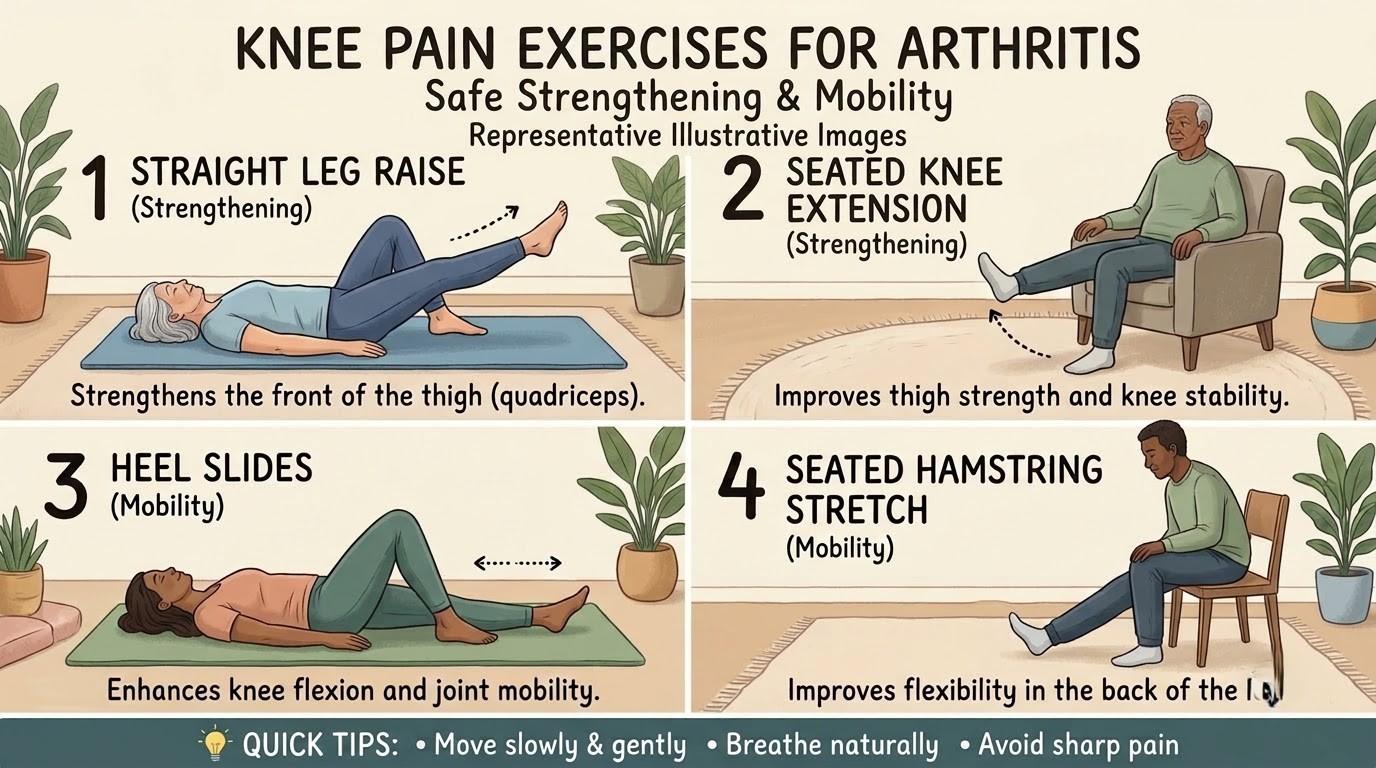
- Straight Leg Raises: Lie on your back with the operated leg straight and the other leg bent. Raise your straight leg about 6 inches keeping it straight and hold. Slowly lower and repeat.
- Heel Slides: To improve flexion of your knee, slowly move your heel toward your buttocks by bending your knee. Then return your foot to the starting position. Repeat.
Practical Tips for a Smooth Recovery
Rest, Ice, Compression and Elevation (R.I.C.E.) protocol needs to be strictly followed for the first 2 weeks following surgery to help control swelling.
Ultimate Pain Management: It is better to take prescribed medications prior to the time when pain is expected to increase rather than waiting to take medication until pain peaks.
Adapt Your Home: Making your home safe may include removing throw rugs to eliminate tripping hazards and securing handrails near staircases. Creating a comfortable “recovery zone” to help you get through the day with all of the essentials (water, pills, remote control, phone, etc) within arm’s reach is helpful.
Never Skip Physical Therapy: Maintaining consistency with your home exercise program in conjunction with in-person therapy sessions will help improve your mobility and strength for the long term.
Conclusion
Arthroscopic knee surgery offers a highly effective, minimally invasive path to resolving joint issues, but true healing doesn’t end in the operating room. A successful recovery depends heavily on your commitment to the rehabilitation timeline, consistent physical therapy, and proper post-operative self-care. By following the R.I.C.E. protocol, performing prescribed exercises, and listening to your body every step of the way, you can safely minimize complications, rebuild lower limb strength, and return to an active, pain-free lifestyle. Always consult your orthopedic surgeon or physical therapist for a personalized recovery plan tailored to your specific procedure.
Frequently Asked Questions (FAQs)
1. What is the time period taken by patients to recover completely after getting arthroscopic knee operation?
Most patients report a great progress in functionality between 4-6 weeks after the surgery but the complete internal healing process and maximum recovery of muscles can take anything between 3-6 months depending on the type of surgery.
2. When can I walk normally after knee arthroscopy?
Individuals can begin walking on their own after 1-2 weeks depending on the nature of their problem and the actual procedure performed.
3. What are the exercises to perform during early rehabilitation?
The most common exercises for the early rehabilitation phase are the ankle pumps for the circulation improvement, quadriceps sets for the thigh strengthening, straight leg raises and heel slides for restoring the knee flexion.
4. What are the best techniques for controlling pain and swelling at home?
The first 48 to 72 hours of your surgery are very important in your recovery process. It is very important to adhere to the R.I.C.E. protocol, which means adhering to Rest, Ice, Compression, and Elevation. Always take the prescribed medication on time and do not wait for the pain to hit you.
5. How soon will I be able to drive and go back to work?
It depends on your comfort level, but most patients return to desk jobs after 3 to 7 days.
Disclaimer: This post is for educational and awareness purposes only. Please consult a doctor for personalized medical advice.