Medically reviewed by : Dr. Neha Narula
Qualification : Head of Physiotherapy & Rehabilitation • 10+ years of experience
Specialty: Consultant Psychiatrist at Fortis Escorts Hospital, New Delhi and StepUp Joints, Lajpat Nagar 4. With over 6 years of clinical experience
Clinic: StepUp Joints, Lajpat Nagar, South Delhi
Last reviewed: [6 – November -2026]
Doctor’s Statement
Proposed wording for Dr. Neha Narula’s review and approval—not a verified quotation:
“Back pain rehabilitation should begin with an assessment of symptoms, function and any warning signs. Treatment is usually most useful when it helps the person understand the problem, remain appropriately active and build physical capacity. Exercises and other interventions should be tailored to the individual, with progress reviewed over time. Persistent or changing symptoms may require further medical assessment.”
Summary
Lower back pain can significantly disrupt your daily life, making even simple movements like walking, working, or bending feel challenging. While it is one of the most common physical complaints, navigating recovery doesn’t have to mean relying on routine scans or quick fixes. Effective back pain physiotherapy focuses on thorough clinical assessment, patient education, tailored exercise therapy, and active self-management to help you build physical capacity and regain your independence. This guide explores what to expect during your assessment, evidence-based treatment options, and how to find individualized rehabilitation care in Delhi.
What Is Back Pain Physiotherapy?
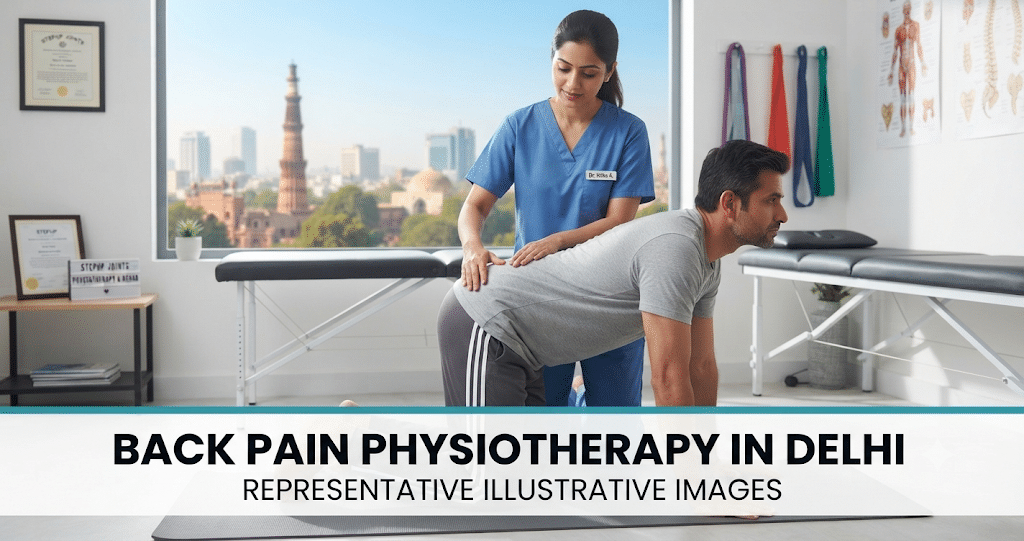
Physiotherapy for back pain is a treatment aimed at improving movement and function. It can involve providing advice, individualised exercise and targeted manual therapy.
The aim of rehabilitation is to provide symptom relief but can help to improve confidence to move, cope with flare-ups and get back to work, family and physical activities.
This article will mainly focus on lower back pain in adults. If there is a serious cause to your back pain or you have had recent back surgery you may need a different treatment pathway.
Why Does Lower Back Pain Occur?
Pain in the lower back can be classified as specific or non-specific. Specific back pain has a known cause whereas non-specific back pain cannot clearly be attributed to a particular illness or condition. Most back pain is non-specific.
Symptoms can include sciatica with pain and symptoms radiating down the leg. It is important to identify whether the back pain is simple, possibly neurological or requires medical investigation.
Chronic back pain can be influenced by a number of social, psychological and physical factors. This does not mean that the pain is not real but that effective management may require treatment of more than one factor.
What Happens at your Physiotherapy Assessment?
The aim of your assessment is to determine whether a physiotherapy intervention is appropriate.
1. Review of Symptoms
Your Clinician will ask you questions to fully understand your symptoms, such as, how your pain has been affecting you, what makes it worse or better, any new or worsening symptoms. Your assessment should also consider possible alternative causes of your symptoms e.g. trauma, infection, cancer or inflammatory.
It would be useful to know:
- When your symptoms began.
- What makes them better/worse.
- Are your symptoms travelling down your leg?
- Any numbness/weakness or changes to your bladder/bowel.
- Any previous treatment or relevant medical history.
- What you wish to do.
This will help your assessment, identify any red flags and set appropriate goals for your treatment.
2. Functional Assessment
Your assessment will look at how your symptoms are affecting your movement and functional activities. Further tests may be required based on the findings, to assess any potential nerve involvement or if a referral is appropriate. Your treatment should be tailored to your specific requirements and abilities.
3. Consideration of Influencing Factors
Chronic back pain can be influenced by fear avoidance, negative emotions and difficulty returning to normal activities. Some people will require basic advice and exercises whilst others will benefit from a more holistic approach.
Do You Need an MRI Before Physiotherapy?
Generally no. The NICE guidelines advise against routine imaging in non specialist practice for patients with low back pain, with or without sciatica.
Imaging is generally only considered once referred to a specialist if it will alter management. This can help to reduce unnecessary investigations whilst still ensuring any worrying symptoms get managed correctly.
Scanning should only be carried out if the patient presents with clinical findings that require it.
Treatments available to treat back pain:
1. Information and Self-Management
Providing patients with information about their condition will help them manage their symptoms. This should be personalized to the patient which could include advice on staying active, managing symptoms and returning to normal activities.
It can also help develop a plan to deal with any future exacerbations.
2. Exercise Therapy
Exercise plays a key role in the management of many people with lower back pain. Strengthening, aerobic, movement and mind-body exercises can be provided depending on the patient’s needs, preferences and abilities.
The exercises should be simple to perform and flexible. A patient who is returning to walking or domestic activities may start with different exercises to someone who is trying to prepare for heavy work or sport.
Each patient does not have to do the same exercise. Personalized treatment should be provided.
3. Manual Therapy
Mobilization, manipulation and soft tissue therapies (e.g. massage) can be considered as a treatment for lower back pain. However, NICE recommends manual therapy should be used alongside exercise.
Manual therapy should be used to help encourage active recovery.
4. Chronic Pain Management
Some people may require a multi-disciplinary approach to manage ongoing symptoms. Cognitive behavioral strategies may be used to help overcome obstacles to recovery.
This approach acknowledges that pain, distress, activity and confidence can impact each other. It doesn’t mean that the symptoms are all in their heads.
5. Work and Activity Advice
Advice may be given to help manage work related activities as part of their rehabilitation. This can include adapting to the workplace, remaining active, improving sleep and supporting their wellbeing.
To help them feel they can manage their activity.
6. Not all treatments are recommended
Not all treatments commonly promoted are recommended. Traction should not be used for lower back pain with or without sciatica (NICE). The WHO advise against using some treatments routinely such as lumbar supports and traction for chronic primary lower back pain.
Patients can ask what the treatment is aiming to achieve and how their progress will be measured.
What Does Rehabilitation in Delhi Involve?
The rehabilitation should address your goals. If you are looking for rehabilitation in Delhi, perhaps you want to be able to travel, manage around the house, go back to work or exercise.
Rehabilitation aims to increase your independence and ability to take part in meaningful activities. You should monitor your progress by looking at your functional abilities and not just pain scoring.
A useful plan should explain:
| Element | What to clarify |
| Assessment findings | What is the working explanation for the symptoms? |
| Goals | Which activities are currently limited? |
| Exercise plan | What should be done at home, and how will it progress? |
| Additional treatment | Why is it being recommended? |
| Review | How will changes in symptoms and function be assessed? |
| Referral | What findings would require medical or specialist review? |
This structure supports a person-centred approach rather than an identical programme for every patient.
How Many Physiotherapy Sessions Will You Need?
This will vary depending on individual circumstances. The amount of help they receive should be proportional to their symptoms, functional problems and likely ease or difficulty of recovery.
Some people may require some advice and exercises to do at home whilst others require a supervised exercise and support package. A review/adjustment plan should be in place rather than guaranteeing recovery in a set number of sessions.
Choosing Physiotherapy in Delhi
Look for whether they will provide:
- An initial assessment
- Screening for symptoms to refer to the medical profession
- Realistic aims
- An exercise/self management plan to do at home
- An explanation of what each treatment is for
- Review based on symptoms and function
This will give you a good indication that the service is following guidelines and providing individualized care. Don’t be tempted by long lists of machines or quick pain relief. It is important that a logical assessment and treatment plan takes place.
When Back Pain Needs Urgent Medical Attention
Do not delay in calling for an emergency doctor appointment if before it one or more of the following symptoms appear with back or leg pain:
- Difficulty starting urination,
- Inability to pass urine,
- Loss of bladder control,
- Loss of bowel control,
- Feeling numb around the genital area,
- Having reduced awareness of bladder fullness and urinary flow.
These can be symptoms of cauda equina syndrome and require urgent emergency treatment. Consult the nearest hospital.
Weakness in the legs or feet should also be assessed urgently.
Conclusion
The most effective treatment plan will link assessment results to achievable goals and actions. Physiotherapy in Delhi should be individualised and based on evidence to help you become active in your recovery and can be adapted to meet changing needs.
FAQs
1. Can physiotherapy help with lower back pain?
Physiotherapy can play an important role in helping you recover from your back pain. This could include education, exercises and some other treatments. The most appropriate treatment will depend on your assessment. There is no guarantee that any treatment will work the same for everyone.
2. Can physiotherapy help with sciatica?
Exercise based approaches and some manual therapy may be used to manage your lower back pain. If you have any new weakness or bladder/bowel/saddle area sensory changes you should seek medical advice.
3. Will I need an MRI scan?
No. Images are generally only sought if there is a high likelihood of the results changing your management.
4. Is massage the best way to treat back pain?
Massage may be used as part of your treatment however, it is recommended to use manual therapy alongside exercises (NICE).
5. Should I avoid doing any activity if my back is painful?
Generally guidelines would recommend trying to carry out normal activities as much as possible. Exercises will be individually prescribed to suit your abilities. If you have severe, progressive or worrying symptoms please seek individual advice.
Disclaimer: This post is for educational and awareness purposes only. Please consult a doctor for personalized medical advice.