Medically reviewed by: Dr. Pulak Vatsya
[Qualification – Trained at AIIMS New Delhi, PGIMER Chandigarh, and the Tokyo Sports & Orthopaedic Centre, Japan ]
[Specialty– robotic joint replacement, Direct Anterior Approach (DAA) hip surgery, and ACL reconstruction],
Clinic: StepUp Joints, Lajpat Nagar, South Delhi
Last reviewed: [22-10-2026]
Doctor’s Clinical Perspective
Dr. Pulak Vatsya says: “Recovery after a sports injury should be gradual, assessment-based, and individualized. Sports injury rehabilitation exercises should aim to restore movement, strength, balance, and confidence without causing pain or re-injury. Patients should not begin or progress an exercise program without appropriate professional guidance, especially after a significant injury or surgery.”
Summary
Sports injury rehabilitation exercises are a form of movement designed to help injured athletes and active people recover. An effective rehabilitation program should reduce discomfort and swelling, improve range of motion and balance, strengthen muscles, and help the patient return to his or her sport or activity. The purpose of this essay is to discuss the sport injury rehabilitation exercises, their indications, and importance. The professional rehabilitation strategy should be designed by the doctor since each patient needs a specific course of therapy.
Understanding Sports Injury Rehabilitation Exercises
Sports injury rehabilitation exercises are types of therapeutic movements that are assigned or recommended following an injury to facilitate the healing process. They can be utilized in the management of muscle, ligament, and tendon injuries, as well as joint pain, surgical interventions, and overuse syndromes.
The goals of sports injury rehabilitation exercises are not only to relieve pain but also to restore range of motion, increase muscle strength and endurance, improve balance and coordination, and prevent future injuries. The process of rehabilitation typically starts with restoring motion and progresses to resistance training, neuromuscular re-education, functional restoration, and sport-specific training.
Since different injuries present distinct manifestations, the same rehabilitation exercises may not be appropriate for different patients. Therefore, the sports injury rehabilitation exercises should be determined by a qualified professional during the clinical evaluation of the patient.
Why Rehabilitation Is Important
After an injury, many people avoid moving to avoid pain or further injury. However, this can cause stiffness, weakness, reduced balance, and decreased confidence in movement.
Appropriately designed sports injury rehabilitation exercises can help with the following:
- Gradual recovery under medical supervision
- Range of motion restoration
- Restoring muscle strength and endurance
- Improving balance and coordination
- Reducing compensations
- Preparation for a gradual return to activity
- Long-term physical function
Rehabilitation should be progressive. The literature and guidelines commonly recommend restoring range of motion first, followed by strengthening, balance, and sport/function-specific exercises.
Important Safety Principles
Before starting sports injury rehab exercises, a person should consult a qualified medical professional. This is particularly important for people with severe pain, swelling, numbness, joint instability, an inability to bear weight, or a history of surgery.
Some general safety guidelines include:
- do not force movement through sharp pain
- start with lower load exercises if advised
- proceed gradually rather than aggressively
- maintain proper form throughout
- cease activity if symptoms worsen during or after exercise
- follow the instructions of your treating medical professional
- avoid comparing your progress to others
Pain during rehab is not something to be concerned about as long as it is controlled. However, if a person experiences worsening pain, swelling, or weakness, they should seek professional evaluation.
Phase 1: Pain Control and Gentle Movement
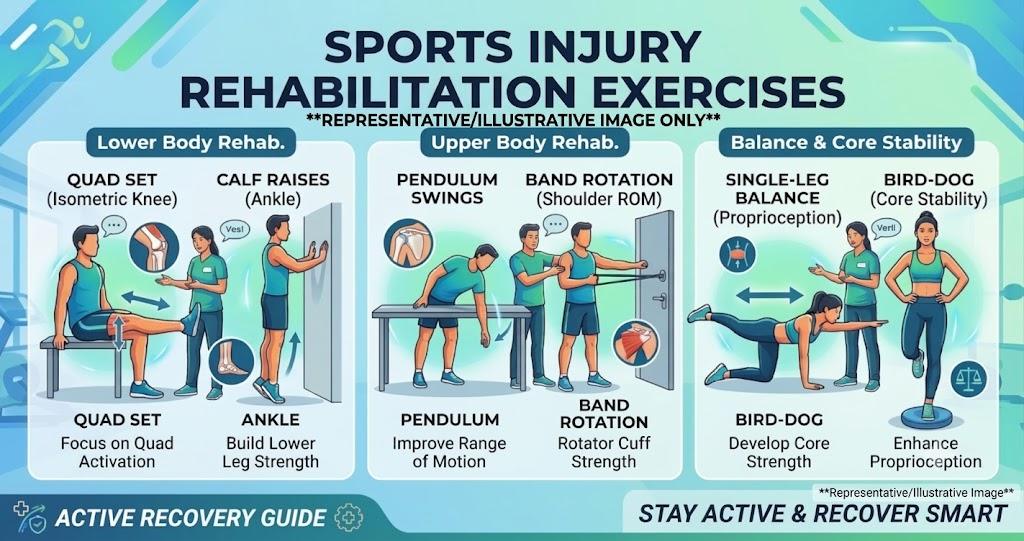
The initial phase of rehabilitation exercises for a sports injury is aimed at protecting the injured part while performing mild movements. This stage depends on the nature of the injury, and it may involve simple range of motion activities and light muscle contractions.
Some examples of these exercises are:
- Ankle pumps
- Knee-to-heel slides
- Pendulum stretches
- Gentle wrist and elbow movements
- Isometric contractions of the muscles
- Short walks and pain-free movement (if allowed)
These exercises should be performed under the guidance and supervision of a specialist, especially for moderate or severe injuries.
Phase 2: Mobility and Flexibility
Once the pain and swelling have gone down, rehabilitation exercises for sports injuries can begin to restore mobility. Limited mobility can impact day-to-day activities, including walking, running, lifting, throwing, and more.
Mobility exercises can include:
- Calf stretches
- Hamstring stretches
- Hip flexor stretches
- Shoulder wall slides
- Gentle thoracic rotations
- Ankle mobility drills
Stretches have to be done slowly and gently to avoid pain. The person stretching should not bounce or push into pain.
Phase 3: Strength and Muscle Activation
Strength training is considered a significant component of a sports injury rehabilitation program. It works by reducing the load on a particular joint and strengthening the muscles that surround it. This is especially essential for patients who lead a sedentary lifestyle because their muscles atrophy due to inactivity. The following strength training exercises can be incorporated into a rehabilitation program:
- Glute bridges
- Clamshells
- Straight-leg lifts
- Mini squats
- Step-ups
- Calf raises
- Resistance-band rows
- Shoulder dislocators
- Core stability workouts
The intensity and volume of training should be individualized for each patient. In addition, a dynamic overload, or a progressive increase in the number of repetitions and resistance, should be implemented to avoid overloading the muscles.
Phase 4: Balance and Coordination
Balance training is particularly beneficial in the rehabilitation process for injuries of the ankle, knee, and hip. The ability to sense the position of the joints and respond to movement is affected when experiencing such injuries.
A balance training program for sports-related injuries could consist of the following exercises:
- Single-leg stands
- Single-leg stands with slow head movements
- Exercises to improve balance on a stable and then an unstable surface
- Single-leg reach
- Heel-to-toe walks
- Step-downs with control
Such drills should be done in a safe environment near a wall, chair, or other objects to prevent additional injuries if a person loses balance.
Phase 5: Functional and Sport-Specific Rehabilitation
The last stage of the rehabilitation process includes the restoration of the individual’s functioning according to the requirements of their sport/activity. It involves the gradual reintroduction of the loads associated with the nature of the injury – walking, jogging, jumps, direction changes, lifting weights, throwing movements, and the performance of sport-specific tasks at a low intensity.
Among the components of the stage are:
- Increasing the intensity of walking or jogging
- Lateral movements
- Hopping movements – if appropriate
- Agility training
- Reduced-intensity sport-specific tasks
- A progressive return to training following the development of sufficient function
The return to sport should be based on objective findings, including sport-specific functional capacity, strength, control of movement patterns, and response to activity, not solely on the absence of pain.
Knee Rehabilitation Exercises
Knee injuries may involve the quadriceps, hamstrings, calves, hips, and core muscles. As part of the rehabilitation process, a person may need to perform exercises that work these areas and help strengthen and stabilize the knee.
Some typical knee injury sports rehabilitation exercises are as follows:
- Quad sets
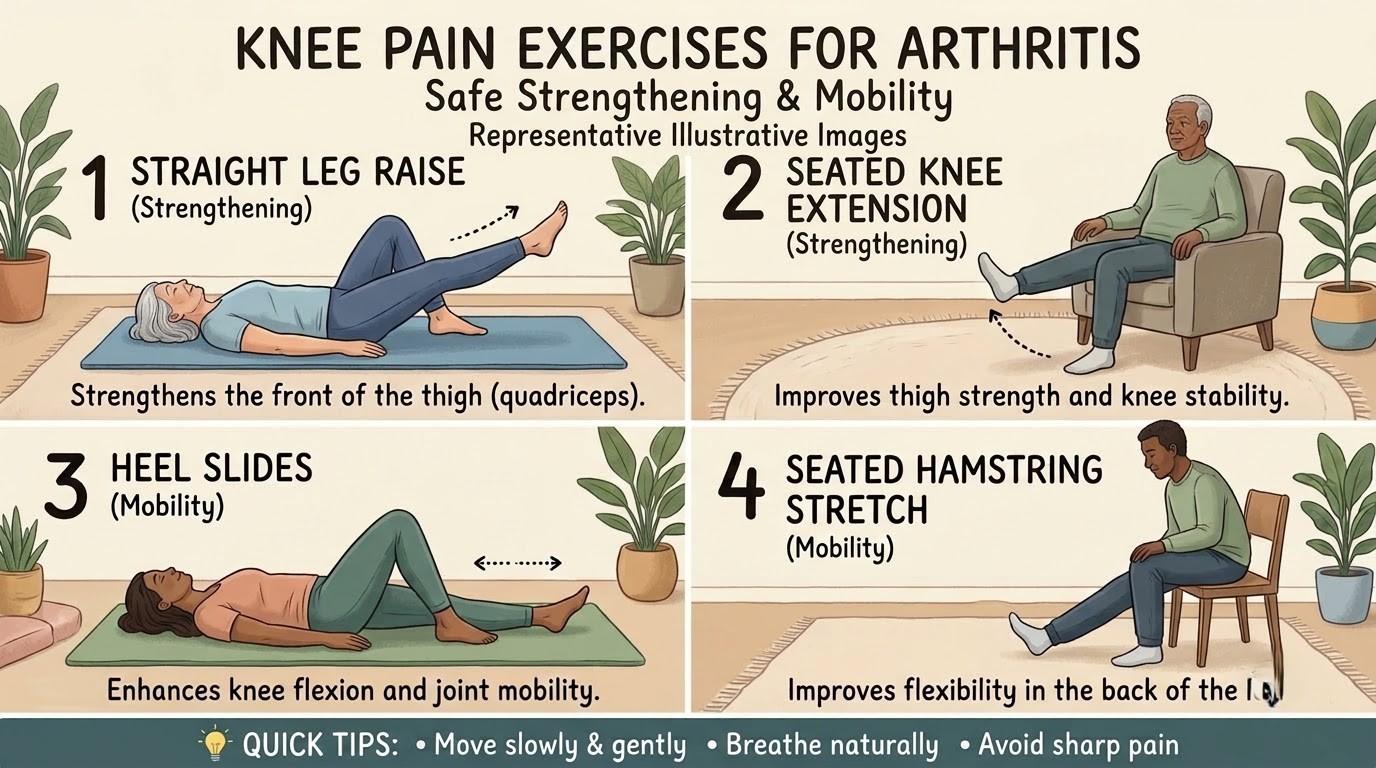
- Straight-leg raises
- Heel slides
- Glute bridges
- Mini squats
- Step-ups
- Hamstring curls
- Single-leg balance
These exercises are generally suitable for most knee conditions, but it is essential to consult a medical professional and seek individual advice.
Ankle Rehabilitation Exercises
Ankle injuries are common amongst athletes, especially those participating in sports that involve running, jumping, and quick directional changes. The functional rehabilitation that typically includes the progressive weight-bearing and therapeutic exercise is appropriate for treating ankle injuries in patients.
A set of ankle-focused rehabilitation exercises for sport injuries could consist of:
- Ankle pumps
- Alphabet writing
- Resistance band movements
- Calf raises
- Heel walks
- Toe walks
- Single-leg balance
- Lateral movements
Balance training is crucial in the rehabilitation process after an ankle injury, but it should be introduced gently and only when the patient is ready.
Shoulder Rehabilitation Exercises
Shoulder rehabilitation may involve restoring mobility, improving scapular control, strengthening the rotator-cuff, and progressing back into overhead or throwing activity. Rehabilitation may advance through acute, intermediate, strengthening, and functional stages.
Common shoulder-specific sports injury rehabilitation exercises may include:
- Gentle pendulum motions
- Wall slides
- Scapular squeezes
- Resistance-band rows
- External-rotation exercises using a band
- Prone Y raises
- Controlled pushing or pressing motions (as directed)
Heavy lifting, throwing, or overhead activity should be avoided until cleared by a medical professional.
Hip and Hamstring Rehabilitation Exercises
Hip and hamstring injury rehabilitation can be a protracted process and requires a progressive return to training. This may include hip and core strengthening exercises with activity modification during the early stages of recovery.
Consider the following examples:
- Glute bridges
- Hip thrusts
- Clamshells
- Side-lying leg raises
- Single-leg balance
- Controlled hip-hinge movements
- Gradual progression to running
High-speed running, sprinting, or explosive-type movements should be reintroduced under the guidance of a medical professional.
How Often Should Rehabilitation Exercises Be Done?
The frequency of sports injury rehab exercises is determined by the nature of their injury, the state of their healing, and the professional guidance they receive. Some gentle movements may be performed on a daily basis while building strength may be recommended every other day to facilitate their healing process.
An appropriate sport injury rehab program may consist of such a pattern as the following:
- Mobility work most days of the week
- Strength training two to four times per week
- Balance or coordination work a few times per week
- Sport-specific activity only when appropriate
- And sufficient rest and recovery in between
Consistency is vital to the healing but overtraining can impede the process; hence, a rehab program should always be adjusted according to one’s symptoms and the recommendations provided.
Signs of Safe Progress
A rehabilitation program may be progressing appropriately if:
- Pain is gradually decreasing
- Swelling is subsiding
- The range of motion is improving
- Strength and control are improving
- Activities of daily living become easier
- Sport-specific movements can be performed with greater confidence
- Symptoms are not significantly exacerbated with activity
The return to sport is generally considered to be when an individual is able to perform sport-related activities with appropriate range of motion, strength, and function.
When to Seek Medical Advice
A person should get medical intervention if they have:
- A sharp pain or the pain gets worse
- Swelling that is significant or increases
- Numbness and tingling
- Worsening joint instability
- Inability to bear weight
- Symptoms that do not go away and come back
- Pain that keeps them from sleeping
- No improvement even when they do the right rehabilitation
These are some of the symptoms that may cause a person to seek a different course of treatment or reevaluation of their injury.
Common Rehabilitation Mistakes
Common mistakes include:
- returning to sport too soon
- failing to strengthen and stabilize the injured area
- stretching too much
- doing only cardiovascular workouts and no specific strengthening or range of motion exercises
- stopping rehabilitation when the pain goes away
- increasing the demands on the injured part or the amount of exercise too rapidly
- overlooking compensations
- following the same exercise program another person is using
A reduction in pain is not necessarily an indication that it is safe to return to sport. Patients often need to continue with their rehabilitation to improve the strength, range of motion, balance, endurance, and confidence needed for sports activities.
Preventing Future Injuries
After rehabilitation, it is important to continue to develop a maintenance program that includes physical exercises and nutritional and lifestyle adjustments. It may consist of various elements, such as strength training and specific drills, stretching, balance and flexibility activities, proper warm-up and warm-down, progression, sufficient sleep, proper hydration, and a balanced diet. A program has to be tailored to an individual’s sport, past injuries, biomechanics, and current fitness level.
Final Takeaway
Sports injury rehabilitation exercises play a vital role in the treatment of any athlete or individual who actively participates in sports training. The proper rehabilitation program implies a progressive and systematic return to moderate physical activity. This process should be individualized and depend on many factors, such as a specific diagnosis, and gradually move from gentle exercises to those more intense.
Before starting or making changes to your sports injury rehabilitation exercises, it is important to consult with a qualified healthcare provider. They will determine the most appropriate set of activities for you.
FAQs
1. What are sports injury rehabilitation exercises
Sports injury rehabilitation exercises can be described as a series of movements, which are aimed at helping an individual recover from a sports injury. These exercises can help reduce pain, regain range of motion, improve the functionality of the injured part, increase balance, and get back to normal activities or sport. Depending on the case, different rehabilitation activities are required.
2. When should one begin doing sports injury rehabilitation exercises
The decision to begin doing sports injury rehabilitation exercises depends on the case and should be done under the supervision of a specialist. In some cases, it might start right away, while in others, it may begin at a later stage. Rehabilitation activities should not be attempted on one’s own, especially when it comes to serious injuries or after surgery. It is critical to consult a specialist when getting back to any physical activities.
3. Can rehabilitation exercises for sports injuries be done at home
Most rehabilitation activities can be done at home after a doctor or physiotherapist looked at the case and developed a personalized action plan. When doing rehabilitation activities at home, it is important to ensure that the right technique is used and that there is no pain or swelling after the exercise. A specialist would determine what activities can be done at home and how often they should be performed.
4. How long does it take to rehabilitate from a sports injury
Depending on the case and the severity of the injury, it can take anywhere from a few weeks to several months. For example, a muscle strain will heal faster than a ligament injury, fracture, or post-surgery rehabilitation. A personalized plan prescribed by a specialist is more likely to heal a sports injury faster and with better results.
5. In sports injury rehabilitation, is it normal for someone to experience pain
Depending on the stage of the rehabilitation process and a personal tolerance level, some activities can cause slight pain or discomfort. However, it should not be sharp or located in other parts of the body. If rehabilitation activities cause more pain, instability, numbness, or weakness in other areas, consult a medical professional.
Disclaimer: This post is for educational and awareness purposes only. Please consult a doctor for personalized medical advice.