
Medically reviewed by: Dr. Naman Wahal
[Qualification– Trained at AIIMS New Delhi and MAMC, with an advanced international fellowship at ATOS Klinik, Germany.],
[Specialty – specialist Shoulder & Sports Orthopaedic Surgeon . ]
[Clinic: specialist Shoulder & Sports Orthopaedic Surgeon ]
Last reviewed: [31-October-2026]
Doctor’s Statement
“Knee replacement surgery can be life-changing for patients suffering from advanced arthritis or severe knee damage. The key to a successful outcome is not only a well-performed surgery but also proper pre-operative planning and dedicated physiotherapy after the procedure. Patients who follow their rehabilitation programme consistently often regain mobility, confidence, and a better quality of life. If knee pain is affecting your daily activities, do not delay an expert evaluation.”
Short Summary
“Knee replacement surgery is an effective option for people with severe knee pain, arthritis, or joint damage that does not improve with medicines or physiotherapy.”
stepupjoints is an effective option for people with severe knee pain, arthritis, or joint damage that does not improve with medicines or physiotherapy. The surgery replaces damaged knee surfaces with artificial implants to reduce pain and improve mobility. Recovery usually begins within a day, with physiotherapy continuing for several weeks to months. In Delhi, the cost generally depends on the hospital, implant type, surgeon, and whether one or both knees are replaced. Early consultation, proper planning, and regular rehabilitation can help patients return to a more active and independent life.
What Is Knee Replacement Surgery?
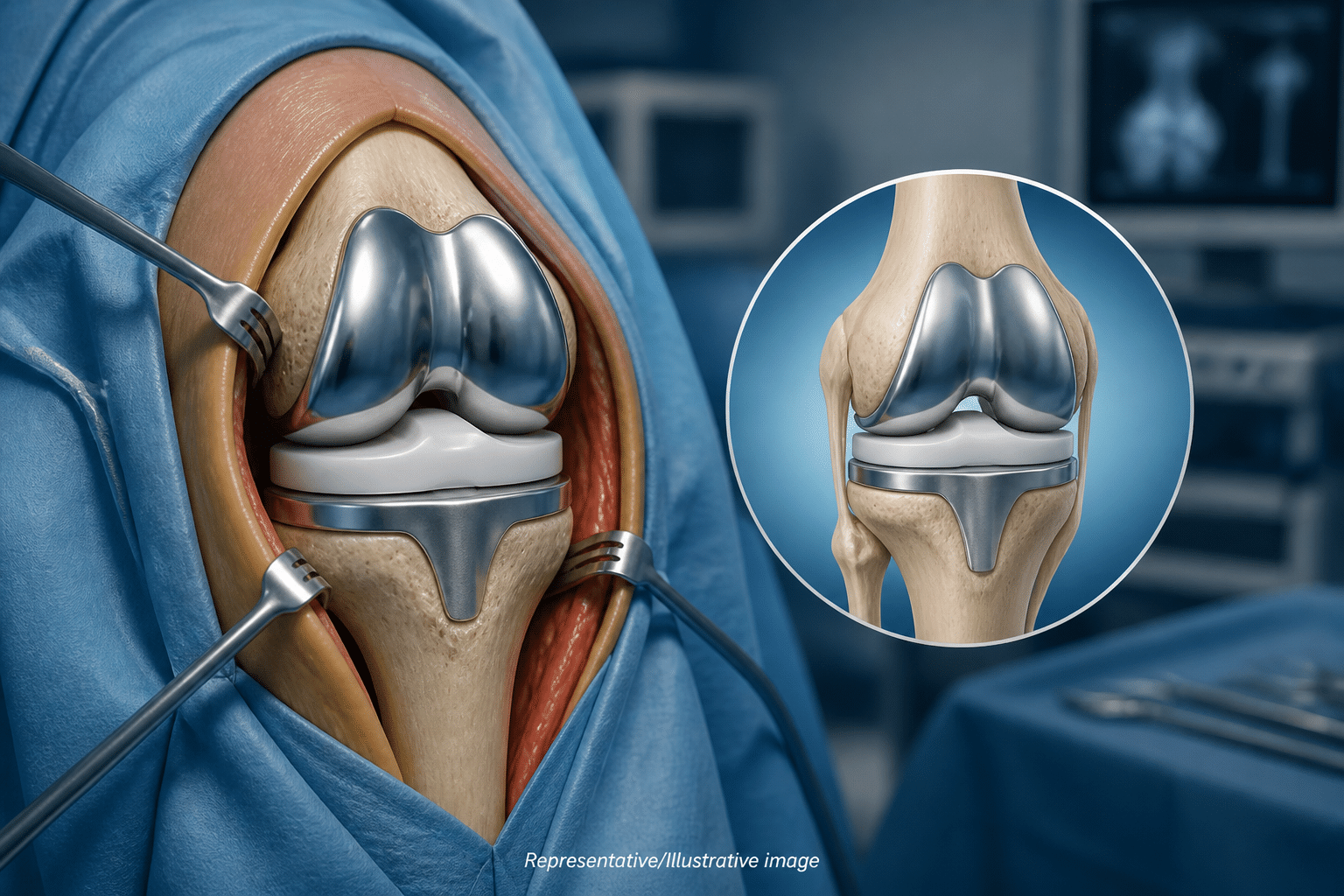
Knee replacement surgery or knee arthroplasty is a surgical procedure that involves replacing damaged parts of the knee joint with an artificial device made of metal and plastic. It is a procedure done to relieve knee pain and help you resume normal daily activities.
The cost of Knee Replacement Surgery: Procedure, Recovery & Cost varies depending on the knee replaced, if one or both knees are replaced, the type of prosthesis used in the surgery, hospital’s amenities, and the patient’s medical condition.
Knee Replacement Surgery: Procedure, Recovery & Cost is mostly considered when conservative treatments such as medication, physiotherapy, injections, and lifestyle modifications fail to provide significant pain relief.
There are two types of knee replacement: Total knee replacement involves replacing the entire surface of the diseased knee joint, while a partial knee replacement is performed when one side of the knee is affected and only one part of the knee joint is replaced.
A surgeon can recommend Knee Replacement Surgery: Procedure, Recovery & Cost following imaging tests, a review of your medical records, a gait analysis, and a patient’s response to nonsurgical treatments.
Who May Need Knee Replacement?
You may be a candidate for knee replacement if you have any of these:
- Severe osteoarthritis (OA) or rheumatoid arthritis (RA)
- Pain when you are not active or pain that wakes you up from the sleep
- Unable to walk, stand, climb stairs or get up from a chair easily
- Bowed legs or knock knees
- Limited range of motion that makes it hard to do things like your daily activities.
Pain even after you have tried nonsurgical treatments like medications, physical therapy, losing weight or shots around the knee.
Having a knee replacement is usually considered when arthritis has caused significant damage to the knee. It is not a decision that is made based only on your age. The orthopaedic surgeon will determine if you are a good candidate based on the amount of pain you are having and how well you are able to function. The decision to have knee replacement surgery is also based on the condition of your bones and other medical conditions you may have.
Conditions Treated by Knee Replacement
The most common indication for knee replacement is osteoarthritis, a degenerative disease in which the protective cartilage of the knee gets eroded away. Other reasons for knee replacement are:
- Rheumatoid arthritis
- Post-traumatic arthritis following knee trauma
- Avascular necrosis
- Severe knee deformity
- Failed surgery on the knee
- Some fractures or knee injuries
When the damage to the knee joint reaches a point where non-surgical treatment only provides temporary relief, Knee Replacement Surgery: Procedure, Recovery & Cost becomes an option to seriously consider in consultation with your orthopaedic surgeon.
Preparing for Knee Replacement Surgery
Good preparation can improve the results of surgery and facilitate the postoperative period. In this regard, before knee replacement surgery, the doctor may recommend:
- blood tests, ECG, chest X-ray, and other tests to assess health;
- checking the list of medications (e.g., dosage of anticoagulants and diabetes drugs);
- dentist’s examination if there is an infection in the mouth;
- reducing weight and stopping smoking;
- therapeutic exercises to strengthen thigh and hip muscles;
- organizing help in the first days after surgery.
It is also advisable to find out from the surgeon what implant is planned to be used, under which anesthesia the operation will be performed, how long the hospital stay will last, and what the rehabilitation program will look like. A Knee Replacement Surgery: Procedure, Recovery & Cost consultation beforehand will help the patient cope with stress and prepare for changes in the first days and weeks after surgery.
Knee Replacement Surgery Procedure
It typically involves one to two hours for a knee joint. It is usually performed under spinal or general anaesthesia.
Summary of the procedure
Anaesthesia: The anaesthetist administers spinal or general anaesthesia. In addition, many patients receive a nerve block to manage post-surgical pain.
Incision: A surgical incision is made above the knee joint.
Removal of damaged tissue: The surgeon removes damaged cartilage and a small amount of bone from the thigh bone, shin bone, and kneecap.
Insertion of implants: Metal implants are attached to the femur and tibia. In addition, a plastic spacer is inserted between the two bones so that they can move smoothly against each other.
Test mobility: The surgeon tests the alignment and mobility of the knee.
Closure: The surgical site is closed by clipping or suturing the incision and covering it with a bandage.
Surgery can sometimes be minimally invasive and robotic-assisted at specialized facilities. However, the particular method is best determined by the patient’s anatomy, the nature of the deformity, the experience of the surgeon, and the type of implant used.
Recovery After Knee Replacement Surgery
The rehabilitation process is slow, and physiotherapy is the most critical element. Most patients can stand or start walking with assistance after the day of the operation, depending on their personal recovery rate and the doctor’s orders.
First 24 to 48 hours after surgery
- Pain relief treatments and reduced swelling are prioritized.
- Physiotherapy exercises prevent lung problems, such as reduced expansion and promote healing.
- Ankle movement and knee muscle stretches are introduced.
- A physiotherapist assists the patient in sitting, standing, and walking with a walker.
Week 1 – Week 2
- Patients start walking short distances with assistance.
- Knee bending and straightening exercises help improve flexibility and reduce swelling.
- Bruises and swelling should subside by the end of the second week.
- The stitches or clips are typically removed between 10 and 14 days after surgery.
Week 3 – Week 6
- Physiotherapy is usually done on an outpatient basis.
- Leg muscle activities, balance training, and walking are performed.
- Most patients resume returning to daily activities at this stage.
- Driving might be resumed if the doctor determines the leg function is sufficient to control the vehicle.
Month 2 – Month 3
- Most patients’ functional capacity is improved, allowing them to resume most of their daily activities.
- Endurance walking is reintroduced.
- Stairs climbing becomes more comfortable with practice.
- Many patients report being much more confident and independent.
Month 3 – Month 12
Balance, strength, and confidence continue to improve during the next few months.
An active and healthy lifestyle is encouraged when patients have enough strength and stability to participate.
Bicycling, swimming, and walking are recommended activities.
Full recovery takes six to twelve months for most patients. According to research and clinical practice, a person’s ability to perform many tasks is often restored within three months after surgery, but it takes six to twelve months for everything to return to normal.
Physiotherapy After Knee Replacement
The physiotherapy is not optional since it is a required part of the knee replacement surgery rehabilitation. The rehabilitation programme allows you to resume knee bending and straightening, improve the strength of your muscles, balance and the way you walk.
Some of the most common knee exercises after surgery include:
- Ankle pumps
- Quadriceps sets
- Straight-leg raises
- Heel slides
- Knee bending and extension
- Sitting and standing
- Gait training with a walker or stick
- Balance and strengthening
Moreover, skipping physiotherapy can lead to stiffness and weakness, and it will slow down your recovery. Make sure to follow all the precautions recommended by your surgeon and go to all the required physiotherapy sessions.
Pain Management After Surgery
Some pain and swelling is to be expected following surgery, and this should subside. Your care providers may use the following to help manage these symptoms:
- Prescription pain medications
- Ice
- Elevation
- Gradual return to activity and physiotherapy
- Nerve block or regional anaesthesia
- Compression stockings, if appropriate
Contact your doctor immediately if you experience fever, increased redness or warmth around the surgical site, discharge from the incision, marked swelling of the leg or calf pain, chest pain or difficulty breathing. This could be a sign of complication and requires immediate attention.
Knee Replacement Surgery Cost in Delhi
It depends on the hospital, the type of implant, the experience of the surgeon, the category of the room, the length of stay, and whether one or both knees are replaced. So in Delhi, it is typically estimated to cost around Rs. 3.5 lakh, with an average range of Rs. 1.7 to 6.5 lakh, depending on the hospital and implant. Another estimate from Delhi for a knee replacement costs around Rs. 2.95 lakh with unilateral total knee replacement averaging between Rs. 2.8 – 3.22 lakh.
What affects the cost?
| Factor | Impact on cost |
| Type of surgery | Partial knee replacement usually costs less than total knee replacement |
| Unilateral vs bilateral | Both knees together increases the overall cost |
| Implant choice | Imported, high-flexion, or premium implants may cost more |
| Robotic assistance | Robotic-assisted surgery may increase the package cost |
| Hospital room | Private or deluxe rooms cost more than general wards |
| Length of stay | Longer hospitalisation increases charges |
| Comorbidities | Diabetes, heart disease, or other conditions may require extra care |
| Physiotherapy | Rehabilitation sessions add to the total expense |
Approximate cost components
- Surgeon and anaesthesia fees
- Operation theatre charges
- Implant cost
- Hospital room and nursing charges
- Diagnostic tests
- Medicines and consumables
- Post-operative physiotherapy
- Follow-up consultations
Some estimates for total knee replacement in India start at about ₹1.5 lakh to ₹2 lakh, while robotic-assisted procedures may cost between ₹2.5 lakh to ₹5 lakh. Always request a detailed written estimate from the hospital as the final bill could vary depending on your medical condition.
Is Knee Replacement Safe?
Knee replacement surgery is a common and generally safe procedure when performed by an experienced orthopaedic team. However, the operation has potential risks and complications, such as:
- Infection
- Blood clots
- Bleeding
- Stiffness of the knee
- Loosening or wearing of the implant
- Nerve or blood vessel damage
- Chronic pain in some cases
The likelihood of complications is reduced if patients follow doctors’ advice and take care of themselves before and after the operation, control chronic conditions such as diabetes and hypertension, and quit smoking if applicable.
Life After Knee Replacement
Most individuals report significant improvement in pain and function after recovering. You may be able to walk, climb, drive, shop, travel, and do more every day.
However, you should probably not run, jump, or play contact sports if you have had a standard knee replacement. Instead, you can try less stressful exercises, such as walking, stationary bicycling, and swimming.
Also, maintaining a healthy weight, exercising your muscles, and attending regular medical checkups will benefit the knee joint replacement.
When to See a Doctor
Consult an orthopaedic surgeon if you have:
- persistent knee pain
- night pain
- pain that wakes you up at night
- swelling / locking / instability
- difficulty in walking or getting around
- inability to undertake usual activities of daily living
- failure to respond to medical therapy and / or physiotherapy
- progressive deformity
Early intervention does not always mean surgery. Physiotherapy, injections, weight reduction or modification of activity may help to avoid knee replacement. However, if there is significant damage to the joint, knee replacement can prevent further deterioration and help to return you to a normal active life.
Final Thoughts
Knee Replacement Surgery: Procedure, Recovery & Cost: A knee replacement surgery entails a wide range of factors beyond the procedure itself. A successful knee replacement requires an appropriate choice of patients, skilled medical professionals, effective post-surgery pain management, and rehabilitation.
Therefore, if severe knee pain is restricting your lifestyle, it is advisable to consult an orthopaedic surgeon or physiotherapist to discuss the available knee replacement surgery options and their implications. Patients who undergo knee replacement surgeries normally gain back mobility and live more energetic liv
Frequently Asked Questions
1. What is knee replacement surgery?
Knee replacement surgery, otherwise known as knee arthroplasty, is a medical procedure, which involves the replacement of damaged cartilage and bones in the knee joint with prosthetic implants. The surgical intervention is primarily performed to alleviate severe pain and restore the normal function of the knee joint.
2. Who needs a knee replacement?
A knee replacement is indicated in patients with moderate or severe arthritis, persistent knee pain, stiffness, and deformity, which significantly limits the range of motion and causes difficulties with walking. The decision to perform the surgery is made by an orthopaedic surgeon, who evaluates the X-rays of the knee joint, the patient’s symptoms, and the overall state of health.
3. How long is the knee replacement surgery?
The intervention for replacing the knee joint usually lasts between one and two hours. However, in some cases, it may take longer due to the anaesthetic and recovery stages.
4. How painful is the knee replacement surgery?
Following the intervention, patients commonly experience discomfort, pain, and significant swelling in the knee joint, which is usually subside within the first six weeks after surgery. The pain is managed by analgesics, cold therapy, physiotherapy, and elevation of the lower limb.
5. When can I walk after a knee replacement?
In most cases, the patient is assisted to stand and walk within 24 hours after surgery with a walker, however, the progress is individual and depends on the rehabilitation program designed by a healthcare professional.
Disclaimer: This post is for educational and awareness purposes only. Please consult a doctor for personalized medical advice.