Medically reviewed by: Dr. Devender Bairwa,
[Qualification : – Trained at premier institutes including AIIMS, JIPMER and MAMC ]
[Specialty : – Dr. Bairwa has over 13 years of experience in Clinical Immunology and Rheumatology ]
Clinic: StepUp Joints, Lajpat Nagar, South Delhi
Last reviewed: [31 – 10 – 2026]
Doctor Statement
“Rehabilitation should be individualized, gradual, and based on a proper assessment. The goal is to improve movement, strength, function, and independence while ensuring that any medical concerns are addressed appropriately. If there is major swelling, instability, locking, fever, or difficulty bearing weight, medical assessment should be sought first.”
— Dr. Devender Bairwa
StepUp Joints, Lajpat Nagar, South Delhi
Introduction
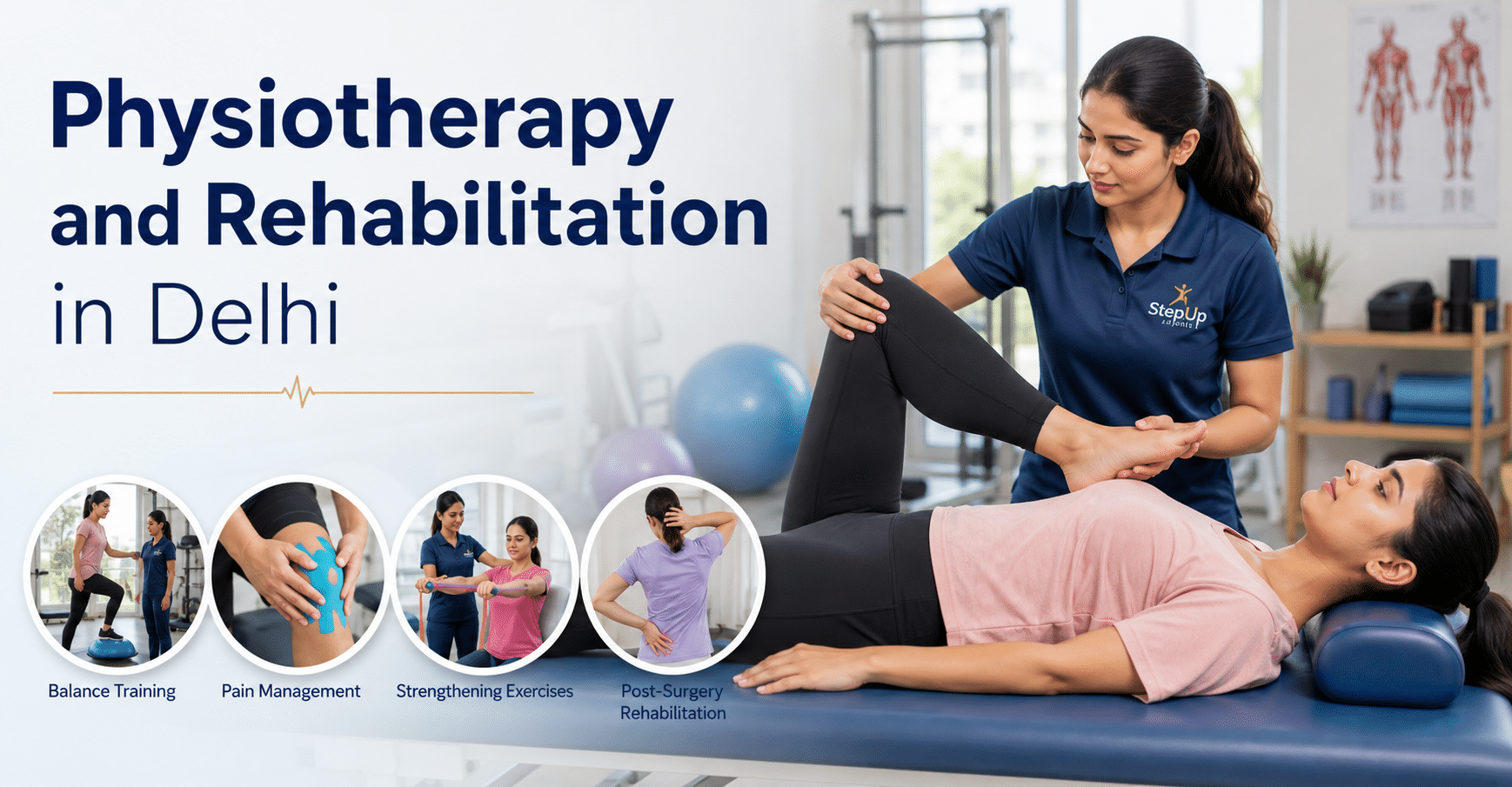
Physiotherapy and rehabilitation can be found throughout Delhi and can help ease or overcome pain, injuries, post-operative problems, neurological issues and age-related mobility problems. The care can be offered in a clinic, at home or as part of a wider rehabilitation plan.
This guide outlines commonly available rehabilitation services in Delhi. It also gives an overview of what can effect cost and the options you could have. This information is for general knowledge purposes only and should not replace a personal assessment by a qualified healthcare professional.
What Is Rehabilitation?
Rehabilitation is a structured process to help you regain movement, strength, function, confidence and independence after an illness, injury, surgery or long term health condition.
Physiotherapy is often a part of the rehabilitation process. This may include exercise and movement therapy, education and training, balance and manual therapy, and/or advice on how to resume your normal activities of daily living.
There are different ways to approach rehabilitation. The best way will depend on the diagnosis, the severity of your symptoms, the stage of your recovery, your personal goals, and your health care professional’s recommendations.
Rehabilitation Services in Delhi
Different rehabilitation services are available in hospitals and rehabilitation, physiotherapy clinics and home care services. Some of the rehabilitation services are
Orthopaedic Rehabilitation
Rehabilitation for the musculoskeletal conditions of the bone, joints and soft tissue like muscles, ligaments and tendons are included in orthopaedic rehabilitation.
- This may help with conditions like
- Pain in the knee, hip, shoulder and back
- Injuries sustained while playing sports
- Strains
- Ligament sprains
- Problems of the tendons
- Pain and stiffness of joints due to arthritis
- Pain and stiffness after a fracture (once healed)
Exercise and physical therapy may help to improve strength, joint and soft tissue flexibility, balance and functional ability.
Post-Surgical Rehabilitation
Post-surgical rehabilitation is done to help with the return of function after surgical procedures for joint and spine surgeries and injuries.
- A program may help you
- Manage pain and swelling
- Stretch and regain movement in joints
- Improve strength
- Improve walking, balance and your ability to perform your daily tasks
- Return to your normal activities including work, sport and other leisure activities
It is important to abide by the recommendations of your healthcare team.
Neurological Rehabilitation
This type of rehabilitation is for conditions that are related to the nerves, spinal cord and brain.
It may help with conditions like
- Effects of a stroke
- Parkinson’s disease
Multiple sclerosis, spinal cord injuries, and other neurological conditions may benefit from retraining movement and compensating for loss of balance and gait. Care may include exercises to improve strength and endurance, gait training, balance exercises, and movement retraining to promote functional independence.
Sports Injury Rehabilitation
Sports injury rehabilitation aims to safely return to sport and physical activities. It may include:
- Strength and movement assessment.
- Load management.
- Strengthening.
- Balance and sport-specific training.
- Return-to-play planning.
The goal is not just pain relief. Pain management may help the person to engage in activities they want to do.
Geriatric Rehabilitation
Many components of geriatric rehabilitation are similar to sports injury rehabilitation. Both help reduce mobility issues, joint pain, and difficulty with activities of daily living. Geriatric rehabilitation may include:
- Strength and balance training.
- Activities to prevent falls.
- Practice walking and climbing stairs.
- Joint mobility.
- Education to family and caregivers.
- Home-Based Physiotherapy
Home physiotherapy is similar to clinic-based physiotherapy and may include assessment and exercises to improve mobility, strength, balance, and fall-prevention strategies. Home-based care is appropriate for people who prefer, or are not able to, leave their home for care.
Conditions Commonly Managed by Rehabilitation
Rehabilitation may help knee osteoarthritis, shoulder pain and stiffness, low back and neck pain, post-fracture stiffness and weakness, and post-stroke movement difficulties, balance, and fall risk. Other conditions may include Parkinson’s disease, vestibular disorders, athletic or sports-related injuries, and joint replacement surgery.
Pain interfering with normal activities.
Tailored exercise programs with addition of local muscle and general fitness training are suggested by NICE for management of osteoarthritis. Supervised exercise programs may also be suggested.
What Happens During a Rehabilitation Assessment?
A rehabilitation assessment begins with discussing your symptoms, medical history, medications, previous treatment, and goals.
Depending on your condition, assessment may include:
- Reporting on the level of pain, stiffness, and swelling.
- Testing the range of motion of the joints.
- Testing the strength and endurance of the muscles.
- Analyzing your walking and movement.
- Examining your balance.
- Assessing how you perform daily activities like sitting, standing, and lifting.
- Screening to identify potential conditions that may require further medical evaluation.
After the assessment, the healthcare professional may discuss the rehabilitation needs and develop a plan based on your goals and conditions.
What May Be Included in a Rehabilitation Plan?
A rehabilitation plan is usually individualized and may consist of the following:
- Mobility and joint activities.
- Practice for walking and stair climbing.
- Therapeutic exercises to improve strength and flexibility.
- Pain management.
- Activity and pacing.
- Posture and movement retraining.
- Customized home exercise program.
NICE recommends that for management of osteoarthritis, there may be discomfort in the beginning of therapeutic exercise. Long term, regular exercise is likely to improve the condition and reduce the pain.
Initial assessments vs. follow-up sessions
- Clinic-based care vs. home-based care
- Session length
- Total number of sessions required
- Specialist rehabilitation equipment required
- whether more than one discipline is involved e.g. Physiotherapy, Occupational Therapy, Medical
- Location within Delhi and travel requirements for home visits
It is important to check the current fees and what is included, especially the cancellation policy, as there may be variations between providers.
Clinic-based versus home-based rehabilitation
- Factor
- Clinic-based rehabilitation
- Home-based rehabilitation
- Best suited for
people who can travel and require equipment or supervised exercise
people with mobility issues, post-surgical, or travel issues
Equipment
- Equipment and space available
- portable equipment and home environment
Supervision
in person supervision and progression
in person home care and include caregiver if needed
- Convenience
- requires travel
- travel not required
- Environment
- clinical setting
- home setting
- Cost
varies by clinic, treatment and type of session
includes travel and home visits
Neither option is always better. The right option depends on safety needs, goals of rehabilitation, your condition and practical circumstances.
Choosing a rehabilitation provider in Delhi
When choosing a rehabilitation provider
check if the team is appropriately qualified and registered to practice
experience with your condition e.g. post-surgical, neurological, rehabilitation sports injuries etc.
- is the assessment individualised
- are cautions and a treatment plan discussed
- number of expected treatment sessions
- what is the plan if there is no improvement
- is the treatment justified
- Clear information on costs, inclusions, and cancelation policies.
- Coordination with your doctor or surgeon where required.
- Working within the confines of (location, availability, accessibility, home visits, etc.)
Don’t be swayed by marketing that guarantees recovery or promises the “best” treatment, or instantaneous results. Be aware that individual health factors, adherence to rehabilitation, and other symptoms will play a role in determining the outcome of your recovery.
When Rehabilitation May Need Medical Review First
You may need to see a doctor for a medical assessment before rehabilitation if you experience:
- New or increasing swelling.
- Pain after a recent injury.
- Loss of the ability to put weight through the injured leg.
- Joint that ‘locks’ in a bent position.
- Knee that gives way.
- Fever and joint that is hot, red and swollen.
- New weakness, numbness or other neurological symptoms.
- New problems with control of your bladder or bowel.
Rehabilitation for Knee Osteoarthritis
Rehabilitation for knee osteoarthritis may include:
- Individualised therapeutic exercise.
- Knee and hip muscle strengthening.
- Aerobic exercise.
- Education and self-management.
- Weight loss if overweight.
NICE recommends that therapeutic exercise is the primary treatment for osteoarthritis. Where appropriate, the management of weight is also recommended. Manual therapy may be considered for hip and knee osteoarthritis, but should always be coupled with exercise. There is not sufficient evidence to recommend its use in isolation.
It is recommended that for individuals with overweight or obesity, improvements in quality of life, function and pain may be expected with weight loss. NICE states that any weight loss may be beneficial; however, a greater benefit may be expected with a weight loss of 10% compared with a 5% weight loss.
How Long Does Rehabilitation Take?
There is no fixed time for how long rehabilitation may take. Factors that influence how long rehabilitation may take include:
- The individual’s health and fitness.
- The nature of the injury/condition.
- The extent and duration of symptoms.
- The individual’s goals and activity demands.
- The consistency and adherence to the rehabilitation programme.
It may take a few weeks for some individuals to notice a difference, while others may require long-term rehabilitation. Progress should be regularly assessed and the rehabilitation programme modified according to the individual’s response.
Questions to Ask Prior to Starting Rehabilitation
Consider asking the following questions prior to starting rehabilitation:
- What do you think is the most likely cause of my symptoms?
- What are the goals of rehabilitation?
- What kind of exercises will I be required to do?
- How frequently will I be required to do them?
- What kind of things am I allowed to do at home?
- What kind of activities will I need to modify?
- When will my progress be reviewed?
- When should I be concerned and/or seek a medical review?
- What are the total costs of the rehabilitation, and what does it include?
Physiotherapy and Rehabilitation at StepUp Joints
StepUp Joints offers physiotherapy and rehabilitation services at its clinic in Lajpat Nagar, South Delhi. The clinic is headed by Dr. Neha Narula (PT).
If you are looking for rehabilitation for any pain, injury, post-surgical condition, mobility issue, or neurological condition, you can call StepUp Joints to find out more about the services offered, and/or to schedule an assessment.
Conclusion
Depending on your individual situation and needs, physiotherapy and rehabilitation in Delhi can address a broad range of conditions including those that are neurological, post-surgical, sports-related, orthopaedic, and age-related. The key to effective rehabilitation is to define clear goals, and to routinely review and assess your progress.
Prior to starting rehabilitation, ensure that the costs and services included are clearly communicated. Transparent information regarding the assessment and plan should also be provided prior to the start of treatment. You can talk to your healthcare professionals to help answer any of your questions and/or address your concerns about your condition and treatment.
Frequently Asked Questions
1.What is the difference between physiotherapy and rehabilitation?
Physiotherapy is often a part of rehabilitation. Rehabilitation is a process that can include many aspects such as, physiotherapy, medical care, occupational therapy, and support and education to restore and improve one’s physical and psychological functioning, thus helping to regain independence.
2.What conditions can be treated with rehabilitation?
Rehabilitation can be considered for musculoskeletal pain, sports injuries, post surgery, neurological conditions, balance, arthritis and mobility restriction due to old age.
3.What is the cost of physiotherapy in Delhi?
The cost of physiotherapy varies due to several factors including the condition, what is provided in the session, its duration, the location (clinic or home), and the provider. Rough estimates put the cost at a range of ₹500 to ₹2,000 per session; however, actual costs may differ. Always check with the provider about the cost, what is included, how long the session will be, the cancellation policy, etc.
4.Can physiotherapy be done at home?
Yes. Both clinic-based and home-based physiotherapy can be appropriate. Clinics can provide access to more equipment and offer supervised progression, whereas home-based care can be more practical for those with mobility limitations and/or who are post-operative.
5.How many physiotherapy sessions will I need?
This depends on the diagnosis, the severity of the condition, the goals of treatment, and the response to rehabilitation. The plan should be regularly reviewed and altered to ensure it remains appropriate.
6.Can rehabilitation be a non-surgical option?
Yes, a lot of musculoskeletal and neurological conditions can be managed with rehabilitation, exercise and activity management. Whether or not surgery is necessary is determined by the response to conservative management.
7.When should I see a doctor instead of starting rehabilitation?
You should see a doctor before starting rehabilitation for a major injury, if you are unable to bear weight, for significant swelling and/or joint effusion, for joints that are unstable or dislocated, for joints that are locked, for fever with a hot, swollen, joint, and/or for new symptoms or changes in the nerve function.