Medically reviewed by : Dr. Neha Narula
[Qualification : Head of Physiotherapy & Rehabilitation • 10+ years of experience]
[Specialty: Consultant Psychiatrist at Fortis Escorts Hospital, New Delhi and StepUp Joints, Lajpat Nagar 4. With over 6 years of clinical experience ]
[Registration No : IAP-31212]
[Clinic: StepUp Joints, Lajpat Nagar, South Delhi ]
Doctor’s Statement
Medically guided DR. NEHA NARULA (PT) — Head of Physiotherapy & Rehabilitation • 10+ years of experience
Dr. Neha Narula (PT), Head of Physiotherapy & Rehabilitation at StepUp Joints, emphasizes the importance of assessing posture alongside muscle strength, joint mobility, movement patterns, and everyday habits. An individualized physiotherapy programme can help patients improve body mechanics, develop strength, and work towards more comfortable movement.
Quick Summary
- Posture refers to how you position your body while sitting, standing, walking, and performing daily activities.
- Poor posture may be associated with prolonged sitting, screen use, muscle weakness, reduced mobility, and repetitive movement patterns.
- Posture correction combines awareness, appropriate exercises, ergonomic changes, and physiotherapy when necessary.
- Chin tucks, wall slides, and strengthening exercises may help selected individuals when performed correctly.
- Persistent pain, numbness, weakness, or significant changes in posture require professional evaluation.
1. What Is Posture Correction?
Posture correction is the process of improving the positioning and control of the body during physical activities. This includes developing proper motor patterns, enhancing muscular fitness and flexibility, and making changes in workstations or in the environment that might cause discomfort.
Good posture does not necessarily mean standing or sitting up with straight backs and stiff muscles. A healthy posture should be comfortable, and it should allow for moving and stretching muscles. For many people, it is healthier to change positions regularly and avoid sitting or standing in the same postures for too long.
When looking for a Posture Correction in Delhi, make sure to ask about the following:
- Evaluation of sitting, standing, and walking patterns
- Exercises and techniques for improving flexibility, strength, range of motion, and motor patterns
- Physiotherapy treatments for associated conditions, such as discomfort in the neck, shoulders, or upper back
- Suggestions for making the workplace and the home environment more posture-friendly
- Advice on gradually returning to one’s normal activities in a way that minimizes the risk of further discomfort
The ultimate aim of posture correction therapy is to maximize comfort and restore normal function and range of motion.
2. What Causes Poor Posture?
Poor posture can arise due to various factors, including lifestyle and physical conditions. Understanding the underlying causes can help in determining possible solutions.
- Prolonged Sitting
Working, studying, or travelling while sitting for long periods can limit the opportunity for exercise and leisure activities. As a result, a person may unconsciously adopt a bad posture while sitting at a desk or working out.
Sitting itself does not necessarily inflict harm on the spine. However, sitting for too long without changing postures can cause discomfort and restrict movement.
- Excessive Mobile Phone and Computer Usage
Bending over a phone or computer while working or studying can impose extra pressure on the cervical region of the spine, inflicting fatigue and discomfort in the neck and upper back region.
It is essential to adjust the monitors and bring the devices closer to the line of vision while working.
- Muscle Weakness and Poor Endurance
The muscles in the core, hips, shoulders, and shoulder blades play an important role in stabilizing the body and facilitating movement. Weakened muscles or poor endurance can lead to increased fatigue during physical activity.
A physiotherapist can advise if specific exercises to strengthen the muscles are indicated in a particular case.
- Limited Range of Motion
Reduced range of motion in the hips, upper back, or shoulders can also contribute to poor posture. Lack of mobility can be due to various reasons, including the absence of regular exercise, injuries, or diseases that affect the joints.
Stretching and specific exercises can help if the limited range of motion is found during the examination.
- Repetitive Movements at Work
Performing the same movements at the workplace can lead to the development of poor posture. Bending, reaching, lifting, or carrying heavy objects can cause unnatural stresses on the spine. In addition, carrying a bag on one side, for example, can cause discomfort in people who are used to such a load.
Such a burden, as well as asymmetrical movements when working, can be eliminated by adjusting the height of the desk or changing the nature of the work. Physiotherapists recommend alternating different activities and specific exercises that help in reducing the load on the spine.
- Pain and Injuries
In the case of injuries or painful conditions, a person may adopt a protective posture to reduce pain and further stress the injured area. Such a posture can also cause deviations if, after the injury has healed, the person does not change the way of sitting or standing.
When the posture is affected by injuries or painful conditions, physiotherapists need to examine the spine to see if other problems have occurred. A specialist can also determine whether there is pain, limited range of motion, muscle weakness, or other issues.
- Structural or Medical Problems
Some spinal deformities, fractures, inflammations, or neurological and skeletal diseases can also be the cause of poor posture. These conditions require a more detailed examination by a specialist and specific treatments. A physiotherapist can recommend what methods of therapy and exercises will be most beneficial in a particular case.
3. Identifying Posture-Related Problems
Postural problems can manifest themselves in a variety of ways, depending on the individual. Common self-reported symptoms may include:
- Forward head posture when talking on the phone or working at a desk
- Rounded shoulders when working at a desk
- Tight upper back after sitting
- Neck and shoulder pain with repetitive tasks
- Lower back pain with standing or sitting for long periods of time
- Difficulty maintaining good posture at work
Muscle fatigue with prolonged activity
The presence of these indicators is not necessarily pathological on its own. Pain may result from poor postural habits, but the presence of pain does not necessarily indicate poor posture. Furthermore, simply poor posture is not always a symptom of a larger underlying disease.
If these symptoms negatively affect one’s daytime functioning, sleeping, exercising, or general quality of life, it may be worth discussing with a medical professional
4. Posture Corrective Exercises
An exercise regimen should be individualized based on symptoms, functional limitations, underlying conditions, and other factors. The following examples are a few common postural control exercises that may be recommended for certain individuals with musculoskeletal disorders affecting posture, but they are not necessarily universally applicable. If a certain posture corrective exercise causes dizziness, tingling, or sharp pain, it is essential to stop it immediately and consult a medical professional.
- Chin tucks
Chin tucks promote active engagement of the muscles in the front of the neck, as well as the muscles that extend from the spine into the shoulders, without over-flexing the neck.
Instructions:
- While sitting or standing, ensure that the shoulders are in a neutral position (not)
- Looking forward, gently tuck the chin in so that there is a small hollow at the back of the neck, creating a double chin.
- During the chin tucks, maintain a neutral position of the head and neck: do not look up or down.
- Hold for a moment, then return to the starting position.
- Do five to ten repetitions if possible, but do not force the chin in. Avoid leaning your head against the wall if doing the chin tucks forward.
- Wall slides
Wall slides allow for shoulder mobility and postural control exercises.
Instructions:
- Depending on the variation, the individual either stands facing a wall or facing away from it, with the forearms held against the wall if possible.
- Slowly raise the arms up the wall as far as possible within the pain-free range of motion.
- Maintain relaxed shoulders and avoid excessive lower back arching.
- Lower back slowly to the starting position.
Repeat five to ten times, varying the range of motion as needed and avoiding pain.
- Scapular retraction
The primary goal of this exercise is to work the muscles that bring the shoulder blades together at the back of the torso.
Instructions:
- Sit or stand facing forward, trying to maintain a neutral but not stiff spine.
- Gently draw the shoulder blades together at the back of the torso.
- Avoid raising the shoulders towards the ears.
Hold for several seconds, then return to the starting position.
Repeat several times without forcing the shoulder blades together.
- Thoracic extension
Extension of the upper back while seated may be beneficial for many individuals with prolonged sitting jobs.
Instructions:
- While sitting on a firm surface with the feet supported, place the hands on the chest.
- Gently lean back over the lower part of the back of the chair, if possible.
- Avoid leaning back with the head or neck.
- Return to the starting position.
If this motion causes pain or has been prohibited by a medical professional due to a spinal condition, it should be avoided.
- Core and hip strengthening
Depending on the individual’s needs and symptoms, core and hip-strengthening exercises such as bridges, bird-dogs, and various abdominal muscle workouts may be recommended. Working on the core muscles helps to stabilize the trunk and supports the hips, which in turn strengthens the legs and the core itself. It is important to choose the most suitable type of exercise and the most appropriate level of difficulty for the individual to avoid exacerbating any existing conditions.
A medical professional, such as a physiotherapist, can recommend the most suitable type and number of repetitions for each recommended exercise.
5. How Does Physiotherapy Help With Posture Correction?
Physiotherapy can help you identify movement patterns and physical limitations that contribute to discomfort or difficulty with everyday activities. Physiotherapists can give you advice about exercises and practical changes that can help you manage a condition in the long term.
A physiotherapist’s assessment as part of a Posture Correction in Delhi may involve:
-
Postural and Movement Assessment
The physiotherapist will discuss how you sit, stand, walk, bend and perform other movements or activities. They will look for patterns or limitations in your posture and movements that may contribute to your discomfort or difficulties.
Your posture is not judged in terms of how good or bad it looks – function and comfort are more important than form.
-
Muscle Strength and Mobility Testing
The physiotherapist may test your muscle strength, joint mobility, flexibility and endurance. This helps them to determine which muscles need strengthening and which joints need more mobility.
-
Rehabilitation Planning
Your physiotherapist will design an individualised programme of mobility, strengthening, motor-control and progressive activity. The type and amount of each of these will depend upon your particular needs and assessment findings.
-
Ergonomic Advice
Physiotherapists can give you advice about making practical changes to your working environment and other activities. They can help you think about how you might change the way you work so that you can sit or stand more comfortably for longer periods of time.
-
Review and Progress Monitoring
You may need several treatments to help you achieve your rehabilitation goals. Your physiotherapist will review your progress at each treatment session to determine whether any changes to your programme are needed.
How long you will need physiotherapy will be dependant upon your individual needs and how well you respond to treatment. Some people need only a short course of treatment while others may need a long-term programme of gentle rehabilitation due to a more complex presentation or underlying health issues.
6. Other Posture Correction Treatment Options
Posture Correction in Delhi could present a range of interventions, depending on the identified causes; however, the primary options usually comprise the following:
Ergonomic adjustments: Ranging from making the work area comfortable to ensuring that often-used items are placed within easy reach.
Exercises: Mostly individualized routines designed to increase the extent and quality of motion and make day-to-day activities less strenuous.
Activity modification: Involves taking regular breaks from long-duration tasks, such as sitting, and engaging in mild exercises, as well as alternating between different duties where possible.
Physiotherapy: A qualified physiotherapist could recommend targeted manual therapies as an adjunct to the rehabilitation process, though it is usually contraindicated as a stand-alone intervention.
Clinical assessment: Often necessary to rule out other causes of discomfort, such as mechanical, inflammatory, neurological, or other conditions, and determine the most appropriate course of action.
Orthoses: Generally not recommended unless there is an established indication following a qualified healthcare professional’s evaluation; they are considered an adjunct rather than a cure for postural disorders.
Treatment recommendations are individualized based on the causes and contributing factors, as well as each patient’s unique considerations and preferences.
7. Daily Habits That Support Better Posture
We can adopt a few simple, repetitive practices to incorporate comfortable exercising into our schedule.
Organize the workplace: Make sure to adjust the screens to the levels that are comfortable for the eyes, and position keyboards and mouses accordingly.
Exercise from time to time: Take short breaks to offer your body some movement if sitting or standing for a long while.
Change body We can adopt a few simple, repetitive practices to incorporate comfortable exercising into our schedule.
Organize the workplace: Make sure to adjust the screens to the levels that are comfortable for the eyes, and position keyboards and mouses accordingly.
Exercise from time to time: Take short breaks to offer your body some movement if sitting or standing for a long while.
Change body positions: Alternate between sitting and standing if work demands it.
Work out regularly: Make sure you include effective exercises aimed at improving strength, boosting mobility and providing aerobic activities in your weekly training plan.
Mind how you lift things: Keep heavy items close to you when lifting them.
Handle phone calls wisely: Use your phone only when it is advantageous to raise it.
Create new habits slowly: Choose appropriate changes you are able to follow, avoid trying to immediately change all body positions.
Yet, remember that you do not need to keep your shoulders rolled back and abs tight all the time. It is much better to exercise comfortably and change body positions: Alternate between sitting and standing if work demands it.
Work out regularly: Make sure you include effective exercises aimed at improving strength, boosting mobility and providing aerobic activities in your weekly training plan.
Mind how you lift things: Keep heavy items close to you when lifting them.
Handle phone calls wisely: Use your phone only when it is advantageous to raise it.
Create new habits slowly: Choose appropriate changes you are able to follow, avoid trying to immediately change all body positions.
Yet, remember that you do not need to keep your shoulders rolled back and abs tight all the time. It is much better to exercise comfortably and change body positions.
8. When Should You Seek Professional Help?
Think about receiving a clinical evaluation if you are suffering from neck, shoulder, or back pain and it continues, returns frequently, or causes difficulty in performing normal daily activities.
You should also see a doctor if you notice that your spine has changed in shape, you have experienced stiffness for a long time, or if you’re having trouble moving due to injury.
If you’re having any new or worsening symptoms of weakness in your legs, issues with blood movement, serious pain in your spine after injury, or problems with urinating, seek help immediately.
9. Posture Correction in Delhi: What to Expect at a Physiotherapy Appointment
Usually, the first appointment consists of discussions of your symptoms, work habits, workouts, and medical background.
The physiotherapist assesses your movements and muscle strength, joints, and related daily activities. From there, they come up with a list of exercises, ergonomics changes, and follow-ups.
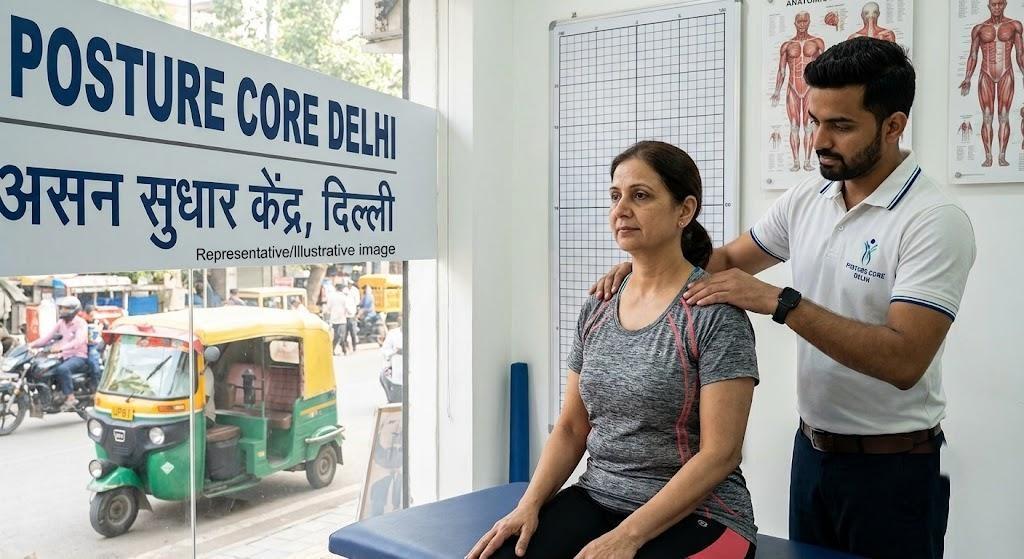
At StepUp Joints in Lajpat Nagar, Delhi, clients may report their musculoskeletal pain and rehabilitation issues to the physiotherapy department. Services that will work for you will be based on your clinical findings and not standard exercises.
If you are looking for Posture Correction in Delhi, get one that will keep in mind your symptoms, health conditions, daily situation, and objectives.
Book a Physiotherapy Consultation at StepUp Joints
Improving posture starts with understanding what your body needs. Whether your concerns involve prolonged desk work, neck stiffness, rounded shoulders, or back discomfort, an individualized assessment can help guide the next steps.
At StepUp Joints, Lajpat Nagar, Delhi, the physiotherapy and rehabilitation team can assess your movement concerns and discuss suitable treatment options.
Take the next step towards comfortable movement. Contact StepUp Joints to enquire about a physiotherapy consultation.
Clinic: StepUp Joints, 1st Floor, 17-A Ring Road, Vikram Vihar, Lajpat Nagar 4, New Delhi – 110024
OPD: Monday–Saturday, 9:00 AM–9:00 PM
Call: +91-7042787560
Frequently Asked Questions (FAQs)
1. What is posture correction?
It is a process that focuses on the improvement of positioning, movement patterns, muscle function, and lifestyle behaviors. This includes the provision of various corrective treatments such as physiotherapy, corrective exercises, ergonomic advice, and management of prolonged sitting or postural stress.
2. What are the common causes of poor posture?
Poor posture can be caused by weakened muscles, decreased range of motion, prolonged sitting, and conditions such as obesity. In addition, poor posture can be caused by repetitive movements or activities, painful conditions, and previous injuries.
3. Can a physiotherapist help with posture?
Physiotherapy can help in the improvement of body posture, mobility, and range of motion provided there is an associated impairments or limitations with the body function and structure.
4. How long does it take to correct posture?
It is not possible to give a definite time frame for correcting posture since it depends on the inciting cause, the severity of the deformity, and the compliance with the prescribed correctional regimen. There are also variations that occur due to individual differences and concurrent conditions.
5. What are the best posture correction drills?
The most appropriate posture correction drills include neck stretches and rolls, wall angels, shoulder and upper back mobility, mid-back, trunk rotations, and hip and thigh stretches. The best posture correction exercise will be determined by a physiotherapist and should be performed under professional guidance.
Disclaimer: This post is for educational and awareness purposes only. Please consult a doctor for personalized medical advice.