Doctor’s Statement
Dr. Devender Bairwa Consultant Rheumatology & Clinical Immunology
Dr. Devender Bairwa, Consultant in Rheumatology and Clinical Immunology, focuses on the evaluation and management of immune-mediated and inflammatory conditions. Recognising unusual infection patterns and immune-related symptoms is important for identifying patients who may need further immunological assessment.
Summary:
Primary immunodeficiency disorders affect the immune system and may cause recurrent infections, autoimmune symptoms, or chronic inflammation. Early diagnosis, appropriate testing, and personalised treatment can help manage these conditions in children and adults.
What Are Primary Immunodeficiency Disorders?
Primary immunodeficiency disorders encompass diseases in which one or more elements of the immune system are defective and unable to perform their normal tasks, usually as a result of genetic defects.
These defects most often manifest themselves in an abnormally low resistance to infection or inappropriate activation of the immune system that leads to autoimmunity, chronic inflammation, allergic reactions, and increased susceptibility to malignancy.
The phrase “inborn errors of immunity” is now preferred to “primary immunodeficiency disorders” since the former better reflects the wide spectrum of clinical manifestations of this group of diseases.
Immunodeficiency can be primary (congenital) or secondary (acquired).
Primary immunodeficiencies are genetic immune system defects, while secondary immunodeficiencies are caused by external factors such as chemotherapy, HIV infection, malignancy, or other environmental influences.
Patients who are researching primary immunodeficiency disorders in Delhi should be aware that these diseases differ tremendously in terms of severity and treatment. Some are quite mild, while others require regular infusions of immunoglobulins or even stem cell transplants. A qualified immunologist will be able to differentiate between several types of immunodeficiency and determine the most appropriate course of treatment.
What Are the Common Symptoms of Primary Immunodeficiency Disorders?
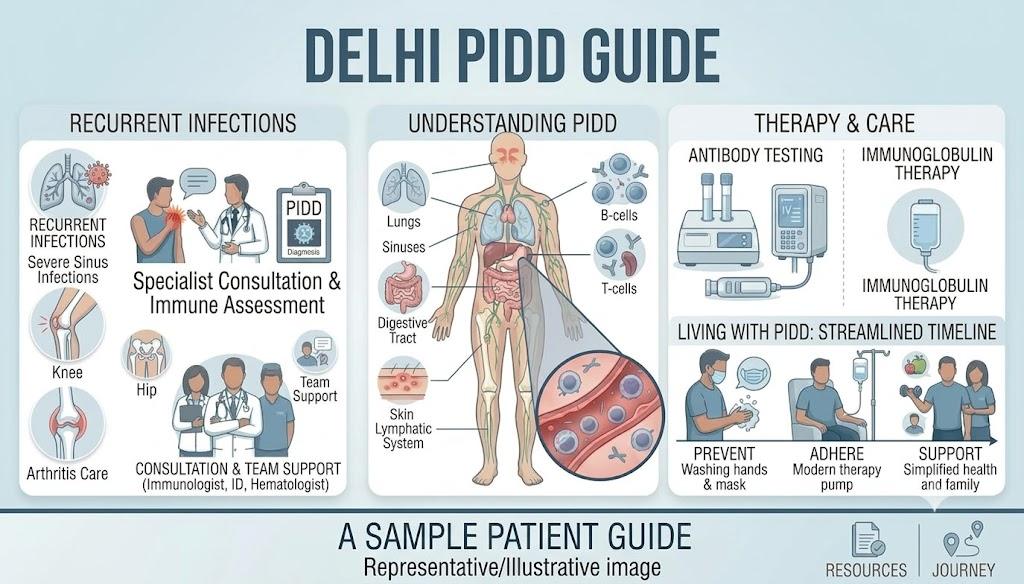
Symptoms depend on the site of immune dysfunctions taking place and what particular disorder does a patient have. People may exhibit signs of recurrent infections or develop inflammatory and autoimmune complications.
1. Recurrent Infections
Spells of frequent infections appear to be an important clinical sign, especially if they are unusually severe, persistent, or resistant to therapy.
The following examples may help distinguish a frequent infection from normal ones:
- Unusually frequent bouts of ear infections, sinus infections, or other infections in any parts of the body.
- Repeated infections often enough to require multiple courses of antibiotics.
- Infections that take longer to respond to therapy than normal.
- Infections due to unusual organisms.
- Bronchitis, pneumonia, or sinus infections that are recurring or persistent.
- Skin abscesses and infections that are recurring or persistent.
- Diarrhea or other GI infections that are recurring or persistent.
Numerous infections, on their own, are not generally enough to diagnose, the frequency, persistence, severity, location, response to treatment, and other factors must also be taken into consideration. It is crucial to assess the person’s history with infections as well.
2. Persistent Respiratory Problems
Some immunodeficiencies may lead to recurrent upper respiratory infections and, as a consequence, lung infections such as pneumonia or bronchitis. These can, in turn, result in complications such as bronchiectasis, which is a permanent abnormal widening of the airways. If there is a suspicion that someone has a lung infection, it is critical to seek immediate medical attention.
Digestive Problems : – There are several types of acquired immunodeficiency that can lead to persistent diarrhoea, recurring gastrointestinal infections, malabsorption of nutrients, or weight loss. The same way frequent and persistent infections may be a sign of an immunodeficiency, these GI issues, on their own, could also suggest one.
3. Autoimmune and Inflammatory Symptoms
Some inborn errors of immunity lead to exaggerated immune responses that can cause autoimmune conditions and inflammation. Autoimmune responses could raise antibody levels in the blood or affect other organs. Manifestations might include blood disorders, persistently inflamed lymph nodes, various unrelated inflammatory symptoms, or some rheumatologic conditions.
Family History : – A family history of immunodeficiency, unusual recurrent infections, or unexplained deaths might indicate a higher risk of developing an immunodeficiency as well. However, the fact that someone does not have a family history of immunodeficiency does not rule out an inherited one.
What Are the Different Types of Primary Immunodeficiency Disorders?
Primary immunodeficiency disorders are a group of various diseases that are classified on the basis of their impact on the elements of the immune system and the manner how they develop.
1. Antibody Deficiencies
They cause recurrent bacterial infections due to the reduced function of antibodies produced by the immune system. The most common infection triggered by antibody deficiency is the infection of the upper respiratory tract and lungs. Patients with CVID usually are diagnosed during the first or second decade of life or even later, and it frequently occurs with autoimmune and inflammatory manifestations.
2. Combined Immunodeficiencies
These diseases are characterized by partial deficits of immunocompetent cells like T lymphocytes and/or B lymphocytes function. Moreover, for combined immunodeficiency, especially severe combined immunodeficiency (SCID), the onset of symptoms is early, and it requires a comprehensive approach to treatment.
3. Phagocyte Disorders
They are caused by the malfunction of phagocytes which are responsible for engulfing foreign particles, pathogens, and cell debris. Chronic granulomatous disease of phagocyte is an example of phagocyte disorder. The development of this disease leads to recurrent bacterial and fungal infections.
4. Complement Deficiencies
They are caused by the malfunction of complement proteins that participate in the majority of immune responses. This deficiency is associated with recurrent bacterial infections, pneumonias, meningitis, and autoimmune diseases.
5. Immune Dysregulation Disorders
Some genetic defects lead to the development of an overactive immune system or the inability to turn it off. As a result, patients experience autoimmunity, recurrent fevers, and inflammatory manifestations or otherimmune -related conditions. To understand what treatments are available, the exact type of immunodeficiency has to be identified.
Can Primary Immunodeficiency Occur in Adults?
Yes, primary immunodeficiency disorders can be diagnosed in adults, although most are genetic and often manifest during childhood, yet the symptoms may be intermittent, subtle, or overlooked for years.
Conditions such as common variable immunodeficiency can present for the first time in adolescence or adulthood. A number of patients may even have had multiple infections without any underlying condition being suspected. Moreover, it may take years for symptoms to appear after the initial event. Therefore, adults should consider getting evaluated by an immunologist in the following circumstances:
- Recurrent sinus or pulmonary infections that cannot be explained
- Uncommon or severe infections that are resistant to treatment
- Recurrent infections associated with gastrointestinal symptoms
- Unexplained inflammatory or autoimmune conditions
- Family history of immunodeficiency
While most people with recurring infections do not have immunodeficiency, and other factors like medication use or other diseases should be considered.
Still, for those who wish to get evaluated for primary immunodeficiency disorders in Delhi, an immunologist can go through the medical history and order the relevant tests to identify the underlying cause and formulate a suitable treatment plan.
How Are Primary Immunodeficiency Disorders Diagnosed?
Diagnosis involves a clinical evaluation as well as laboratory investigations. There is no single test that can detect all forms of deficiencies.
Step 1: Medical and Family History
The doctor will ask about your history of infection, including the type, location, severity and frequency. They will likely ask about hospitalisations and treatments, autoimmune conditions, family history, and current medications.
Step 2: Blood Tests
The initial laboratory tests may involve a complete blood count with differential to evaluate numbers of different types of cells.
Depending on the symptoms, the doctor may also request IgG, IgA, IgM levels.
Step 3: Antibody Function
Even if the levels of immunoglobulins are normal, further tests may be requested to see if there is an antibody deficiency. In some cases, a specialist will test your ability to produce specific antibodies to certain vaccines.
This helps identify if you are able to mount an adequate protective response.
Step 4: Further Immune Investigations
Further tests may be requested to evaluate lymphocytes, complement or other aspects of the immune system.
Step 5: Genetic Testing
Genetic testing may also be recommended if a hereditary condition is suspected. This can help confirm the diagnosis of a genetic disorder, help manage the condition and provide information for families.
Any individual considering primary immunodeficiency investigation Delhi should be aware that testing is a personal process. A qualified clinical immunology specialist can determine what tests are needed and provide an interpretation of results.
What Are the Treatment Options for Primary Immunodeficiency Disorders?
Treatment is dependent upon the diagnosis, severity of manifestations, history of infection, and associated complications. The aim of management is to decrease the risk of infection, prevent organ damage, and improve quality of life.
1. Prevention and Treatment of Infections
A strategy for the prevention and management of infections, including surveillance, hygienic measures, and prompt treatment, should be established for each patient depending on individual considerations. An individual vaccination schedule may also be required.
Appropriate antibiotic or antifungal treatment should be initiated for diagnosed comorbid infections. Preventive antimicrobial therapy may be considered for specific patients with particular manifestations under specialist supervision.
2. Immunoglobulin Replacement Therapy
Immunoglobulin preparations may be indicated for patients with antibody deficiency disorders as replacement therapy.
It can be administered intravenously or, in selected indications and if available, subcutaneously. It is not indicated for every antibody deficiency.
3. Vaccination
The vaccination schedule depends on the diagnosis and includes recommendations about the use of live attenuated vaccines.
Inactivated or non-live vaccines are generally safe for use in patients with most immune deficiency disorders, but each case should be considered individually and with a specialist’s approval.
Live attenuated vaccines should generally be avoided in patients with combined immunodeficiencies, cellular immunodeficiencies, or antibody deficiencies.
4. Targeted Therapies
Targeted therapies may be required for the treatment of specific complications of the disease or the disorder itself, such as defective T-cell function, autoimmunity, or cytopenias. Targeted drugs, immunosuppressants, and other specialist treatments may have a place in the management of immunodeficiency disorders. However, the risks of infection and secondary immunodeficiency should be taken into consideration.
5. Hematopoietic Stem Cell Transplantation and Gene Therapies
For some diagnoses, hematopoietic stem cell transplantation is a potential curative option. It is a high-risk procedure, and eligible patients should be identified by a specialist at a specialized center.
Gene therapies may also be considered for certain diseases if indications and expertise are available.
Why Early Diagnosis and Follow-Up Matter
Recognizing a primary immunodeficiency early can help doctors choose the right treatment and prevent complications from recurrent infections.
Without proper treatment, certain conditions can lead to irreversible lung damage, persistent inflammation, autoimmune diseases, and other complications, but the outlook varies widely for each diagnosis, and many patients can lead relatively normal lives with the right specialist care.
A follow-up examination is often necessary to evaluate the frequency and severity of infections, monitor the effectiveness of therapy, detect possible side effects of medications, and determine the state of other organs.
For patients seeking treatment for primary immunodeficiency diseases in Delhi, an integrated approach involving immunology specialists and other relevant doctors may be required to manage respiratory, gastrointestinal, or autoimmunity-related complications.
When Should You Consult a Specialist?
Consider undergoing a medical examination if the infections are unusual, frequent, severe, persistent, or untreatable, especially in combination with unexpected autoimmunity symptoms or a relevant family history.
Seek immediate medical attention for severe symptoms such as trouble breathing or confusion, significant weakness, or signs of a severe infection.
A specialist can identify whether the symptoms are indicative of an immune system malfunction or unrelated conditions and the most appropriate course of treatment. It is not recommended to take antibiotics, immunoglobulins, or other immunosuppressive drugs on one’s own.
Conclusion
Primary immunodeficiency disorders may occur in children as well as adults, leading to recurrent infections, autoimmunity manifestations, or chronic inflammatory diseases. Recognizing the warning signs and undergoing the required tests can help identify the reason and provide the required treatment.
If you are experiencing concerns regarding primary immunodeficiency disorders in Delhi, it is advisable to contact a qualified clinical immunology specialist to set up an examination and develop the required treatment strategy.
Frequently Asked Questions (FAQs)
1. What are primary immunodeficiency disorders? Explain
These are genetic defects that lead to partial or complete malfunction of one or more immune system components. Such diseases are also characterized by the development of infectious diseases and autoimmune or inflammatory complications. In addition, for each disease, there is a unique treatment and set of symptoms.
2. Can an adult be diagnosed with primary immunodeficiency?
Yes, since some of the problems that partially or completely disable the immune system can be discovered only at a later stage. For example, some of them are asymptomatic or have symptoms that were previously thought to be caused by other diseases.
3. What are typical signs and symptoms of primary immunodeficiency?
They include frequent ear and sinus infections, lung infections such as pneumonia, frequent skin infections, infections that are strange for the body, and infections that do not heal. However, these symptoms are not unique to any of the immune disorders, so a doctor needs to look at the entire picture.
4. What tests can determine the diagnosis?
The tests include a complete blood count, determination of the level of immunoglobulins in the blood, assessment of the body’s ability to form specific antibodies, analysis of lymphocytes, and other related blood tests. In addition, a genetic test is often required.
5. Do you believe that a patient with primary immunodeficiency disorder has a cure?
It all depends on what particular disease was found in the patient. Some of them have been shown to be amenable to treatment, while others, unfortunately, are chronic. For the most serious and debilitating immunodeficiency disorders, there is a possibility of restoration after a stem cell transplant – depending on the patient’s condition and other factors.
Disclaimer: This post is for educational and awareness purposes only. Please consult a doctor for personalized medical advice.