Medically reviewed by: Dr. Naman Wahal
[Qualification-Trained at AIIMS New Delhi and MAMC, with an advanced international fellowship at ATOS Klinik, Germany,],
[Specialty-specialist Shoulder & Sports Orthopaedic, Surgeon],
[DMC Registration No : – 9143]
Clinic: StepUp Joints, Lajpat Nagar, South Delhi
Last reviewed: [22-10-2026]
Doctor’s Statement
“Robotic assistance can support precise planning and implant positioning in knee replacement surgery. However, the decision to use robotic technology should be based on each patient’s clinical condition, anatomy, and treatment goals. A detailed assessment, appropriate surgical planning, and structured rehabilitation remain essential for a safe and satisfactory recovery.”
Summary
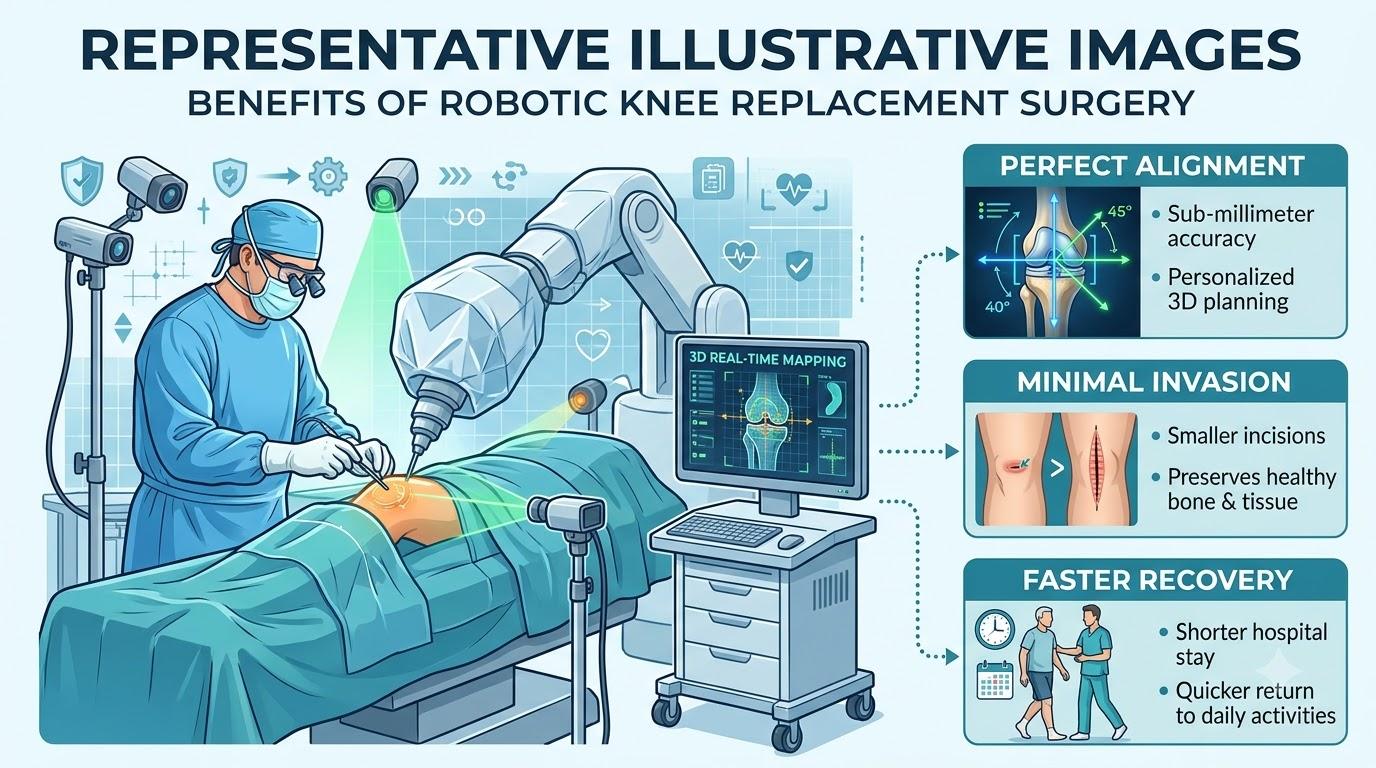
Robotic knee replacement is a surgeon-controlled procedure that uses computer-assisted planning and robotic guidance to support implant positioning and soft-tissue assessment. The potential robotic knee replacement benefits include detailed preoperative planning, improved alignment accuracy, personalized surgical assessment, and possible short-term recovery advantages in selected patients.
However, robotic knee replacement is not suitable for everyone, and it does not guarantee better results for every patient. A careful clinical evaluation, realistic expectations, an experienced surgical team, and committed rehabilitation remain essential for a safe and satisfactory recovery.
What Is Robotic Knee Replacement?
Robotic knee replacement, also known as robotic-assisted knee replacement or robotic-assisted total knee arthroplasty, is a knee replacement procedure performed by an orthopedic surgeon with the aid of a computer-guided robotic system.
The robot does not perform the surgery on its own. The surgeon plans, makes decisions, and performs the surgery. The robotic system provides measurements, 3D planning, and guidance to assist the surgeon in preparing the bone and placing the knee implant according to the patient’s anatomy.
A robotic knee replacement can be considered when knee pain, stiffness, deformity, or limited mobility significantly impact a person’s life and non-surgical treatments have not been sufficient.
Why Knee Replacement May Be Needed
The knee joint can be affected by osteoarthritis, rheumatoid arthritis, previous injury, fractures or gradual wearing of the protective cartilage. When this happens, the bones may rub together resulting in pain, swelling, stiffness, and difficulty in walking.
Initial treatment may consist of:
- Physiotherapy and muscle strengthening exercises
- Weight reduction when appropriate
- Oral medication prescribed by a physician
- Modifying activity
- Using walking aids
- Injections in certain cases
When these measures prove ineffective and normal activities are restricted, consideration may be given to knee replacement. This decision is made on an individual basis following clinical and radiological assessment and taking into account the general health and functional requirements of the patient.
Key Robotic Knee Replacement Benefits
1. Thorough Preparations
One of the major robotic knee replacement benefits is the use of digital information about the patient’s knee to plan the surgery. The robot can analyze the geometry of the knee, the shape of the bones, the expected size of an implant and the joint mechanics to achieve optimal balance in the knee.
Such a detailed examination is especially good for patients with severe knee deformity or those with a history of knee damage or previous knee surgery. Preparation, which would take much longer manually, helps to individualize the approach to each patient instead of using a standard size for all patients.
2. Assisting During Implant Placement
The robotic system is useful in that it helps the surgeon to place the knee implants correctly. Several studies reviewed by the researchers show robotic-assisted knee replacements to be connected with reduced risk of malalignment compared to manual surgery.
Proper implant alignment is indeed essential in knee joint replacement, but it is far from being the sole determinant of a successful outcome. A patient’s general health condition, post-surgery rehabilitation, anesthesia, surgeon skill, and other factors should also be considered.
3. Customized Soft-Tissue Analysis
A knee replacement is not just a prosthesis – it also involves the lower limb soft tissue, and customized robotic assistance can help to restore a natural balance of the knee. The robot can calculate the knee joint motion and soft tissue tension and allow the surgeon to make the necessary adjustments during surgery.
4. Controlled Preparation of the Bone
A robotic system can assist the surgeon in preparing and shaping the bone in a controlled manner. The robotic-assisted knee replacement allows for the surgeon to preserve bone tissue and reduce soft tissue trauma where possible, according to some research and medical reports. However, this does not guarantee that all patients will have less painful surgery with a shorter rehabilitation. A successful knee replacement depends on the patient’s condition and functional capacity, arthritis severity, bone density, the surgeon’s skill, and several other factors.
5. Possible Short-Term Recovery Advantages
Some studies have shown that robotic-assisted knee replacement may lead to reduced early postoperative pain and shorter hospital stays, but these results are not always evident. Robotic surgery is not a guarantee of pain-free or rapid recovery.
Patients should discuss the potential for accelerated healing and recovery with their orthopedic surgeon since everyone’s healing and rehab process is different.
6. Reproducible Surgical Workflow
Robotic-assisted surgery offers objective information during the procedure that makes the process more repeatable and measurable. This can be extremely beneficial for knee replacement surgery, where anatomy can be twisted and manipulated.
The technology is only an extension of an orthopedic surgeon’s expertise, experience, and skill within the operating room.
Robotic Knee Replacement vs Conventional Knee Replacement
| Aspect | Robotic Knee Replacement | Conventional Knee Replacement |
| Surgical control | Surgeon-led, assisted by robotic guidance | Surgeon-led, using standard instruments |
| Planning | Digital planning and real-time feedback | Clinical and imaging-based planning |
| Implant alignment | May offer improved accuracy in selected cases | Can also achieve good alignment with experienced surgical technique |
| Recovery | Some studies report possible short-term benefits | Recovery varies by patient and rehabilitation |
| Suitability | Depends on anatomy, health, and surgeon assessment | Suitable for many patients depending on clinical need |
| Cost and availability | May involve higher cost and specific infrastructure | More widely available |
Both robotic and conventional knee replacement can provide meaningful relief for suitable patients. The appropriate option should be decided after a detailed consultation with an orthopedic surgeon.
Who May Be Considered for Robotic Knee Replacement?
An orthopedic surgeon can discuss robotic knee replacement with patients who have:
- severe arthritis limiting or hindering functionality
- persistent knee discomfort following non-surgical therapy
- significant stiffness or limited range of motion
- deformed or unstable knee
- difficulty walking or climbing stairs
- radiographic analysis reveals severe joint damage
Not all individuals suffering from knee discomfort require surgery. A comprehensive medical examination is required to rule out the need for knee replacement, partial knee replacement, or another medical intervention.
Evaluation Before Surgery
An orthopedic surgeon will want to go over your medical history and the nature of your knee discomfort before suggesting robotic knee replacement surgery. In addition, they may conduct a close physical examination and inquire about your medications and any allergies you may have. In addition, they may want to discuss your fitness for anesthesia and a rehabilitation program following the operation. Furthermore, they may have to go over previous therapies and treatments, as well as the outcomes. Patients suffering from diabetes, anemia, high blood pressure, or malnutrition may be instructed to improve their conditions before the procedure, depending on the recommendations provided by the orthopedic surgeon.
What Happens During the Procedure?
Robotic knee replacement surgery is typically performed under spinal or general anesthesia. The choice of anesthesia depends on the individual patient’s needs and the preferences of the anesthesiologist.
The surgeon will remove damaged tissue and bone and resurface the joint, with the aid of a robotic system. The joint’s stability, range of motion, and soft tissue balance are then determined. The surgeon then makes the final adjustments to the knee joint before the operation is completed. The length of the procedure varies, and compared to traditional knee replacements, robotic surgery may take longer to complete due to the added planning and preparation required.
Recovery After Robotic Knee Replacement
First Few Days
The majority of patients are able to start mobilizing with assistance right after surgery under the guidance and control of the surgical and physiotherapy teams. The primary treatments during the first days are aimed at reducing pain, swelling, and breathing difficulties, performing ankle exercises, and safe ambulation.
First Six Weeks
Physiotherapy procedures are predominantly aimed at restoring the knee joint’s extensor function and improving lower limb power and coordination. In addition, the patient’s gait is normalized, and muscle strength is increased.
The rate of convalescence varies between individuals. Some patients return to their normal activities after several weeks, while others may need more time to do so.
Three to Six Months
At this stage, most patients continue to have excellent results with physiotherapy, gradually increasing their activity level and muscle power. After a while, they experience periodic swells without pain, which indicates good knee joint healing.
Six to Twelve Months
The healing process can take six months to a year after surgery. Depending on the patient’s preoperative condition, general health, physiotherapy and rehabilitative interventions, and other circumstances, the prognosis may vary.
Important Limitations and Risks
Robotic knee replacement is a significant surgical procedure and involves the risks common to any knee replacement surgery, including but not limited to:
- Infection
- Blood clots
- Bleeding
- Stiffness
- Nerve and blood-vessel injury
- Loosening or wear of the prosthetic implant
- Pain and implants dissatisfaction
- Anesthesia complications
The use of robotics does not make a procedure foolproof. A patient should have a thorough conversation with their doctor about their unique risks and possible benefits and alternatives to the surgery before deciding.
While some studies show better alignment using robotic assistance, the long-term clinical and functional benefits of robotic-assisted knee replacement are still unproven. Traditional knee replacement surgery continues to be successful for most patients and offers a proven track record.
Questions to Ask Your Orthopedic Surgeon
Before opting for robotic knee-replacement surgery, a patient should ask himself several questions:
- Is the patient eligible for knee replacement surgery?
- Is the robotic procedure right for his condition?
- What are the possible benefits and risks of the treatment?
- What post-operative recovery and rehabilitation he will need to undertake?
- Are there any alternative treatments and surgeries available?
A robot-assisted knee replacement surgery involves the use of a surgeon in the procedure. This is why consulting the doctor about personal medical options and needs is essential. It allows the patient to choose the most appropriate course of treatment based on a medical rather than a technological basis.
Frequently Asked Questions (FAQ)
1. Is a robot performing surgery?
No. The robot is only a tool. You have an experienced orthopedic surgeon controlling the robotic arm at all times. The surgeon does the thinking, the planning, and has full control of the robotic arm. Safety limits are built into the robotic system to make sure the robotic arm cannot move outside of the pre-planned surgical path.
2. How is robotic knee surgery different from conventional/outpatient knee surgery?
Traditional knee surgery utilized manual guides and measurements. With robotic knee surgery, a 3D CT scan or anatomical mapping is used to generate a virtual 3D model of your knee. This allows for a more accurate soft tissue release and balancing of the knee ligaments not possible with conventional surgery.
3. How long until I can walk on my own or return to normal activity after robotic knee surgery?
Many patients are up and walking with assistance within 24 hours of surgery. Every patient is unique but most can expect to return to normal daily activity within 4-6 weeks post-surgery.
4. Is robotic knee replacement surgery safer than conventional knee surgery?
Robotic knee surgery reduces the risk of human error as well as reducing the trauma to your knee tissues allowing for faster recovery. As with any knee replacement surgery, there are risks involved, including, but not limited to: infection, pulmonary embolism, blood clots, and anesthesia risks.
5. Who is a candidate for robotic knee replacement surgery?
Anyone who is a candidate for conventional knee replacement surgery is a candidate for robotic knee replacement surgery. The decision to have robotic knee surgery is determined by your orthopedic surgeon based on your anatomy and medical history.
Disclaimer: This post is for educational and awareness purposes only. Please consult a doctor for personalized medical advice.