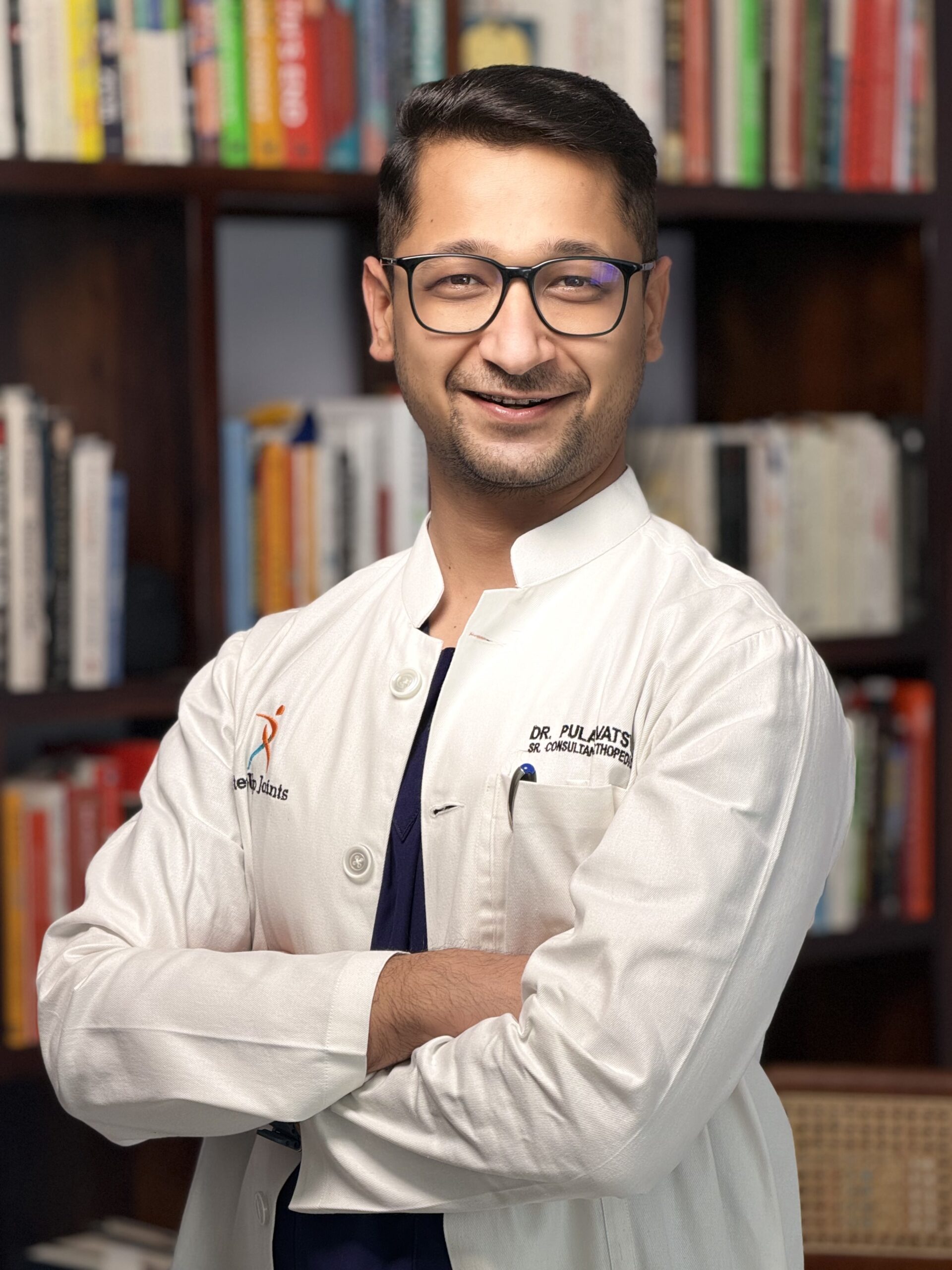
Medically reviewed by: Dr. Pulak Vatsya
Qualification: MBBS, MS Orthopaedics, DNB, MNAMS
Specialty: robotic joint replacement, Direct Anterior Approach (DAA) hip surgery, and ACL reconstruction.
Clinic: StepUp Joints, Lajpat Nagar, South Delhi
Last reviewed: [31-10 – 2026]
Doctor Statement
Medically guided by Dr. Pulak Vatsya (MBBS, MS Orthopaedics, DNB, MNAMS)
“The success of a rotator cuff surgery depends just as much on post-operative care as it does on meticulous surgical technique. Patients must remember that while the tendon is securely anchored during surgery, true biological tendon-to-bone healing takes several months. Rushing your rotator cuff repair recovery by removing your sling prematurely or attempting heavy lifting too early can compromise the repair. Following a guided, phased rehabilitation program ensures the anchor site heals solidly while gradually restoring your complete range of motion.”
— Senior Orthopaedic & Shoulder Specialist
Dr. Pulak Vatsya
Short Summary
This in depth guide shows you everything you need to know about recovering after a rotator cuff repair. From your initial post-op period to building up strength in your tissues and getting back to playing sport or doing physical work. This article has been written by an expert orthopaedic surgeon and includes tips on looking after your shoulder day-to-day, physio exercises, sleeping, pain relief and some FAQs to help you get through your recovery with confidence.
Understanding the Biology of Tendon Healing
To understand the structure of your rehabilitation programme we can look at what happens within the joint during healing.
[Inflammatory Phase] —> [Proliferative Phase] —> [Remodeling Phase]
(Weeks 0-2) (Weeks 2-8) (Months 2-12)
Blood clot forms New tissues and collagens formed Collagen matures and organize
Little strength Tendon begins to adhere to bone Strong tensile strength developed
From Weeks 0-6: Scar tissue will form between the tendon repair and the bone. Little strength means strict sling wear.
From Weeks 6-12: Collagen fibers will form organized giving improved strength between the tendon and bone. Passive and active assisted movement begins.
From Months 3-6+: Collagen fibers will start to mature and organize. Resistance training can be progressed. High functional loading can be undertaken.
Complete Week-by-Week Rotator Cuff Repair Recovery Guide
Stage 1: Protection & Passive Healing (Weeks 1-6)
The main aim during this stage is to protect the repair and prevent stiffness in the elbow, wrist and hand.
+—————————-+—————————————————————————-+
| Focus During Recovery | Guidelines For Stage 1 (Weeks 1 – 6) |
+—————————-+—————————————————————————-+
| Sling Wear | Constantly wear sling (except for hygiene reasons and specific exercises) |
| Movement | Pendulum movements, elbow flexion, wrist rotation & squeezing |
| Sleeping Position | Sleep on incline (using recliner chair/wedge cushions) |
| Restrictions | No active lifting/pushing/pulling/reaching with the operated arm +
+—————————-+—————————————————————————-+
Weeks 1-2: Protecting Your Repair
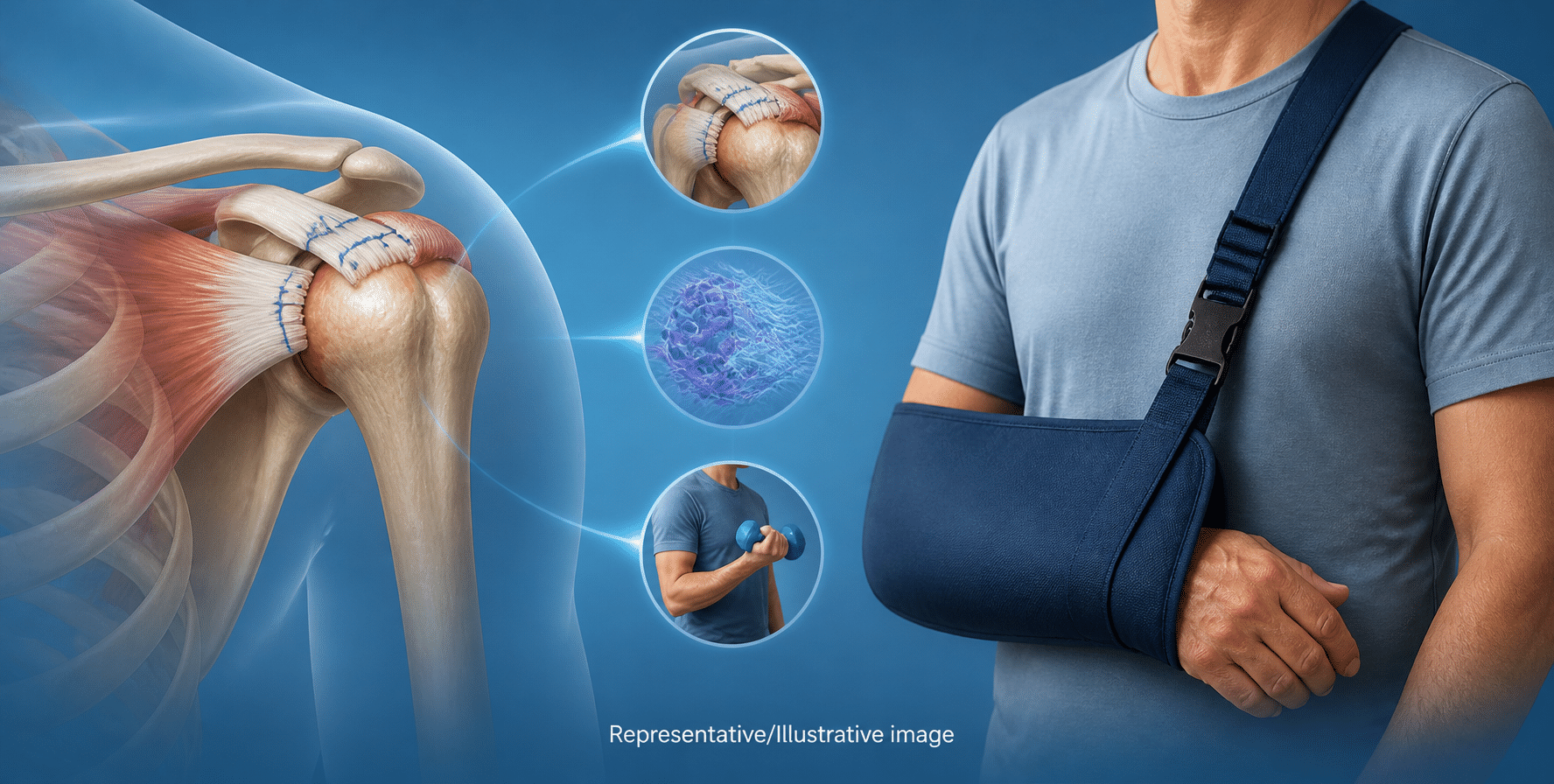
Immobilise: Ensure you are wearing your shoulder sling constantly including while sleeping.
Pain & Swelling: Use an ice pack for 15-20 mins several times a day. Take any painkillers as prescribed.
Passive Movement: Move your wrist and finger joints gently. You can also squeeze a stress ball. Bend your elbow passively outside of the sling ensuring your upper arm lies flat against your body.
Hygiene: Keep your dressings dry. It is advised that you have a sponge bath until your surgeon gives permission for you to have a shower.
Weeks 3-6: Passive Movement
Physical Therapy: Passive movement exercises (PROM). These are done with the help of your physio. During this your physio or other arm will move your operated arm. The repaired muscle will not contract.
Pendulum Movements: Lean forward slightly and allow your injured arm to hang loosely. Gently move your arm in small circles using momentum.
Sling: Towards the end of week 6 your surgeon will assess how your tissues are healing. They will advise you when to start weaning off your sling in low risk situations at home.
Phase 2: Active Assisted & Active Movement (Weeks 7-12)
The rotator cuff repair should be healed with good tendon to bone healing. The aim of this stage is to regain full movement in the shoulder joint while being careful not to strain the healing tendon.
Weeks 7-8: Active Assisted Range of Movement (AAROM).
Sling Removal.
You will usually fully remove your sling (as advised by your orthopaedic surgeon).
Shoulder Pulleys. Using a pulley system or light stick/cane (held in both hands) you can actively assist your repaired arm to move through its overhead and externally rotating movements.
Using your arm. You can start using your repaired arm for light daily activities, however only up to chest height. This includes eating, typing, washing your face. Do not lift anything heavier than a coffee cup.
Weeks 9-12: Full Active Range of Movement (AROM).
Lifting your arm. You begin to lift your arm actively against gravity.
Shoulder Blade Strengthening. Your physio will work extensively on strengthening the muscles around the shoulder blade (scapular). This provides a strong base for your shoulder to rotate.
Driving. Most people are allowed driving from weeks 8-10 as long as they have stopped taking any narcotic pain killers and have enough control in their arm.
Phase 3: Strengthening (Months 3-6)
Focus is now on enhancing muscular endurance and increasing muscle strength and joint stability.
[Weeks 12-16] Resistance Band Workout [Weeks 16-24] Functional Strength [Months 6+] Advanced Return
Resistance Bands (TheraBand’s) Free Weights (1-3kg) High impact sport / Heavy labor
Isometric Rotator Cuff Exercises Upper body strength training Full activity without restriction
Months 3-4: Light Resistance Exercises
Resistance Band Exercises Low resistance elastic bands (TheraBand’s) will be used to perform internal and external shoulder rotation.
Core and Postural Exercises Focus is on keeping a neutral posture and avoiding shoulder shrugging.
Light Lifting Activities can be increased to allow lifting light items around the house up to 1-2kg.
Months 5-6: Functional and Occupational Rehabilitation
Free Weights Light dumbbells can now be used to perform shoulder press, lateral raise and rowing exercises. These should be done under supervision from your Physiotherapist.
Occupational Based Rehabilitation Your rehabilitation will be tailored to your occupation. If you have a sedentary occupation, heavy lifting occupation or overhead occupation.
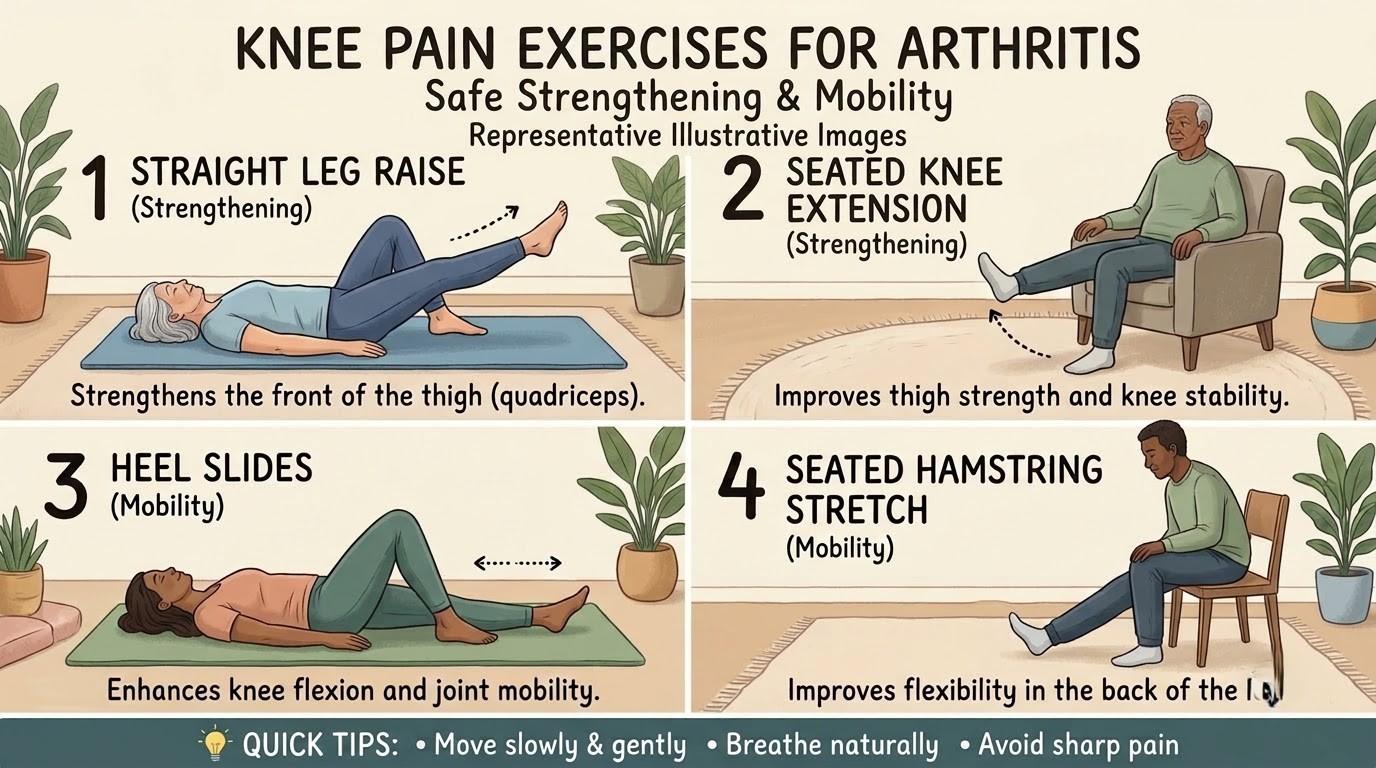
Pain Management You may feel some mild muscle ache following exercises. However if you experience any sharp joint pain then you are over exerting yourself. Reduce the amount of weight you are lifting.
Phase 4: Full recovery and being able to undertake high impact activities (Month 6-12)
This is where you will build up your strength, speed and stamina to full capacity.
Physically demanding jobs: You will usually be able to undertake overhead physically demanding jobs, heavy building work or weightlifting between 6-9 months after surgery.
Sports: You will be able to do non-contact sports such as swimming, cycling and running early on in phase 4. Overhead throwing sports or racket sports (tennis/badminton) will usually be able to be played competitively between 9-12 months.
Maintenance: Continuing maintenance exercises twice a week will help keep your rotator cuff and scapular muscles strong to reduce the risk of future injuries.
Crucial Tips for a Smooth Rotator Cuff Repair Recovery
Sleep in an incline position. Lying flat on your back can cause strain on the repair and cause pain at night. We recommend sleeping in a reclining chair or using a wedge pillow to raise your body by 45 degrees for 4-6 weeks. Place a small pillow under your elbow to support your arm.
Avoid excessive movement. Moving through severe pain can cause tearing of sensitive soft tissue. Only stretch to the point of slight tightness.
Use ice packs. Apply ice packs to reduce localized inflammation for 20 mins after physiotherapy sessions.
Eat a healthy diet. You need enough building blocks to help your tendons heal. Eat well with plenty of lean protein, vitamin C, zinc and collagen promoting foods.
Don’t smoke. Nicotine causes constriction of micro blood vessels and will delay healing from tendon to bone significantly. This will increase the risk of failed repairs.
Conclusion
It takes determination and patience to get the best outcome from your rotator cuff repair. Ensuring you follow the phases of recovery, allowing time for the tendon to heal to bone and wearing your sling will all help ensure you have a strong, pain free and mobile shoulder.
Every shoulder heals at different rates. Remain in contact with your orthopaedic surgeon and physiotherapist throughout your recovery to ensure your rehabilitation is progressing well.
Frequently Asked Questions (FAQs)
Q1: How long will it take me to recover from a total rotator cuff repair?
Most patients will experience significant pain relief and be able to perform light daily activities within 3-4months. Complete healing of the tendon and regaining full strength in the muscle usually takes between 6-12 months.
Q2: Why does my shoulder hurt more at night after a rotator cuff repair?
Pain from your shoulder at night is common due to gravity pulling down. Lying flat can cause the humerus (arm bone) to push into the socket of your joint, causing extra pressure to the repaired tendon. Leaning up with a pillow supporting your elbow will reduce the pressure.
Q3: When can I shower after my rotator cuff surgery?
Most surgeons will allow you to shower 48-72 hours post surgery. Ensure that you have changed your initial dressings and keep your wounds dry. Avoid getting your shoulder submerged in a bath/pool/hot tub until all your wounds are fully healed and your stitches have been removed.
Q4: What are the signs of a re-tear?
If you hear a sudden pop and feel severe pain, lose movement in your arm suddenly or have constant pain that won’t settle with rest and ice then there is a possibility that you have a re-tear. Please contact your orthopaedic surgeon immediately.
Q5: Can I perform my rotator cuff repair exercises at home?
Exercises are a very important part of your recovery. These must be performed exactly as advised by your orthopaedic surgeon and Physiotherapist. Doing any exercises that haven’t been approved or increasing your resistance could affect the repair.