Doctor’s Clinical Perspective
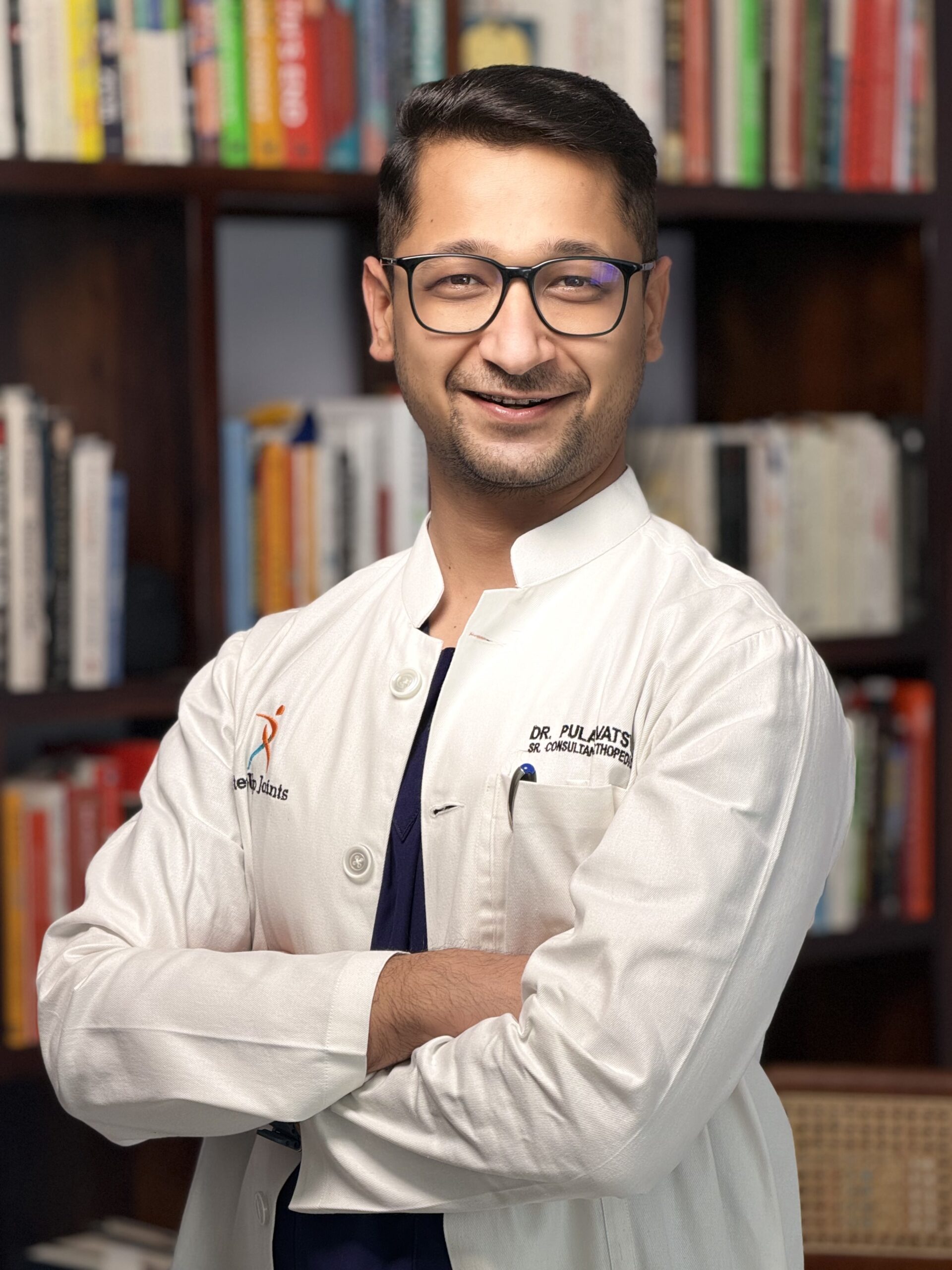
Dr. Pulak Vatsya (MBBS, MS Orthopaedics, DNB, MNAMS) “Shoulder pain shouldn’t keep you from living life on your own terms. Whether you’re dealing with a sports injury or a rotator cuff tear, my goal is to utilize advanced, minimally invasive arthroscopy to accurately repair the joint, minimize recovery time, and restore your full mobility.”
Summary:
Shoulder arthroscopy surgery in Delhi treats conditions such as rotator cuff tears and shoulder instability. Early diagnosis, appropriate treatment, and guided rehabilitation can help improve shoulder mobility and function.
What Is Shoulder Arthroscopy Surgery?
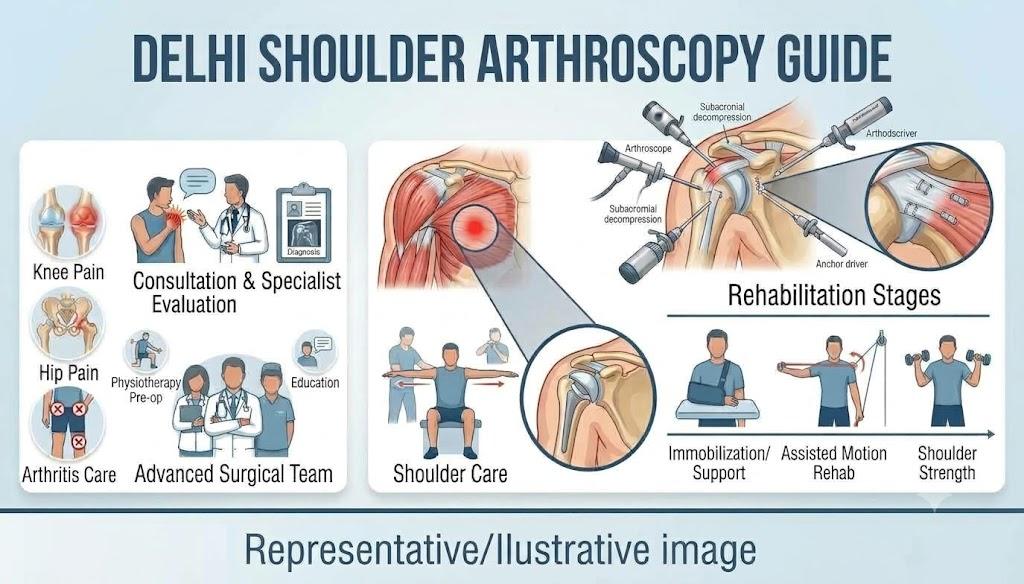
Shoulder arthroscopy is a minimally invasive surgical procedure to diagnose and treat selected conditions of the shoulder joint. During the procedure, an orthopaedic surgeon makes a small incision into the skin and inserts an arthroscope – a thin instrument equipped with a camera and light at the tip. The camera’s images are sent to a monitor for the surgeon to view.
The instruments used can also be inserted through other small incisions to repair the damaged tissues, remove loose bodies or perform other procedures.
People searching for Shoulder Arthroscopy Surgery in Delhi should remember that the procedure is not a one-size-fits-all surgery for all kinds of shoulder ailments. It is a generic name for a number of procedures, each of which is used to treat specific conditions.
For instance, repairing a torn rotator cuff requires a different set of procedures than treating shoulder instability. The latter usually involves the labrum and its surrounding tissues, while the former deals with the tendons. Moreover, some surgeries are needed to debride the shoulder joint of inflamed tissues or loose bodies.
Which Shoulder Conditions Can Be Treated With Arthroscopy?
There are certain diseases and conditions for which a shoulder arthroscopy can be indicated; the patient did not respond to conservative treatment and the procedure can fix the damage.
1. Rotator Cuff Tears
The rotator cuff is a group of muscles and tendons that stabilizes the shoulder and allows it to move. It can be injured by a variety of factors and may lead to the development of tears. This condition is often accompanied by pain, weakness, impaired motion, and nighttime discomfort. In addition, the inability to raise the arm can also be observed. Depending on the severity, location, and cause of the injury, a doctor may prescribe therapy, physiotherapy, changes in the daily routine, and specific drugs. In addition, if the damage is significant, an arthroscopic repair of the tendon may be necessary.
2. Shoulder Instability and Labral Tears
The labrum is a structure that surrounds the shoulder joint and acts as a shock absorber; however, it can be damaged, leading to instability. Such an injury is often caused by dislocation or overuse of the joint. People with this problem may feel that their shoulder is displaced, painful clicking, or recurrent dislocations. If conservative treatments do not help and there is instability, an arthroscopy can repair the injured tissues.
3. Shoulder Impingement and Bursitis
This diagnosis implies the presence of pain and discomfort that may be caused by the irritation of the bursae and rotator cuff. Most patients with this condition respond well to the indicated therapy and changes in the daily routine. However, if these measures are not effective, an orthopedic surgeon can recommend a procedure to remove the source of irritation during an arthroscopic examination.
4. Loose Bodies
Sometimes, pieces of cartilage and other tissues can break inside the shoulder joint, which will then act as foreign bodies. This leads to pain, discomfort, and limited mobility. During an arthroscopic procedure, the surgeon can remove the cause of the inconveniences if it is safe and possible.
When Is Shoulder Arthroscopy Surgery Needed?
Not all shoulder injuries require surgery. Many ailments can initially be treated with physiotherapy, activity modification, and adequate pain control.
A surgeon might suggest arthroscopy if:
- The pain persists despite a suitable course of non-surgical treatment
- A rotator cuff tear results in persistent weakness or restricted function
- The shoulder is dislocated multiple times
- A labral injury needs to be repaired
- There is a loose body in the joint.
- The patient’s examination and imaging suggest that surgery would be beneficial.
The decision should be based on the patient’s symptoms, examination, imaging, general health, and functional needs. Certain acute or extensive tendon tears should be referred to a specialist for early treatment rather than waiting for the non-surgical measures to fail.
If you are considering Shoulder Arthroscopy Surgery in Delhi, consult your orthopaedic surgeon about whether surgery is required, what improvement to expect, and if other treatment options are available.
How Is Shoulder Arthroscopy Surgery Performed?
The particular steps depend on the site and nature of the damage and the surgical technique chosen by the doctor. In general, it includes several main stages.
Preparation and Anaesthetic Test
The doctor will evaluate the symptoms, current health, treatment history, and results of diagnostic tests. If needed, tests such as X-rays, ultrasounds, or MRI scans are done to get a better idea of the situation.
The medical team will also consider existing conditions, medications, anaesthesia, and rehabilitation needs.
Anaesthesia and Incisions
The procedure itself most often takes place under general anaesthesia combined with a regional anaesthetic to reduce discomfort after surgery. The shoulder is also given a specific position for the operation.
Small punctures or incisions are made, and an endoscope is inserted into the joint cavity. In addition, a sterile liquid is injected to expand the joint for better visibility.
Damage Repair
The surgeon deals with the problem area with special tools while the camera monitors the inside of the joint on a monitor. For example, a torn tendon is sutured to the bone with special anchors or stitches. In addition, individual procedures may be performed depending on the nature and location of the damage and the surgeon’s choice of equipment.
Chest Drains and Anaesthesia Discharge
In the end, the doctor removes the instruments, and the incisions are sutured and dressed. While the anaesthetic wears off, the patient receives all the necessary care. Based on the state of health and the stage of anaesthesia, the doctor will decide whether the patient can be discharged on the same day or after several days of observation in the hospital.
What Are the Benefits of Shoulder Arthroscopy?
Advantages of arthroscopic technique depend on the type of condition, and on individual patient situations.
Less invasive: The major benefit of arthroscopy relates to the relatively smaller incisions needed to perform the surgery.
Ability to see what is going on: With the camera in place, the physician can look inside the joint and identify the cause of the injury.
The ability to treat particular injuries: Arthroscopic methods can be used for some tendon tears, particular kinds of labral injuries, instability, and loose joint bodies.
Less damage to surrounding tissues: Arthroscopy, than some open procedures, is less damaging for neighboring tissues.
Faster recovery time and functional improvement: If the procedure is right for this patient and rehabilitation is going well, it can improve level of pain and shoulder functioning.
Nevertheless, the usefulness of small incisions depends on the injury, the surgical method, the quality of the tissue, the adherence to rehabilitation process, and other health issues.
Is Shoulder Arthroscopy Better Than Open Surgery?
Neither technique is automatically better for every patient. The appropriate approach depends on the type of injury, its complexity, and the surgeon’s assessment.
| Feature | Arthroscopic surgery | Open surgery |
| Incisions | Usually several small incisions | Usually a larger incision |
| Visualisation | Camera and specialised instruments | Direct access to the surgical area |
| Soft-tissue disruption | Often less for suitable procedures | May require more tissue exposure |
| Suitable conditions | Many selected tendon, labral, and instability problems | Some complex injuries or cases requiring direct access |
| Recovery | Depends on the repair and rehabilitation plan | Depends on the procedure and extent of repair |
Arthroscopic techniques are commonly used for many shoulder repairs. However, open surgery or a combined approach may be appropriate for certain complex injuries or specific surgical requirements.
The most important consideration is choosing a technique that safely addresses the problem, rather than selecting surgery based on incision size alone.
Recovery After Shoulder Arthroscopy Surgery
Recovery depends on the type of surgery. The treatment following a “loose body removal” surgery would be different from that followed after repair of a major rotator cuff tear.
The patients who have undergone shoulder arthroscopy surgery in Delhi should follow the separate instructions given by their surgeon and physiotherapist.
Days Following the Surgery
Pain, swelling, bruising, and temporary stiffness are expected. The right medicines, the correct application of ice pack, proper way of treating the wound, and rest should lessen the pain.
A sling may be required to help protect the shoulder area. Patients should obey the recommendations given regarding bathing, changing the dressing, sleeping position, and moving the arm.
The first 6 weeks after surgery
In this period, rehabilitation will concentrate on protecting the repair and ensuring safety in movement. In case the operation permits it, the physiotherapist can start introducing passive movements earlier; that means that at this point the shoulder will be moved by someone else rather than the patient.
Weeks 6 to 12
After the initial healing phase, rehabilitation can begin with some light arm exercises and slowly getting back to some active shoulder movements. The exercises will depend on the degree of stiffness and pain that the patient is experiencing and the surgeon’s advice.
It is important that progress is slow. If the patient pushes himself/herself through pain and tries to return to normal activities too soon, this may have a negative effect on recovery.
Three months and Later
The strengthening and functional training can continue for a few months after rehabilitation is over. In some cases, the recovery period may take longer than just a few months depending on the patient’s particular case.
What Are the Possible Risks and Complications?
Though shoulder arthroscopy is a commonly performed procedure, it is still a surgical intervention that carries risks. Potential risks may include:
- Infection at the surgical site or inside the joint,
- Bleeding and swelling,
- Limitation of movement in the shoulder joint and stiffness,
- The occurrence of persistent pain or incomplete recovery,
- Uncommon nerve or blood vessel injuries,
- Blood clots and complications related to anesthesia,
- The failure of healing of the tendon or repaired tissue,
- The presence of recurrent instability and the necessity of further treatment.
The chances of complications depend on the type of procedure performed, as well as the general health state of the patient and other factors. The surgeon should explain the possible complications and expected benefits before getting informed consent from the patient.
Who Is a Suitable Candidate for Shoulder Arthroscopy?
An ideal candidate is an individual whose condition of the shoulder is projected to improve due to arthroscopic intervention and whose general state of health permits surgery.
The evaluation may examine factors including:
- Whether or not the individual has been diagnosed and how severe the injury they are suffering from is.
- Whether or not non-surgical therapy has been effective.
- The patient’s job, personal life, and hobbies.
- The condition of the tendons and the tissues.
- Other medical conditions, smoking history, and other peculiarities of the patient that impact healing.
- The willingness of the patient to comply with post-operative care and rehabilitation.
Age does not determine appropriateness for arthroscopy. The evaluation needs to be complete, and the surgeons should set realistic expectations.
How to Prepare for Shoulder Arthroscopy
Getting ready before the procedure is very useful for the patients to know what the surgery will be like and how the recovery process will go on after being back home.
Before the surgery one needs to discuss with the doctor the current medicines, allergies, health problems, and experience with anaesthesia if there were any. Follow the required fasting procedure.
If you are going to have a same-day surgery, make sure that there is a way back home after the surgery and that during the recovery period someone will help you.
Preparing one’s home for recovery from the surgery can also help a lot because it is recommended to put any necessary items close at hand and organize good conditions for sleeping. Clarify how long a patient should wear a sling or when he or she can return to driving or exercising.
Choosing an Orthopaedic Specialist in Delhi
It is not only important to search for surgeons who conduct a particular procedure but also to check their qualifications and experience in orthopaedics.
At StepUp Joints, patients can get evaluated for shoulder pain, rotator cuff injuries, shoulder instability, etc. Treatment for shoulder conditions must not be based on the assumption that any shoulder problem will require surgery.
If you want to get shoulder arthroscopy surgery in Delhi, do consult an orthopaedic expert regarding your diagnosis and the expected outcome of the procedure, along with possible complications and rehabilitation restrictions.
Book an Orthopaedic Consultation
Chronic shoulder pain has the potential to disrupt work, sleep, physical activity, and daily autonomy. Proper diagnosing explains whether physiotherapy, medication, lifestyle changes, or surgery is the right course of action.
At StepUp Joints, orthopedic consultation can assist you in gaining insights into your shoulder condition and treatment options. If you are considering arthroscopy, inquire about the procedure, expected recovery timeline, risks, and rehabilitation plan as you make your decision.
Contact StepUp Joints now at +91-7042787560
Disclaimer: The information in this article is primarily for educational purposes. It should not be used as a substitute for any personal consultation, diagnosis, or treatment plan.
Frequently Asked Questions (FAQs)
1. What is shoulder arthroscopy surgery?
Shoulder arthroscopy surgery is a minimally invasive procedure that involves the use of a small camera and other instruments to diagnose and treat selected conditions in the shoulder. Some of the conditions amenable to this form of surgery include: rotator cuff tear, specific labral injuries, instability, and the removal of various loose bodies in the shoulder. The type of surgery that is performed will be determined by the individual needs and diagnosis of the patient.
2. Is shoulder arthroscopy better than the open procedure?
In comparison to the open procedure, arthroscopy is associated with smaller incisions and minimal damage to the surrounding tissues. However, it is not always the preferred alternative. In fact, some injuries might require that the open procedure or a combination of the two approaches be used. The surgeon determines which of these procedures is more appropriate based on the patient’s individual needs, the condition and severity of the injury, and the desired outcome.
3. How long does the surgery take?
The duration of the procedure is highly dependent on the nature of the injury or condition being treated. For instance, if the procedure is straight forward and minimal, it may be completed in less time than a rotator cuff repair, or another procedure that involves multiple repairs. The exact duration will be determined by the surgeon, according to the patient’s needs.
4. Is shoulder arthroscopy painful?
Most patients who undergo this procedure experience some degree of discomfort or soreness, as anticipated following surgery. Although various anesthetic agents, as well as pain relievers are administered, the level of discomfort experienced will determine the need for additional analgesics. It is important to inform your health care provider if the pain is persistent or begins to increase following the surgery.
5. How long does it take to recover from the procedure?
The length of the recovery period will be determined by the type and severity of the injury, as well as the nature of the procedure. The procedure itself is relatively quick; however, if it involves rotator cuff repair, for example, it may take several months to fully recover. Your surgeon and physiotherapist will make recommendations regarding the rehabilitation process and how soon you can resume normal activities.
Disclaimer: This post is for educational and awareness purposes only. Please consult a doctor for personalized medical advice.